BMJ Global Health article calls for a halt to AI R&D until it’s regulated

Certain types and applications pose an “existential threat to humanity,” healthcare professionals warn

An international group of doctors and public health experts have joined the clamor for a moratorium on AI research until the development and use of the technology are properly regulated. 

Despite its transformative potential for society, including in medicine and public health, certain types and applications of AI, including self-improving general purpose AI (AGI), pose an “existential threat to humanity,” they warn in the open-access journal BMJ Global Health.

They highlight 3 sets of threats associated with the misuse of AI and the ongoing failure to anticipate, adapt to, and regulate the transformational impacts of the technology on society.

The first of these comes from the ability of AI to rapidly clean, organize, and analyze massive data sets consisting of personal data, including images.

This can be used to manipulate behavior and subvert democracy, they explain, citing its role in the subversion of the 2013 and 2017 Kenyan elections, the 2016 US presidential election, and the 2017 French presidential election.

“When combined with the rapidly improving ability to distort or misrepresent reality with deep fakes, AI-driven information systems may further undermine democracy by causing a general breakdown in trust or by driving social division and conflict, with ensuing public health impacts,” they contend.

AI-driven surveillance may also be used by governments and other powerful actors to control and oppress people more directly, an example of which is China’s Social Credit System, they point out. 

This system combines facial recognition software and analysis of ‘big data’ repositories of people’s financial transactions, movements, police records, and social relationships.

But China isn’t the only country developing AI surveillance: at least 75 others, “ranging from liberal democracies to military regimes, have been expanding such systems,” they highlight.

The second set of threats concerns the development of Lethal Autonomous Weapon Systems (LAWS)---capable of locating, selecting, and engaging human targets without the need for human supervision.

LAWS can be attached to small mobile devices, such as drones, and could be cheaply mass-produced and easily set up to kill “at an industrial scale,” warn the authors. 

The third set of threats arises from the loss of jobs that will accompany the widespread deployment of AI technology, with estimates ranging from tens to hundreds of millions over the coming decade.

“While there would be many benefits from ending work that is repetitive, dangerous, and unpleasant, we already know that unemployment is strongly associated with adverse health outcomes and behavior,” they point out.

To date, increasing automation has tended only to shift income and wealth from labor to the owners of capital, so helping to contribute to inequitable wealth distribution across the globe, they note.

“Furthermore, we do not know how society will respond psychologically and emotionally to a world where work is unavailable or unnecessary, nor are we thinking much about the policies and strategies that would be needed to break the association between unemployment and ill health,” they highlight.

But the threat posed by self-improving AGI, which, theoretically, could learn and perform the full range of human tasks, is all-encompassing, they suggest. 

“We are now seeking to create machines that are vastly more intelligent and powerful than ourselves. The potential for such machines to apply this intelligence and power—whether deliberately or not—in ways that could harm or subjugate humans—is real and has to be considered. 

“If realized, the connection of AGI to the internet and the real world, including via vehicles, robots, weapons and all the digital systems that increasingly run our societies, could well represent the ‘biggest event in human history’,” they write.

“With exponential growth in AI research and development, the window of opportunity to avoid serious and potentially existential harms is closing. The future outcomes of the development of AI and AGI will depend on policy decisions taken now and on the effectiveness of regulatory institutions that we design to minimize risk and harm and maximize benefit,” they emphasize. 

International agreement and cooperation will be needed, as well as the avoidance of a mutually destructive AI ‘arms race’, they insist. And healthcare professionals have a key role in raising awareness and sounding the alarm on the risks and threats posed by AI.

“If AI is to ever fulfill its promise to benefit humanity and society, we must protect democracy, strengthen our public-interest institutions, and dilute power so that there are effective checks and balances. 

“This includes ensuring transparency and accountability of the parts of the military–corporate industrial complex driving AI developments and the social media companies that are enabling AI-driven, targeted misinformation to undermine our democratic institutions and rights to privacy,” they conclude.

 

A new Smidt Heart Institute study published in Nature showed  that artificial intelligence was expert in assessing and diagnosing cardiac function by analyzing echocardiogram images. Image by Getty.
A new Smidt Heart Institute study published in Nature showed that artificial intelligence was expert in assessing and diagnosing cardiac function by analyzing echocardiogram images. Image by Getty.

Cedars-Sinai cardiologist Ouyang investigates the performance of AI at assessing heart health

Published in Nature, new research from the Smidt Heart Institute shows whether artificial intelligence or sonographers provide the most accurate heart evaluations

Who can assess and diagnose cardiac function best after reading an echocardiogram: artificial intelligence (AI) or a sonographer? 

According to Cedars-Sinai investigators and their research published today in the academic journal Nature, AI proved superior in assessing and diagnosing cardiac function when compared with echocardiogram assessments made by sonographers.  

The findings are based on a first-of-its-kind, blinded, randomized clinical trial of AI in cardiology led by investigators in the Smidt Heart Institute and the Division of Artificial Intelligence in Medicine at Cedars-Sinai. 

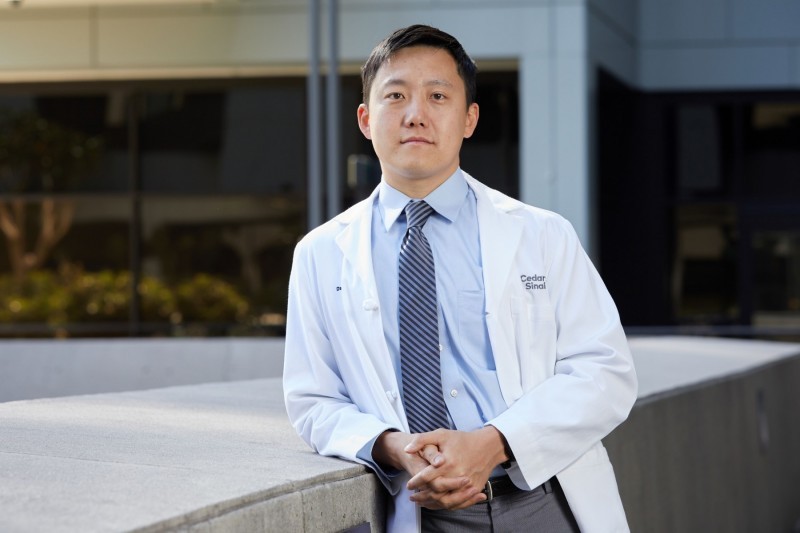
“The results have immediate implications for patients undergoing cardiac function imaging as well as broader implications for the field of cardiac imaging,” said cardiologist David Ouyang, MD, principal investigator of the clinical trial and senior author of the study. “This trial offers rigorous evidence that utilizing AI in this novel way can improve the quality and effectiveness of echocardiogram imaging for many patients.” David Ouyang, MD

Investigators are confident that this technology will be found beneficial when deployed across the clinical system at Cedars-Sinai and health systems nationwide.

“This successful clinical trial sets a superb precedent for how novel clinical AI algorithms can be discovered and tested within health systems, increasing the likelihood of seamless deployment for improved patient care,” said Sumeet Chugh, MD, director of the Division of Artificial Intelligence in Medicine and the Pauline and Harold Price Chair in Cardiac Electrophysiology Research.

In 2020, researchers at the Smidt Heart Institute and Stanford University developed one of the first AI technologies to assess cardiac function, specifically, left ventricular ejection fraction—the key heart measurement used in diagnosing cardiac function. Their research also was published in Nature.

Building on those findings, the new study assessed whether AI was more accurate in evaluating 3,495 transthoracic echocardiogram studies by comparing initial assessment by AI or by a sonographer—also known as an ultrasound technician.

Among the findings: 

  • Cardiologists more frequently agreed with the AI initial assessment and made corrections to only 16.8% of the initial assessments made by AI. 
  • Cardiologists made corrections to 27.2% of the initial assessments made by the sonographers. 
  • The physicians were unable to tell which assessments were made by AI and which were made by sonographers.
  • The AI assistance saved cardiologists and sonographers time.

“We asked our cardiologists to guess if the preliminary interpretation was performed by AI or by a sonographer, and it turns out that they couldn’t tell the difference,” said Ouyang. “This speaks to the strong performance of the AI algorithm as well as the seamless integration into clinical software. We believe these are all good signs for future AI trial research in the field.”

The hope, Ouyang says, is to save clinicians time and minimize the more tedious parts of the cardiac imaging workflow. The cardiologist, however, remains the final expert adjudicator of the AI model output. 

The clinical trial and subsequent published research also shed light on the opportunity for regulatory approvals.

“This work raises the bar for artificial intelligence technologies being considered for regulatory approval, as the Food and Drug Administration has previously approved artificial intelligence tools without data from prospective clinical trials,” said Susan Cheng, MD, MPH, director of the Institute for Research on Healthy Aging in the Department of Cardiology at the Smidt Heart Institute and co-senior author of the study. “We believe this level of evidence offers clinicians extra assurance as health systems work to adopt artificial intelligence more broadly as part of efforts to increase efficiency and quality overall.” 

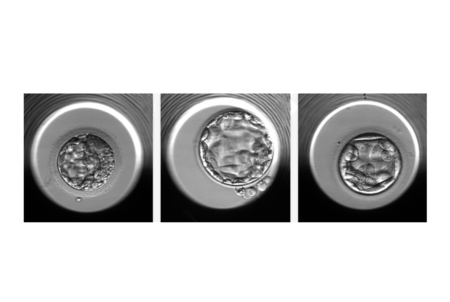
Examples of embryos evaluated by the STORK-A algorithm. From left to right, an embryo predicted to have a normal chromosome count or a single chromosomal abnormality;  an embryo predicted to have a normal chromosome count; an embryo predicted to have more than one chromosomal abnormality.
Examples of embryos evaluated by the STORK-A algorithm. From left to right, an embryo predicted to have a normal chromosome count or a single chromosomal abnormality; an embryo predicted to have a normal chromosome count; an embryo predicted to have more than one chromosomal abnormality.

Weill Cornell Medicine creates STORK-A for IVF embryo selection

An artificial intelligence algorithm can determine non-invasively, with about 70 percent accuracy, if an in vitro fertilized embryo has a normal or abnormal number of chromosomes, according to a new study from researchers at Weill Cornell Medicine. Dr. Zev Rosenwaks

Having an abnormal number of chromosomes, a condition called aneuploidy is a major reason embryo derived from in vitro fertilization (IVF) fail to implant or result in a healthy pregnancy. One of the current methods for detecting aneuploidy involves the biopsy-like sampling and genetic testing of cells from an embryo—an approach that adds cost to the IVF process and is invasive to the embryo. The new algorithm, STORK-A can help predict aneuploidy without the disadvantages of biopsy.  It operates by analyzing microscope images of the embryo and incorporates information about maternal age and the IVF clinic’s scoring of the embryo’s appearance.

“Our hope is that we’ll ultimately be able to predict aneuploidy in a completely non-invasive way, using artificial intelligence and computer vision techniques,” said study senior author Dr. Iman Hajirasouliha, associate professor of computational genomics and physiology and biophysics at Weill Cornell Medicine and a member of the Englander Institute for Precision MedicineDr. Iman Hajirasouliha

The study’s first author is Josue Barnes, a doctoral student at the Weill Cornell Graduate School of Medical Sciences who studies in the Hajirasouliha Laboratory. Dr. Nikica Zaninovic, associate professor of embryology in clinical obstetrics and gynecology and director of the Embryology Laboratory at the Ronald O. Perelman and Claudia Cohen Center for Reproductive Medicine at Weill Cornell Medicine and NewYork-Presbyterian/Weill Cornell Medical Center led the embryology work for the study.

According to the U.S. Centers for Disease Control and Prevention, there were more than 300,000 IVF cycles performed in the United States in 2020, resulting in about 80,000 live births. IVF experts are always looking for ways to boost that success rate, to achieve more successful pregnancies with fewer embryo transfers—which means developing better methods for identifying viable embryos.

Fertility clinic staff currently use microscopy to assess embryos for large-scale abnormalities that correlate with poor viability. To obtain information about the chromosomes, clinic staff may also use a biopsy method called preimplantation genetic testing for aneuploidy (PGT-A), predominantly in women over the age of 37.

To develop a computational approach to embryo assessment that capitalized on the Embryology Laboratory’s pioneering use of time-lapse photography, investigators from the Center for Reproductive Medicine teamed up with colleagues at the Englander Institute.

In a 2019 study, the teams developed an artificial intelligence (AI) algorithm, STORK, that could assess embryo quality as well as IVF clinic staff. For the new study, they developed STORK-A as a potential replacement for PGT-A—or as a more selective way of deciding which embryos should have PGT-A testing. Dr. Nikica Zaninovic

The new STORK-A algorithm uses microscope images of embryos taken five days past fertilization, clinic staff’s scoring of embryo quality, maternal age, and other information that is normally gathered as part of the IVF process. Because it uses AI, the algorithm automatically “learns” to correlate certain features of the data, often too subtle for the human eye, with the chance of aneuploidy. The team trained STORK-A on a dataset of 10,378 blastocysts for which ploidy status was already known.

From its performance, they assessed the algorithm’s accuracy in predicting aneuploid versus normal-chromosome “euploid” embryos at nearly 70 percent (69.3%). In predicting aneuploidy involving more than one chromosome—complex aneuploidy—versus euploidy, STORK-A was 77.6 percent accurate. They later tested the algorithm on independent datasets, including one from an IVF clinic in Spain, and found comparable accuracy results, demonstrating the generalizability of STORK-A.

The study provides a proof of concept for an approach that is currently experimental. Standardizing the use of STORK-A in clinics would require clinical trials comparing it to PGT-A, and Food and Drug Administration approval—all years in the future. But the new algorithm represents progress on the way to making IVF embryo selection less risky, less subjective, less costly, and more accurate.

“This is another great example of how AI can potentially transform medicine. The algorithm turns tens of thousands of embryo images into AI models that may ultimately be used to help improve IVF efficacy and further democratize access by reducing costs,” said co-author Dr. Olivier Elemento, director of the Englander Institute for Precision Medicine and a professor of physiology and biophysics and computational genomics in computational biomedicine at Weill Cornell Medicine.

Dr. Olivier Elemento“We believe that ultimately by using this technology we can reduce the number of embryos to be biopsied, reduce the costs, and provide a very good tool for consultation with the patient when they need to decide whether to do PGT-A or not,” said Dr. Zaninovic.

The team now plans to build on this success with algorithms trained on videos of embryo development.

“By using video classification, we can leverage both temporal and spatial information about the embryo’s development, and hopefully that will allow the detection of trends in development that distinguish aneuploidy from euploidy with even higher accuracy,” Barnes said. Josue Barnes

“This technology is being optimized with the hope that at some point its accuracy will be close to genetic testing, which is the gold standard and is more than 90 percent accurate,” said co-author Dr. Zev Rosenwaks, director and physician-in-chief of the Ronald O. Perelman and Claudia Cohen Center for Reproductive Medicine at NewYork-Presbyterian/Weill Cornell Medical Center and Weill Cornell Medicine, and the Revlon Distinguished Professor of Reproductive Medicine in Obstetrics and Gynecology at Weill Cornell Medicine. “But we realize that this goal is aspirational.”