

SUPERCOMPUTING NEWS SUPERCOMPUTING NEWS
    • MEDIA KIT
    • MOST READ
    • RSS FEED
    • ACADEMIA
    • AEROSPACE
    • APPLICATIONS
    • ASTRONOMY
    • AUTOMOTIVE
    • BIG DATA
    • BIOLOGY
    • CHEMISTRY
    • CLIENTS
    • CLOUD
    • DEFENSE
    • DEVELOPER TOOLS
    • EARTH SCIENCES
    • ECONOMICS
    • ENGINEERING
    • ENTERTAINMENT
    • GAMING
    • GOVERNMENT
    • HEALTH
    • OIL & GAS
    • INDUSTRY
    • INTERCONNECTS
    • MANUFACTURING
    • MIDDLEWARE
    • MOVIES
    • NETWORKS
    • PHYSICS
    • PROCESSORS
    • RETAIL
    • SCIENCE
    • STORAGE
    • SYSTEMS
    • VISUALIZATION
    • AcyMailing subscription form

    • ADD YOUR VIDEOS
    • MANAGE VIDEOS
    • CONVERSATION INBOX
    • SOCIAL ADVERTISER
    • SOCIAL NETWORK VIDEOS
    • SURVEYS
    • GROUPS
    • PAGES
    • MARKETPLACE LISTINGS
    • APPLICATIONS BROWSER
    • PRIVACY CONFIRM REQUEST
    • PRIVACY CREATE REQUEST
    • LEADERBOARD
    • POINTS LISTING
      • BADGES
    • TRADE SHOWS
Sign In
ChatGPT: A breakthrough in biomedical simulation
Tyler O'Neal, Staff Editor SCIENCE July 11, 2024, 5:00 pm

ChatGPT: A breakthrough in biomedical simulation

The convergence of artificial intelligence (AI) and medicine has led to a new era of innovation in biomedical research. GPT-4, an AI model, has been widely used in ChatGPT for biomedical simulations.

In Vienna, Austria, MedUni Vienna has demonstrated the potential of ChatGPT in biomedical research by developing a simulator based on GPT-4. This simulator has shown improved precision in classifying the significance of genes in cancer cells and predicting cancer prognosis. 

GPT-4 has become valuable in biomedicine. Researchers from MedUni Vienna have highlighted various applications of GPT-4 as a simulator for biological systems. They tested the hypothesis that using GPT-4 for simulating biological and medical processes leads to better outcomes. The researchers also developed "SimulateGPT," a simulation method that uses structured inputs in GPT-4 for various scenarios, such as mouse experiments, sepsis treatment support, and cancer patient analysis.

In the field of biomedicine, modern models like ChatGPT/GPT-4 are good at responding to simple queries, but can struggle with more complex scenarios. Scientists at MedUni Vienna configured GPT-4 with structured inputs and specific instructions to perform detailed text-based simulations. This approach led to significantly improved results and garnered favorable reviews from biomedical experts.

Dr. Matthias Samwald emphasizes the potential for language models like GPT-4 to create biomedical simulators. He suggests several directions for further development, such as integrating biological databases and training AI models with empirical data. 

The work done at MedUni Vienna represents a significant advance in the field of biomedical simulations, pointing towards revolutionary advancements in understanding and managing complex biological systems.
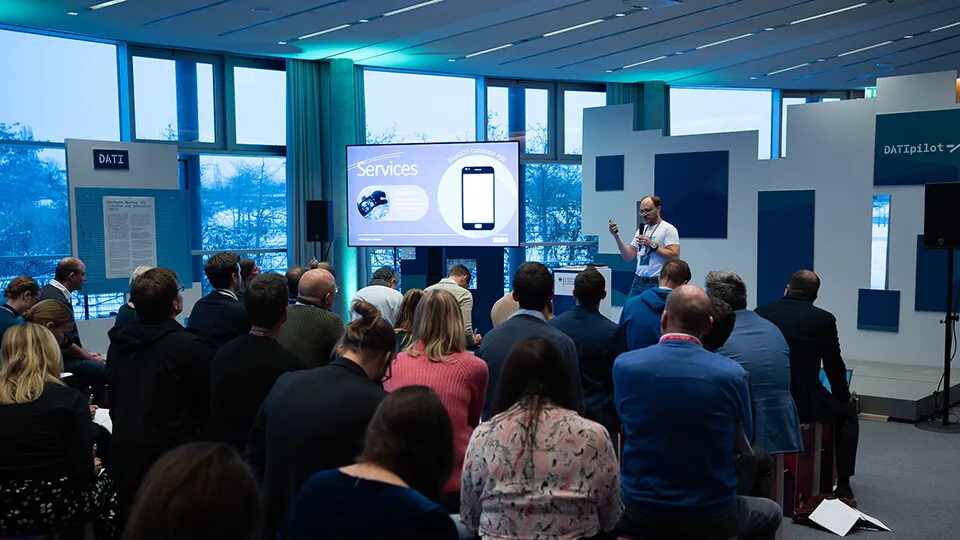
Christophe Galerne presented the Innovation Sprint project. Ten percent of the submitted projects were selected for funding. Photo: DATIpilot.

Germany unleashing the power of citizen science: BlueDOT project pioneers data collection for supercomputer modeling

Tyler O'Neal, Staff Editor SCIENCE July 11, 2024, 1:00 pm

In the vast expanse of the Mediterranean Sea, where the azure waters hold secrets beneath the shimmering surface, a remarkable initiative is underway - the BlueDOT project. Amidst rising temperatures and changing ecosystems, a dedicated team of researchers at MARUM - Center for Marine Environmental Sciences at the University of Bremen is embarking on a transformative journey fueled by the spirit of citizen science.

Diving into the depths of the Mediterranean, citizen scientists, in the guise of passionate divers, are playing a pivotal role in gathering crucial data through their diving computers. What started as a quest to understand the anomalies in sea temperatures has blossomed into a groundbreaking endeavor to monitor and analyze the changing ocean surface with unprecedented depth and precision.

Led by the visionary Dr. Christophe Galerne, the BlueDOT project signifies a union of scientific rigor and collective passion. As divers delve into the waters each day, their data becomes a beacon of hope in unraveling the mysteries of the sea. Through the collaborative efforts of researchers, citizen scientists, and industry partners, a symphony of data is being orchestrated to pave the way for supercomputer modeling.

Every dive, every data point, is a step towards empowering climate models, informing risk assessments, and guiding policymakers toward sustainable decisions. The BlueDOT project transcends boundaries, bridging past and present data to illuminate the path toward a resilient future for our oceans and beyond.

With unwavering dedication, the team behind BlueDOT is setting sail toward innovation and discovery. From the rugged coast of Costa Brava to the picturesque island of Gozo, the calibration stations stand as sentinels of progress, harnessing the collective wisdom and data from the diving community.

As the depths of the Mediterranean yield their secrets, the BlueDOT project stands as a testament to the transformative power of citizen science. Through shared knowledge, collective action, and unwavering commitment, a new era of scientific exploration is dawning, where the synergy of data and technology fuels the engines of progress.

In the heart of the Mediterranean, where the waves whisper tales of change and resilience, the BlueDOT project is a beacon of hope, lighting the way toward a future where the power of citizen science empowers us to chart a course toward a sustainable and harmonious coexistence with our marine realm.

Join us on this extraordinary journey, where each data point is a step closer to unlocking the mysteries of the deep, guiding us towards a future where our actions today shape the oceans of tomorrow.

The left image is from the Digitized Sky Survey (DSS) showing a wider view of the region. The two right-side images are from Hubble. Credits: NASA, ESA, Eduardo Vitral, Roeland van der Marel, Sangmo Tony Sohn (STScI), DSS. Image processing: Joseph DePasquale (STScI)

NASA's Hubble traces dark matter in dwarf galaxies using stellar motions

Tyler O'Neal, Staff Editor SCIENCE July 11, 2024, 12:00 pm

The cosmos, with its celestial wonders, continues to captivate humanity. Dark matter, an invisible force shaping the universe, remains an enigma. A team of astronomers used NASA's Hubble Space Telescope and supercomputer models to study dark matter in the Draco dwarf galaxy, and they found that its distribution challenges prevailing theoretical models.

The quest to understand the elusive nature of dark matter has been a scientific odyssey, fraught with paradoxes and contradictions. While prevailing theoretical models suggest that dark matter should aggregate in the heart of galaxies, observations have often hinted at a more diffuse distribution, challenging our fundamental understanding of this ethereal substance. To unravel this conundrum, the team measured the dynamic motions of stars within the Draco dwarf galaxy over 18 years, utilizing the capabilities of the Hubble Space Telescope and supercomputer models.

Their findings align with current cosmological models and provide insights beyond the Draco dwarf galaxy. The team's work represents a testament to the enduring legacy of the Hubble Space Telescope.

Looking ahead, the horizon beckons with the promise of new revelations and the allure of uncharted territories, igniting the spirit of curiosity and discovery that fuels our quest to comprehend the universe’s most profound enigma.

  1. UC Riverside unveils solid-state spin centers in quantum computing
  2. Duke researchers build a prototype of the cosmos

Page 14 of 61

  • 9
  • 10
  • 11
  • 12
  • 13
  • 14
  • 15
  • 16
  • 17
  • 18
POPULAR RIGHT NOW
  • Supercomputers replace ‘bathtub’ flood maps with physics-based digital twins of Britain’s coastline
    Supercomputers replace ‘bathtub’ flood maps with physics-based digital twins of Britain’s coastline
  • Supercomputers push neural quantum simulation beyond previous limits
    Supercomputers push neural quantum simulation beyond previous limits
  • Intel’s AI supercomputing revival: Q2 financial surge signals new era for CPU-powered HPC infrastructure
    Intel’s AI supercomputing revival: Q2 financial surge signals new era for CPU-powered HPC infrastructure
  • AWS supercomputing investment reaches historic scale as Amazon’s AI strategy powers record financial results
    AWS supercomputing investment reaches historic scale as Amazon’s AI strategy powers record financial results
  • AI infrastructure financing fears shake semiconductor sector
    AI infrastructure financing fears shake semiconductor sector
  • Catching the wave of the future: Supercomputers unlock the hidden dynamics of Venus
    Catching the wave of the future: Supercomputers unlock the hidden dynamics of Venus
  • NCAR supercomputers run planet scale climate experiments impossible in the real world
    NCAR supercomputers run planet scale climate experiments impossible in the real world
  • AI hunts the cosmos: Machine learning helps astronomers discover the first ‘Wandering’ supermassive black hole caught destroying a star
    AI hunts the cosmos: Machine learning helps astronomers discover the first ‘Wandering’ supermassive black hole caught destroying a star
  • Supercomputing for the masses: Meta's vision of a personal superintelligence for everyone
    Supercomputing for the masses: Meta's vision of a personal superintelligence for everyone
  • NVIDIA helps turn AI compute into a new asset class as Wall Street mobilizes $500 billion
    NVIDIA helps turn AI compute into a new asset class as Wall Street mobilizes $500 billion
THIS YEAR'S MOST READ
  • Wall Street wants to trade supercomputing power like oil
    Wall Street wants to trade supercomputing power like oil
  • Beamforming the future: BeammWave's 6G push signals the rise of orbital-terrestrial wireless networks
    Joakim Axmon
    Joakim Axmon
  • Cosmic ambition at scale: UK’s supercomputer unlocks a 2.5 petabytes universe
    Cosmic ambition at scale: UK’s supercomputer unlocks a 2.5 petabytes universe
  • Hidden order, revealed at scale: Supercomputing, electron ptychography uncover the inner workings of relaxor ferroelectrics
    Hidden order, revealed at scale: Supercomputing, electron ptychography uncover the inner workings of relaxor ferroelectrics
  • Intel's Q1 results signal supercomputing surge driving Xeon momentum
    Intel's Q1 results signal supercomputing surge driving Xeon momentum
  • When stars fall apart: Supercomputing reveals the hidden physics of black holes
    When stars fall apart: Supercomputing reveals the hidden physics of black holes
  • MIT develops computational framework to probe dark matter via gravitational waves
    MIT develops computational framework to probe dark matter via gravitational waves
  • Explainable AI moves into the watershed: FAMU-FSU engineers build predictive framework for real-time E. coli forecasting
    FAMU-FSU College of Engineering Assistant Professor Nasrin Alamdari. (Scott Holstein/FAMU-FSU College of Engineering)
    FAMU-FSU College of Engineering Assistant Professor Nasrin Alamdari. (Scott Holstein/FAMU-FSU College of Engineering)
  • Multi-layer simulations reveal the hidden supply chain of solar prominences
    Multi-layer simulations reveal the hidden supply chain of solar prominences
  • Japanese scientists decode dolphin speed with supercomputing: Turbulence, vortices, and the hidden physics of propulsion
    Japanese scientists decode dolphin speed with supercomputing: Turbulence, vortices, and the hidden physics of propulsion
  • FRONTPAGE
  • LATEST
  • POPULAR
  • REGISTER
  • SOCIAL
  • VIDEO
  • SUBSCRIPTION
  • RSS
  • GUIDELINES
  • PRIVACY
  • TOS
  • ABOUT
  • +1 (816) 799-4488
  • editorial@supercomputingonline.com
© 2001 - 2026 SuperComputingOnline.com, LLC. All rights reserved. This material may not be published, broadcast, rewritten or redistributed without permission.
Sign In
  • FRONT PAGE
  • LATEST
    • MEDIA KIT
    • MOST READ
    • RSS FEED
    • ACADEMIA
    • AEROSPACE
    • APPLICATIONS
    • ASTRONOMY
    • AUTOMOTIVE
    • BIG DATA
    • BIOLOGY
    • CHEMISTRY
    • CLIENTS
    • CLOUD
    • DEFENSE
    • DEVELOPER TOOLS
    • EARTH SCIENCES
    • ECONOMICS
    • ENGINEERING
    • ENTERTAINMENT
    • HEALTH
    • INDUSTRY
    • INTERCONNECTS
    • GAMING
    • GOVERNMENT
    • MANUFACTURING
    • MIDDLEWARE
    • MOVIES
    • NETWORKS
    • OIL & GAS
    • PHYSICS
    • PROCESSORS
    • RETAIL
    • SCIENCE
    • STORAGE
    • SYSTEMS
    • VISUALIZATION
  • VIDEOS
    • ADD YOUR VIDEOS
    • MANAGE VIDEOS
  • COMMUNITY
    • TRADE SHOWS
    • SOCIAL NETWORK VIDEOS
    • SURVEYS
    • APPLICATIONS BROWSER
    • CONVERSATION INBOX
    • SOCIAL ADVERTISER
    • GROUPS
    • MARKETPLACE LISTINGS
    • PAGES
    • LEADERBOARD
    • POINTS LISTING
      • BADGES
    • PRIVACY CONFIRM REQUEST
    • PRIVACY CREATE REQUEST

Hey there! We noticed you’re using an ad blocker.