


Dr Lachlan Astfalck
Dr Lachlan Astfalck

Australian mathematical discovery reveals ocean secrets, leading to advanced ocean studies

Researchers at The University of Western Australia ARC Industrial Transformation Research Hub for Transforming Energy Infrastructure through Digital Engineering (TIDE) have made a significant breakthrough in mathematical methodology that could revolutionize oceanographic studies and drive innovation in ocean technology.

Dr. Lachlan Astfalck, a Research Fellow from UWA’s School of Physics, Mathematics, and Computing, and his team, have developed a new approach for spectral density estimation, which addresses long-standing biases and lays the groundwork for more precise and informed oceanographic investigations.

The new method for spectral density estimation shows promise for various fields, including offshore engineering, climate assessment and supercomputer modeling, renewable technologies, defense, and transportation. Dr. Astfalck emphasized the crucial role of understanding the ocean in these diverse domains and highlighted the significance of the breakthrough for advancing ocean-related technologies with enhanced confidence and accuracy.

Spectral density estimation is a fundamental mathematical technique used to quantify the energy contributions of oscillatory signals, such as waves and currents, by identifying the frequencies carrying the most energy. Traditionally, the widely used Welch’s estimator has been the preferred method for spectral density estimation due to its ease of use and widespread citation. However, Dr. Astfalck highlighted the inherent risks of bias associated with this method, emphasizing the potential distortion of expected estimates based on the model's assumptions.

In response to these challenges, the TIDE team has introduced the debiased Welch estimator, harnessing the power of non-parametric statistical learning to mitigate biases in the estimation process. This pioneering method has been designed to enhance the accuracy and reliability of spectral calculations without being contingent on specific assumptions about the shape or distribution of the data. Its applicability in handling complex data that does not conform to known analytical patterns underscores its potential to tackle real-world oceanographic complexities precisely.

The impact of this breakthrough has already been evidenced in a TIDE research project led by Dr. Matt Rayson, a Senior Lecturer at UWA’s Oceans Graduate School and a TIDE collaborator. Dr. Rayson explained how the new method has facilitated a deeper understanding of complex non-linear ocean processes, signaling a significant stride toward unraveling the enigmatic aspects of the ocean. By enhancing insights into ocean processes, climate models, ocean currents, and sediment transport, the debiased Welch estimator holds the promise of ushering in the next generation of numerical ocean models, thus propelling the evolution of oceanographic science.

In conclusion, the introduction of the debiased Welch estimator represents a significant advancement in oceanographic research. This breakthrough promises to unlock previously inaccessible mysteries of the ocean and drive progress in ocean technology. It not only showcases the state-of-the-art research capabilities at UWA but also indicates a future enriched by precise and informed insights into the complexities of the ocean. This solid foundation for innovation and progress in oceanographic science and technology holds great promise.
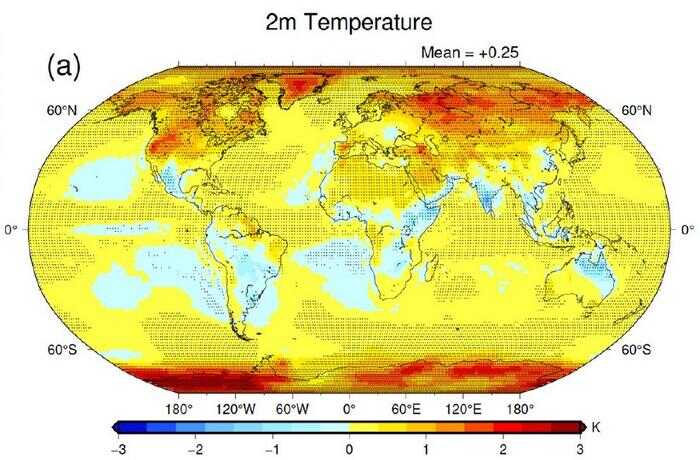
A depiction of the spatial distribution of the radiative impacts of surface changes induced by precipitation on the 2m above-surface temperature.A depiction of the spatial distribution of the radiative impacts of surface changes induced by precipitation on the 2m above-surface temperature.

Japan's supercomputing tech reveals insights into how precipitation affects the Arctic climate, energy balance

Supercomputing is a powerful tool for studying natural phenomena. Recent research by Associate Professor Takuro Michibata from Okayama University in Japan focuses on considering the radiative effects of precipitation (REP) in climate modeling. The study shows how REP impacts radiation budgets, hydrological cycles, and temperature and precipitation changes at global and regional scales.

Dr. Michibata used supercomputer algorithms to incorporate different precipitation and radiative calculation treatments. The study used three versions of the Japanese GCM, MIROC6, to investigate the impact of REP. The research revealed that radiative forcing influences not only radiation budgets but also local thermodynamic profiles, remote precipitation rates, and atmospheric circulation. The weakening of radiative cooling due to REP slows the hydrological cycle globally, especially in winter, leading to surface warming in the polar regions and an increase in average temperature.

The findings provide valuable insights into climate modeling and can help improve the accuracy of climate simulations. Understanding the role of REP can also assist in developing models for simulating the Arctic climate and its link to mid-latitude meteorology and weather. Overall, this study highlights the benefits of supercomputing in exploring the role of REP in Arctic amplification and energy budget and its potential to inform future climate responses and guide efforts to mitigate global warming.

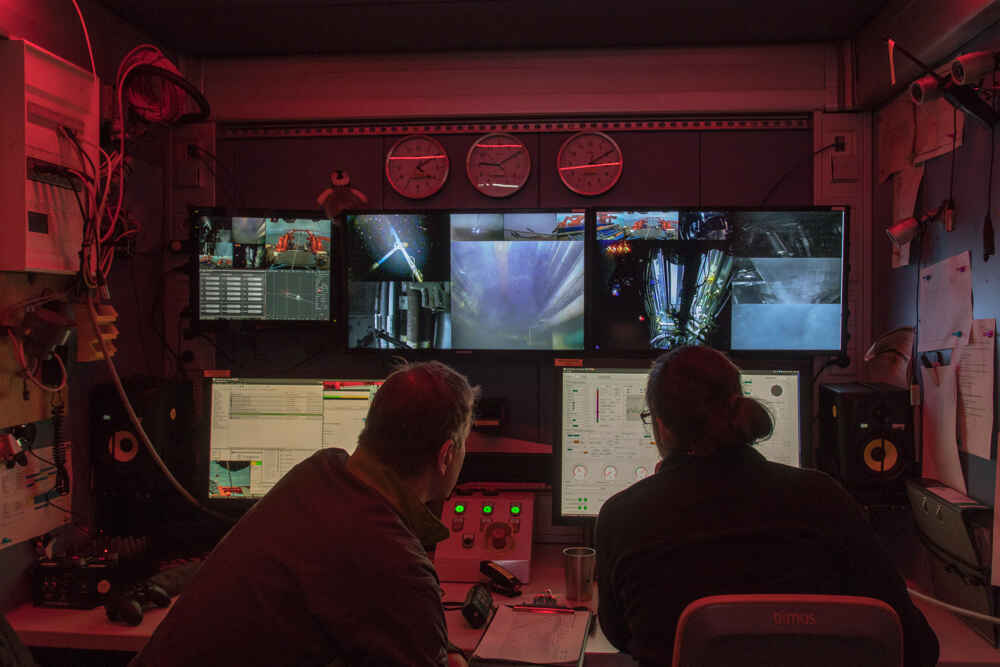
A photo of the control center of the MARUM-MeBo70 during the drilling of core PS104_21-3 (Photo: T. Ronge, IODP)

Antarctic ice sheet reveals secrets during supercomputer simulations, prompting concerns

The recent unveiling of groundbreaking insights into the formation and evolution of the Antarctic ice sheets has sparked concerns and contemplation over the future stability of Antarctica's icy expanse. The British Antarctic Survey (BAS) and the Alfred Wegener Institute Helmholtz Centre for Polar and Marine Research (AWI) collaborated to shed light on the origins of the East and West Antarctic ice sheets. Their efforts have raised critical questions about the precarious balance of our planet's climate system.

Researchers used unique geological samples and sophisticated supercomputer modeling to delve deep into the Antarctic past, meticulously dissecting the spatial and temporal nuances of the ice sheet's inception. The revelations challenge conventional wisdom and unravel the complexities of Antarctica's climatic history.

Of paramount significance is the revelation that the permanent glaciation of Antarctica commenced approximately 34 million years ago, marking a crucial juncture in Earth's climatic evolution. The supercomputer simulations revealed an intricate tale of ice sheet advancement from East Antarctica toward the West Antarctic coast over several million years.

Analysis of sediment core samples recovered from the depths of the Amundsen Sea in West Antarctica revealed that East Antarctica was the cradle of initial glaciation, serving as the birthplace of the continent's ice-covered landscape. Astonishingly, it was not until millions of years later that the icy tendrils of the advancing glaciation crept toward the western extremities of Antarctica, leaving a staggered mark on the continent's topography.

The implications of these findings echo concerns over the vulnerability of the West Antarctic Ice Sheet to climate change. The discovery that the formation of the West Antarctic Ice Sheet occurred under cooler conditions than previously hypothesized has raised alarm bells regarding its susceptibility to even marginal temperature elevations, fostering a sense of impending instability.

Supercomputer simulations have played an instrumental role in guiding researchers through the labyrinth of Antarctica's climatic past and potential future trajectories. By synthesizing diverse datasets on air and water temperatures, ice occurrence, and the interplay of climatic forces, these simulations have provided a nuanced understanding of how the Antarctic ice sheets responded to climatic drivers through time.

This newfound knowledge carries profound implications for the broader climate discourse, guiding the refinement of climate models and enriching our understanding of the intricate interactions between ice, ocean, and atmosphere. The scrutiny of the East and West Antarctic ice sheets' responses to external climate stimuli illuminates the intricacies of our planet's cryospheric dynamics and emphasizes the need for a holistic understanding of these systems for informed decision-making.

In light of the specter of a warming world, these findings call for a reevaluation of our approach towards Antarctic conservation and the preservation of our planet's cryospheric integrity. The international research consortium's efforts have broadened our understanding of Antarctica's climatic past and furnished invaluable insights pivotal for navigating the climatic challenges ahead.

In conclusion, the delicate dance between past, present, and future Antarctic ice sheets, unraveled through the lens of supercomputer modeling, underscores the imperative for concerted global action in safeguarding Antarctica's icy heritage. The journey from the dawn of the Antarctic ice sheets to the uncertainties of their future trajectories serves as a reminder of the fragility of our planet's polar realms and the pivotal role we play in shaping their destiny. The publication of the research findings invites us to ponder our climate legacies and fortify our resolve to steward Antarctica's icy expanse with vigilance, empathy, and unwavering dedication in the face of an uncertain climatic landscape.