

Chinese professor unveils an exciting vision for the advancement of intelligent supercomputing facilities

Enter the era of CoRE-learning

Have you ever thought about the untapped potential of computational resources in machine learning? Researchers at Nanjing University in China are exploring the impact of intelligent supercomputing facilities on machine learning performance. The groundbreaking research by Prof. Zhi-Hua Zhou introduces the concept of CoRE (COmputational Resource Efficient)-learning, which aims to utilize computational resources effectively.

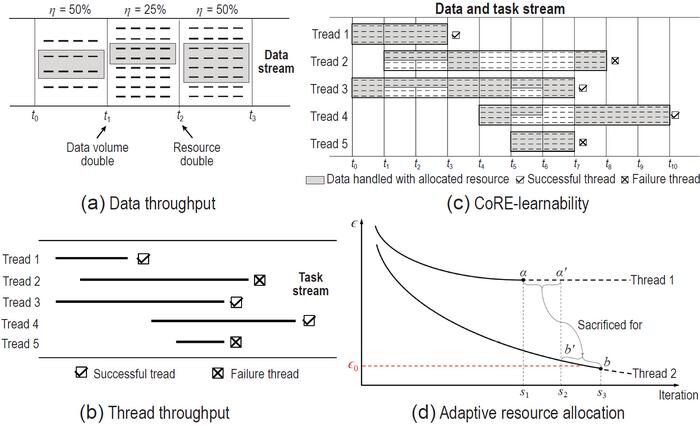
Traditionally, the success of machine learning applications has been attributed to algorithms and data. However, Prof. Zhou emphasizes the often-overlooked influence of computational resources. In an attempt to bridge this gap, the CoRE-learning framework comes to light. This innovative approach introduces the concept of "machine learning throughput," allowing researchers to study the influence of computational resources on machine learning performance.

One key component of CoRE-learning is "time-sharing." This concept revolutionized computer systems, allowing them to serve multiple user tasks. Prof. Zhou observes that current intelligent supercomputing facilities tend to operate in an "elusive" style, where predetermined amounts of computational resources are allocated to specific tasks. This approach overlooks the possibility of wastage due to overallocation or the potential failure of a task due to underallocation.

CoRE-learning takes a step further by considering a task bundle—a collection of task threads during a specified period. Here, the importance of a "scheduling" mechanism becomes prominent, intelligently allocating resources to different task threads in real time. This sophisticated approach ensures not only hardware efficiency but also user efficiency, heralding a new era of intelligent supercomputing.

The CoRE-learning theoretical framework represents a breakthrough as it considers computational resource supply in machine learning performances within learning theory for the first time. By shedding light on power consumption reduction for training machine learning models, this research addresses a concerning issue for sustainable development. As the demand for machine learning grows, efficiency and resource optimization become increasingly crucial.

The findings, published in the National Science Review, pave the path for transforming the current "elusive" resource usage style in intelligent supercomputing facilities into a more efficient "time-sharing" style. This transition not only promises exciting advancements in machine learning but also holds the potential to reduce power consumption and contribute to sustainable development.

The groundbreaking research by Prof. Zhi-Hua Zhou and his team at Nanjing University promises a future where intelligent supercomputing facilities facilitate smarter resource allocation. As we embark on this journey, the fusion of CoRE-learning and cutting-edge technologies opens doors to unrivaled potential in the realm of computational resources.

Are we on the cusp of a new age of computing efficiency? Only time, and the curiosity of brilliant minds, will reveal the full extent of what lies ahead.
Simulator predicts the fate of CO2 underground

Advancing Green Technology for a Sustainable Future

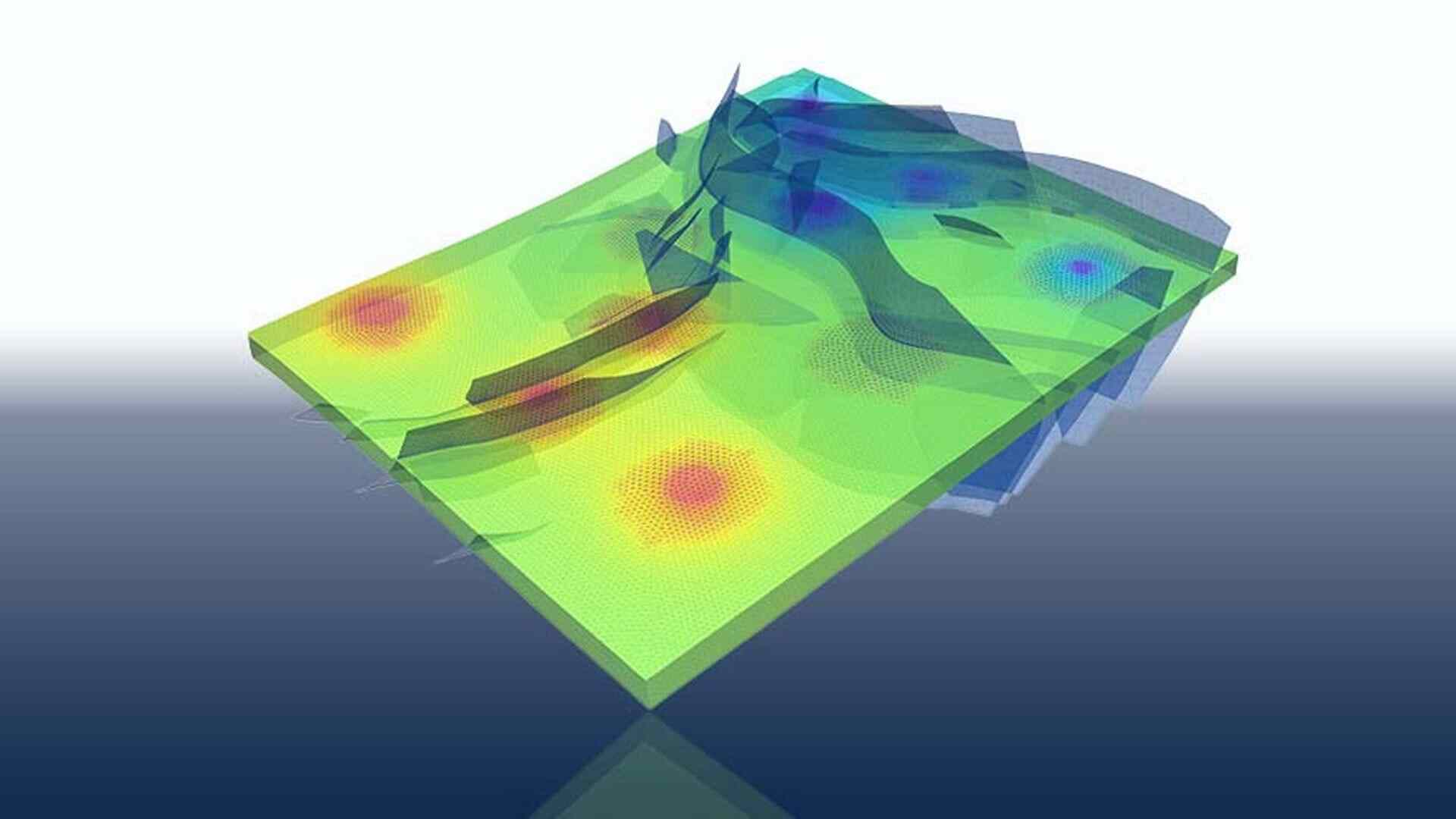
Chemistry researchers at the Technical University of Denmark (DTU) have unveiled a groundbreaking development in the realm of carbon storage—the expansion of a sophisticated simulator capable of predicting the behavior of injected and stored CO2 underground. This innovative endeavor holds promise for enhancing our understanding of underground carbon storage, addressing vital considerations such as geochemical reactions, as well as the geological and chemical fate of CO2 over extended periods.

The crucial ability to make precise predictions regarding the geological conditions and the behavior of CO2 in subsurface environments is of paramount importance for the successful implementation of underground carbon storage. To meet this demand for refined analyses, the chemistry researchers at DTU have set out to augment the GEOS carbon storage simulator with expert knowledge on geochemical reactions, thereby enriching its predictive capabilities.

The GEOS carbon storage simulator, initially developed through collaborative efforts involving Lawrence Livermore National Laboratory, Stanford University, and TotalEnergies, is being enhanced with the addition of advanced algorithms that calculate the behavior of CO2 under diverse temperature and pressure conditions, as well as its interactions with other substances present in the subsurface.

Associate Professor Wei Yan, who leads DTU’s contribution to this pioneering project, underlined the significance of this expansion, stating, "In this project, we can contribute algorithms that calculate how CO2 will behave under different temperatures, pressures, and in the encounter with other substances in the subsurface, such as salty water, minerals, or hydrocarbons."

The development of these sophisticated simulations forms part of the extensive green partnership, INNO-CCUS, which is supported by the Innovation Fund Denmark. Through this collaboration, the research team aims to predict potential adverse chemical reactions that may arise during CO2 injection, offering the invaluable insight necessary to assess the viability and sustainability of proposed carbon storage sites.

The simulations also hold the potential to forecast the underground spread and stability of injected CO2 over an extended period—extending to a few hundred years—providing essential knowledge that can influence the long-term containment and effectiveness of carbon storage initiatives. This information is indispensable for ensuring the secure and enduring sequestration of CO2, aligning with the core objectives of carbon storage technologies.

The research team at DTU has set a vigorous timeline of up to 2027 for the development of the simulation program, which is anticipated to be released as an accessible and free tool for use by stakeholders seeking to make informed decisions regarding future carbon storage locations.

As the world continues to seek sustainable and innovative solutions to mitigate the impact of greenhouse gas emissions, the advancement of supercomputing simulations and predictive tools for underground carbon storage signifies a significant leap forward in our collective efforts towards a greener and more sustainable future.

New shapes of photons open doors to advanced optical technologies

The University of Twente in the Netherlands has made significant progress in studying photons, shedding light on the diverse and controllable nature of these elementary particles that make up light. In their paper titled "Symmetries and wave functions of photons confined in three-dimensional photonic band gap superlattices," the researchers provide insights that have wide-ranging applications in fields from smart LED lighting to quantum computing and nano-sensors.

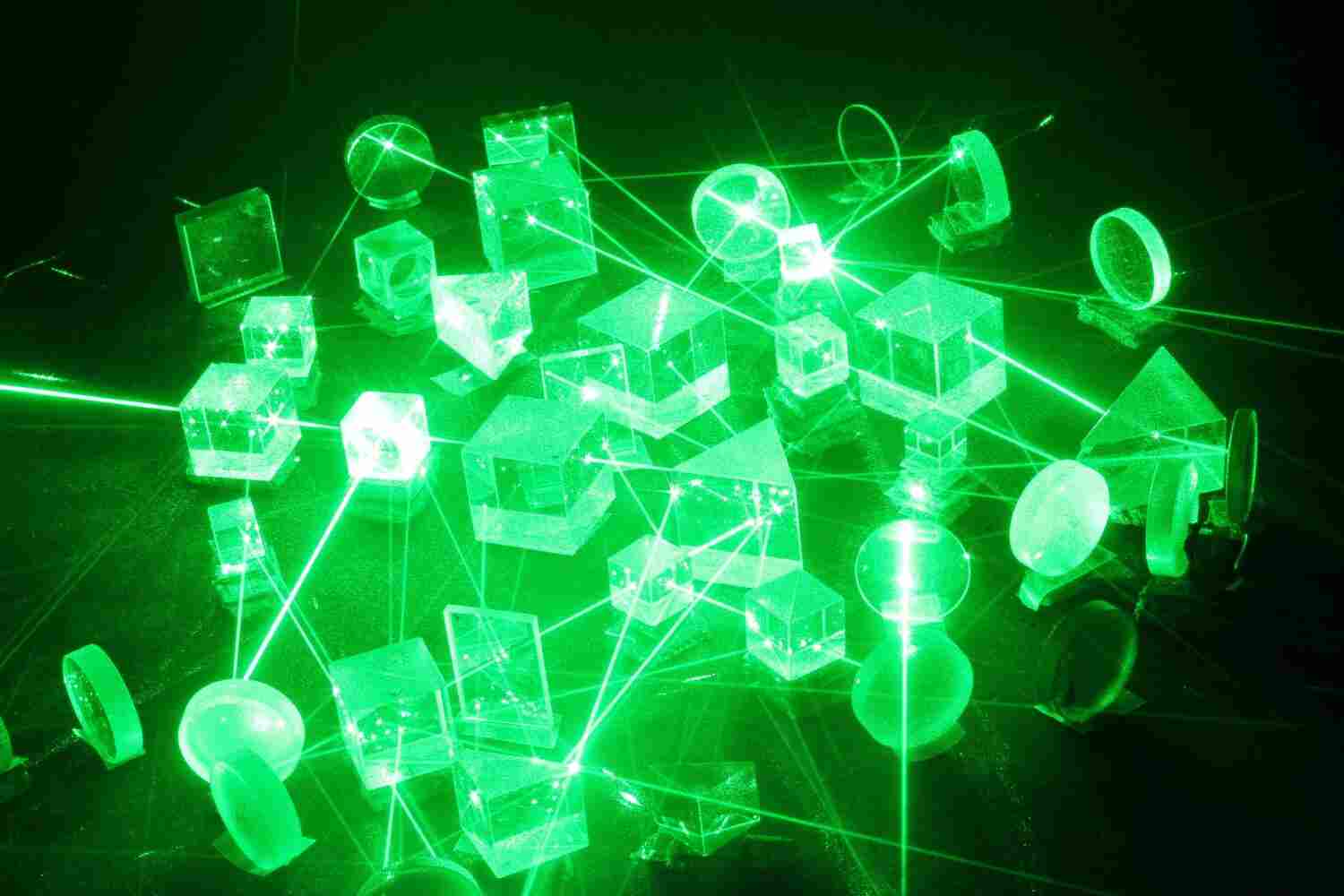
In contrast to electrons, which orbit around atomic nuclei in predictable orbitals, photons exhibit a remarkable diversity of behaviors and can be easily manipulated. By carefully designing specific materials, the researchers discovered that they could create and control photonic orbitals with an unprecedented variety of shapes and symmetries. This breakthrough paves the way for the development of advanced optical technologies and quantum computing applications.

First author Marek Kozon explains, "In textbook chemistry, the electrons always orbit around the tiny atomic core at the center of the orbital. So an electron orbital's shape cannot deviate much from a perfect sphere. With photons, the orbitals can have whatever wild shape you design by combining different optical materials in designed spatial arrangements."

Physicists Vos and Lagendijk further emphasize the significance of this discovery by highlighting the ease of designing innovative nanostructures with novel photonic orbitals compared to modifying atoms to realize novel electronic orbitals and chemistry. This perspective underscores the practical implications of these findings in the realm of advanced optical technologies.

The study involves a computational investigation into how photons behave when confined within a nanostructure consisting of tiny pores, creating a photonic crystal. By intentionally introducing defects in these cavities, a complex superstructure is formed that isolates the photonic states from the surrounding environment. The researchers found that structures with smaller defects exhibit greater enhancement of the local density of optical states, making them more suitable for integrating quantum dots and creating networks of single photons. This enhancement holds paramount importance for applications in cavity quantum electrodynamics, efficient lighting, quantum computing, and sensitive photonic sensors.

The comprehensive work conducted by Marek Kozon, Ad Lagendijk, Matthias Schlottbom, Jaap van der Vegt, and Willem Vos from the University of Twente has been instrumental in advancing our understanding of photonic orbitals and their applications. The research has been supported by several programs and institutes, including the NWO-CSER, NWO-JCER, NWO-GROOT, NWO-TTW Perspectief program, and the MESA+ Institute for Nanotechnology.

With the publication of this groundbreaking research, the University of Twente has solidified its position at the forefront of photonics and is poised to drive future innovation in advanced optical technologies.