

Rice wins NIH grant that boosts computational search for cancer drugs

Computer scientist Lydia Kavraki of Rice University's Brown School of Engineering has won a prestigious National Institutes of Health U01 grant to develop a new approach to model and analyze protein-ligand interactions in cancer research.

The end goal is to create a proteomics toolkit, PROTEAN-CR, focused on the structural analysis of protein-ligand interactions. Researchers will use PROTEAN-CR to understand key biological mechanisms of cancer as well as to suggest novel cancer therapies. Pilot projects will include peptide-based cancer vaccination and analysis of mutations in the context of T-cell-based immunotherapy.

The three-year, $1.2 million grant from the National Cancer Institute (NCI) will advance Kavraki's ongoing collaboration with co-investigator Gregory Lizee at the University of Texas MD Anderson Cancer Center. Lydia Kavraki is Rice University's Noah Harding Professor of Computer Science, a professor of bioengineering, mechanical engineering and electrical and computer engineering, and director of Rice's Ken Kennedy Institute.

In cancer, proteins can suffer modifications that favor the maintenance and proliferation of malignant cells. One way to fight cancer is using ligands with anti-tumor properties to inhibit these proteins. But the discovery of molecules with anticancer properties isn't easy. There are hundreds of thousands of different proteins and possible ligands to assess. Proteins and ligands can assume different three-dimensional conformations, and even the same protein can have multiple mutations; both these issues affect protein-ligand binding. Kavraki said PROTEAN-CR is needed because of these challenges and a persistent knowledge gap with structural analyses of protein-ligand interactions.

Kavraki, Rice's Noah Harding Professor of Computer Science, a professor of bioengineering, mechanical engineering and electrical and computer engineering, and director of the Ken Kennedy Institute said the long-term goal of the U01 grant is to enable a broad structural analysis of protein-ligand interactions so cancer researchers can mix, match and test small anti-tumor molecules for personalized cancer therapies.

PROTEAN-CR will also allow researchers to manipulate the 3D structures of known molecules and their possible forms, making it easier for researchers to screen possible protein-ligand complexes and predict how they will bind to and destroy tumor cells. To assess the best binding modes, machine learning methods will be used to create new scoring functions. PROTEAN-CR also will be linked to publicly available biological databases to retrieve updated information on protein mutations and modifications.

Kavraki said her unified data science-inspired approach will accelerate cancer research by complementing wet-lab and clinical studies. Additional collaborators include Dinler Antunes at the University of Houston and Jin Wang at Baylor College of Medicine.

"There is a real gap in incorporating large-scale structural analysis to understand the role of proteins and protein-ligand interactions in complex diseases such as cancer," Kavraki said. "Our work will fill this gap and complement the tools that are currently in development through NCI's informatics program."

Kavraki's lab has already developed some PROTEAN-CR core functions through a prototype web server being tested by MD Anderson researchers for drug discovery and immunotherapy applications. Since March 2017, it has had more than 9,752 unique users from 109 countries.

Marvell launches 1.6T Ethernet PHY with 100G PAM4 I/Os in 5nm for cloud data centers

Marvell has introduced the industry's first 1.6T Ethernet PHY with 100G PAM4 electrical input/outputs (I/Os) in 5nm. The demand for increased bandwidth in the data center to support massive data growth is driving the transition to 1.6T (Terabits per second) in the Ethernet backbone. 100G serial I/Os play a critical role in the cloud infrastructure to help move data across compute, networking, and storage in a power-efficient manner. The new Marvell Alaska C PHY is designed to accelerate the transition to 100G serial interconnects and doubles the bandwidth speeds of the previous generation of PHYs to bring scalability for performance-critical cloud workloads and applications such as artificial intelligence and machine learning.

Marvell's 1.6T Ethernet PHY solution, the 88X93160, enables next-generation 100G serial-based 400G and 800G Ethernet links for high-density switches. The doubling of the signaling rate creates signal integrity challenges, driving the need for retimer devices for high port count switch designs. It's critical that retimer and gearboxes used for these applications are extremely power efficient. Implemented in the latest 5nm node, the Marvell 800GbE PHY provides a 40% savings in I/O power compared to the existing 50G PAM4 based I/Os.  Webp

"100G serial electrical signaling is vitally important because it serves as the foundational speed for the next generation of high-speed networks," said Alan Weckel, founder and technology analyst of 650 Group. "Challenges in signal integrity typically arise as I/O speeds increase. As the industry transitions to 100G serial electrical signaling on high-density switches and optics, Marvell's 1.6T PHY is the only solution that's available in the market today to support this transition."

Marvell's 88X93160 is the industry's first PHY device fully compliant with IEEE's 802.3ck standards for 100G serial I/Os and the Ethernet Technology Consortium's 800GbE specifications. The device supports Gearboxing functionality which helps data center operators get the full bandwidth capabilities of the switch ASICs with 100G serial I/Os while interfacing with existing 50G PAM4 based 400G optical modules.

"Data center demand for 400GbE and beyond is experiencing exponential growth," said Achyut Shah, senior vice president, and general manager of Marvell's PHY business unit. "We are very proud to offer the industry's first dual 1.6T PHY with 100G PAM4 I/Os designed for cloud data centers. Our 112G SerDes in 5nm boasts industry-leading power and greatly enhances the value that high-speed Ethernet brings to cloud data center applications."

With the introduction of the new PHY, Marvell is further extending its leadership in the high-speed Retimer and Gearbox segment with a broad portfolio spanning speeds from 10GbE to 800GbE and support for MACsec encryption and Class C compliant IEEE1588 PTP timestamping. With support for Ethernet speeds up to 800GbE, the new 88X93160 enables customers to build systems that comply with the latest IEEE and Ethernet Technology Consortium standards.

The Marvell 1.6T PHY incorporates the company's 112G 5nm SerDes solution that was announced in November of last year, offering breakthrough performance with the ability to operate at 112G PAM4 across channels with >40dB insertion loss. This 112G 5nm SerDes technology will be designed in Marvell's industry-proven Prestera switch portfolio across data center, enterprise, and carrier segments. It has also been adopted for use by multiple customers of Marvell's 5nm ASIC offering in high-performance infrastructure applications across a variety of markets.

NC State researchers design simulation tool to predict disease, pest spread

North Carolina State University researchers have developed a supercomputer simulation tool to predict when and where pests and diseases will attack crops or forests, and also test when to apply pesticides or other management strategies to contain them.

“It’s like having a bunch of different Earths to experiment on to test how something will work before spending the time, money, and effort to do it,” said the study’s lead author Chris Jones, a research scholar at North Carolina State University’s Center for Geospatial Analytics.

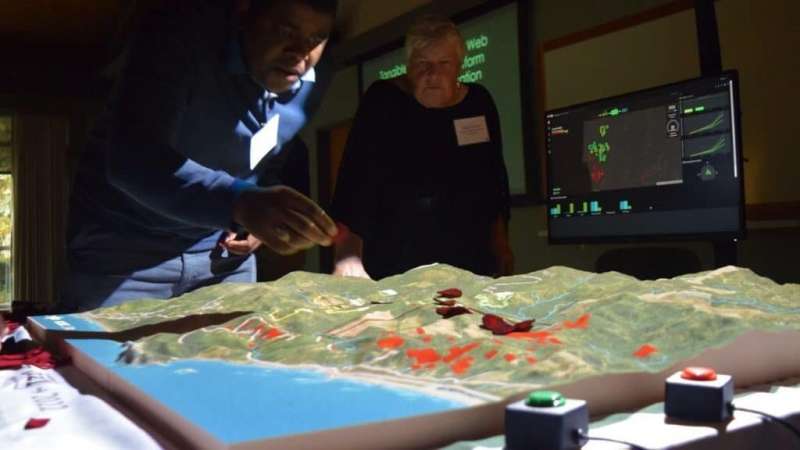
In the journal Frontiers in Ecology and the Environment, researchers reported on their efforts to develop and test the tool, which they called “PoPS,” for the Pest or Pathogen Spread Forecasting Platform. Working with the U.S. Department of Agriculture’s Animal and Plant Health Inspection Service, they created the tool to forecast any type of disease or pathogen, no matter the location. Credit: Vaclav (Vashek) Petras.

Their supercomputer modeling system works by combining information on climate conditions suitable for the spread of a certain disease or pest with data on where cases have been recorded, the reproductive rate of the pathogen or pest, and how it moves in the environment. Over time, the model improves as natural resource managers add data they gather from the field. This repeated feedback with new data helps the forecasting system get better at predicting future spread, the researchers said.

“We have a tool that can be put into the hands of a non-technical user to learn about disease dynamics and management, and how management decisions will affect spread in the future,” Jones said.

The tool is needed as state and federal agencies charged with controlling pests and crop diseases face an increasing number of threats to crops, trees, and other important natural resources. These pests threaten food supplies and biodiversity in forests and ecosystems.

“The biggest problem is the sheer number of new pests and pathogens that are coming in,” Jones said. “State and federal agencies charged with managing them have an ever-decreasing budget to spend on an ever-increasing number of pests. They have to figure out how to spend that money as wisely as possible.”

Already, researchers have been using PoPS to track the spread of eight different emerging pests and diseases. In the study, they described honing the model to track sudden oak death, a disease that has killed millions of trees in California since the 1990s. A new, more aggressive strain of the disease has been detected in Oregon.

They are also improving the model to track spotted lanternfly, an invasive pest in the United States that primarily infests a certain invasive type of tree known as “tree of heaven.” Spotted lanternfly has been infesting fruit crops in Pennsylvania and neighboring states since 2014. It can attack grape, apple, and cherry crops, as well as almonds and walnuts.

The researchers said that just as meteorologists incorporate data into models to forecast weather, ecological scientists are using data to improve forecasting of environmental events – including pest or pathogen spread.

“There’s a movement in ecology to forecast environmental conditions,” said Megan Skrip, a study co-author and science communicator at the Center for Geospatial Analytics. “If we can forecast the weather, can we forecast where there will be an algal bloom, or what species will be in certain areas at certain times? This paper is one of the first demonstrations of doing this for the spread of pests and pathogens.”

The study, “Iteratively Forecasting Invasions with PoPS and a Little Help From Our Friends,” was published June 3, 2021, in the journal Frontiers in Ecology and the Environment. It was authored by Chris Jones, Shannon Jones, Anna Petrasova, Vaclav Petras, Devon Gaydos, Megan Skrip, Yu Takeuchi, Kevin Bigsby, and Ross Meentemeyer. It was partially funded by the National Science Foundation as part of the NSF-NIH Ecology and Evolution of Infectious Diseases Program, as well as Google Cloud and NVIDIA.