

Danes minimize phase noise using ML to improve optical systems

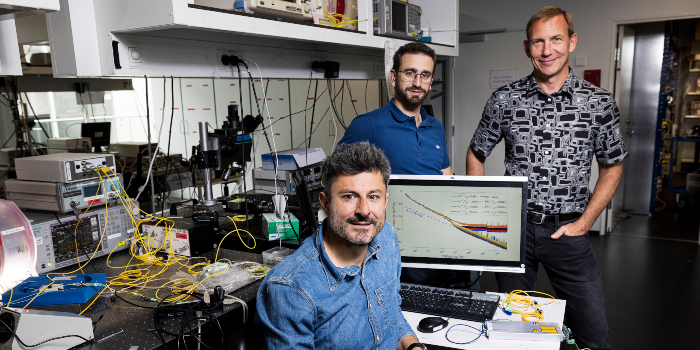
Ultra-precise lasers can be used for optical atomic clocks, quantum supercomputers, power cable monitoring, and much more. But all lasers make noise, which researchers from DTU Fotonik want to minimize using machine learning. Professor Darko Zibar lab
The perfect laser does not exist. There will always be a bit of phase noise because the laser light frequency moves back and forth a little. Phase noise prevents the laser from producing light waves with the perfect steadiness that is otherwise a characteristic feature of the laser.

Most of the lasers we use daily do not need to be completely precise. For example, it is of no importance whether the frequency of the red laser light in the supermarket barcode scanners varies slightly when reading the barcodes. But for certain applications—for example in optical atomic clocks and optical measuring instruments—the laser must be stable so that the light frequency does not vary.

One way of getting closer to an ultra-precise laser is if you can determine the phase noise. This may enable you to find a way of compensating for it so that the result becomes a purer and more accurate laser beam.

This is precisely what Professor Darko Zibar from DTU Fotonik is working on. He heads a research group called Machine Learning in Photonic Systems, where the goal is to develop and utilize machine learning to improve optical systems. Most recently, researchers from the group have characterized the noise from a laser system from the Danish company NKT Photonics with unprecedented precision.

“The question is how to measure that noise, and here we’ve developed the most accurate method available. We can measure much more precisely than others—our method has record-high sensitivity,” says Darko Zibar.

He has developed an algorithm that can analyze and find laser light patterns using machine learning, where a model for the noise is constantly being improved. On this basis, the group of researchers hopes to be able to develop a form of intelligent filter that continuously cleans the laser beam of noise.

Quantum mechanics set the limit

This is something that NKT Photonics can utilize in their optical measuring instruments, says Senior Researcher Poul Varming and his colleague Jens E. Pedersen, who has worked with the DTU researchers:

“We work with fiber lasers that emit constant light, and where the noise level is particularly low. Our most important task is to limit the noise, and—in terms of measuring technology—we had difficulty measuring noise at very high frequencies,” says Poul Varming and continues:

“But then we got in touch with Darko Zibar and his group, and we produced some lasers for them. The researchers were able to measure the noise up to very high frequencies, and the results actually contradict the established understanding of laser noise.”

With the new, improved measuring method, the researchers could thus show that the theoretical basis for calculating the noise was not quite in place. With the more detailed knowledge of the noise, engineers can better identify the parts of the laser system from which the noise emanates so that they know where to make improvements. The hope is that the machine learning system can also be used to attenuate the noise in real-time.

You cannot eliminate noise, because the laws of quantum mechanics set a very fundamental limit to how good a laser can be. Quantum noise is impossible to get rid of, but now it can at least be measured, says Darko Zibar:

“We can measure in the frequencies in which quantum noise is dominant. In this way, we can determine the fundamental noise and find out how much it contributes to the total noise. Once we know the fundamental limit for how good the laser can be, we can then figure out how to suppress the rest of the noise.”

“This is our next project—how we first identify and then suppress the noise, to obtain a laser that is only limited by quantum noise. This will enable us to produce some of the best lasers in the world.”

Optical cable feels vibrations

When the laser noise is known, it can be combated according to roughly the same principle used in noise-reducing headphones. Here, microphones pick up sound from the surroundings, and a signal is then sent in counter phase to the speakers so that the noise and the new signal eliminate each other, and the result is silence.

If the technique can be used to improve lasers by eliminating a large part of the noise so that the light frequency virtually does not vary, optical measuring instruments can have greater sensitivity and a longer range. At NKT Photonics, the technology can initially be used for distributed acoustic sensing, where a fiber optic cable is used as a sensor for measuring tiny vibrations. Distributed acoustic sensing can be used for various forms of monitoring. For example, an optical fiber can be laid along an oil or gas pipeline to ensure ultrafast detection of any ruptures. Or the technology can be used to monitor the fence around an airport or at a border—if a hole is cut in the fence, or someone tries to climb over it—the technology can not only signal what has happened but also pinpoint where it has occurred.

Such an optical monitoring system functions by a laser beam being sent into the optical fiber. During the process, a bit of the light is reflected by tiny impurities in the fiber. However, if the fiber is affected along the way, the properties of the reflected light also change, which is measurable. Even very faint vibrations can be picked up and located with great accuracy.

Monitoring of cables to the energy islands

If the new technology from DTU provides more effective laser light noise attenuation, distributed acoustic sensing can be used over somewhat longer distances than today. Both the sensitivity and the range of distributed acoustic sensing can be increased with the more precise lasers, and this may—for example—be needed when electricity is to be transported from the coming energy islands in the North Sea to the mainland. Here, the power cables can be monitored using the technology, so that any ruptures can be detected and repaired quickly. Today, it is a challenge that the range of the current systems is limited to a maximum of 50 km, and the distance to the energy island will be somewhat longer.

Poul Varming also mentions that several quantum technologies require extremely precise lasers. With noise-attenuated lasers, it becomes easier to develop ultra-precise optical atomic clocks and certain types of quantum computers, where lasers are used to cool individual atoms to close to absolute zero. The new generation of laser systems that may be the result of the researchers’ and engineers’ work thus offers great potential.

Spanish team proposes a new systems immunology approach for COVID-19

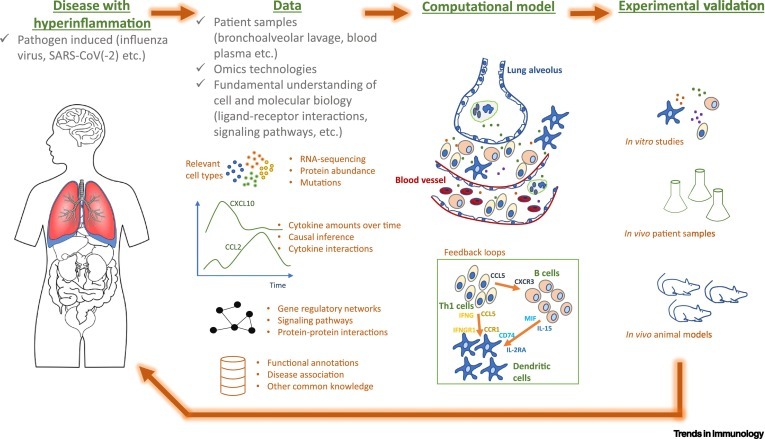
Thanks to the large amount of -omics data becoming increasingly available, sophisticated computational models are developed for new fields such as immunology and the predictions they generate will help identify key molecules in inflammatory processes. The application of such computational systems biology approaches to immunology could lead to novel and more efficacious therapeutic strategies. gr1 0add4

“The recent work of our two teams on the modulation of hyper inflammation in COVID-19 illustrates really well how the synergy between experimental and computational researchers can accelerate the discovery of molecules of interest,” explains Prof. Antonio Del Sol, head of the Computational Biology groups at the LCSB and CIC bioGUNE. “By using computational modeling to inform traditional experimental approaches, we confirmed in a few months a potential target for medical intervention in COVID-19 patients. This is indeed very promising.”

Understanding the “cytokine storm” in COVID-19

In recent studies, researchers from the LCSB and CIC bioGUNE - on the computational side - and from the Kanneganti Lab at St. Jude Children’s Research Hospital - on the experimental side - focused on the mechanisms underlying the hyperinflammatory response in COVID-19. Hyperinflammation is caused when the immune response is amplified and maintained by positive feedback loops above the level needed to control the disease. Kanneganti’s lab recently found that in COVID-19, as well as other diseases, this hyperinflammatory “cytokine storm” could be mechanistically defined as a life-threatening condition caused by excessive production of proinflammatory proteins, cytokines, mediated by a form of inflammatory cell death called PANoptosis. In COVID-19, PANoptosis and the concomitant cytokine storm cause organ damage and increase the severity of the symptoms. This makes treatment challenging, as therapeutics need to alleviate inflammation while maintaining the patient’s ability to clear the virus through cell death and other pathways. It is, therefore, crucial to identify the molecules that amplify and maintain the inflammatory response. It is the first step towards new and putative life-saving therapeutic strategies.

Two studies identify protein TLR2 as a target

In a first study published in Science Advances, researchers from the Computational Biology groups of the LCSB and CIC bioGUNE used a novel computational method to analyze over 1700 cell-cell interactions and create a comprehensive map of the immune response in the lungs of COVID-19 patients. Their model identified Toll-like Receptor 2 (TLR2) as a molecule that might be able to modulate the inflammatory response, predicting that the inhibition of this protein could disrupt up to 75% of the feedback loops without interfering with the general immune response. The study put TLR2 on the map as a potential target for medical intervention in severe COVID-19 cases.

Separately, the team of Dr. Thirumala-Devi Kanneganti from the Department of Immunology of St Jude Children’s Research Hospital published a study in Nature Immunology that independently suggested that TLR2 might act as a key modulator of COVID-19-induced hyperinflammation. Using in vitro and in vivo experiments, the researchers found that increased expression of TLR2 in the blood of patients with COVID-19 correlated with disease severity and that, upon infection by the virus, TLR2 mediated the production of cytokines. The study also showed that treatment of transgenic mice with a TLR2 inhibitor protected the animals against SARS-CoV-2-mediated inflammatory cytokine production and mortality. “Experimental validation of computationally derived biomarkers is critical to provide multiple lines of evidence to support the proof-of-concept for the utility of targeting TLR2 to modulate inflammation. It is imperative to combine computational and experimental approaches to understand mechanisms involved in inflammatory processes,” underlines Dr. Kanneganti.

A coordinated effort to achieve full potential

This example is far from the only one: In a growing number of studies, systems immunology approaches are being successfully employed to help predict novel therapeutic targets for modulating uncontrolled immune responses. “Computational modeling and experimental validation will become key partnerships in biomedical research and should be systematically developed to achieve their full potential,” details Dr. Ilya Potapov, member of the Computational Biology group at the LCSB.

In their recent paper published in November in Trends in Immunology, the three co-authors mention the challenges researchers will have to tackle when building computational models in the context of hyper inflammation – such as technological limitations, shortage of good experimental models, and mutual unawareness – and postulate that experimental and computational efforts should be synergized from the onset. “The technological advances have set the stage for us. Now, we need to work together to build accurate computational models, define the necessary data, and design experiments to validate the computational predictions. This is the key to designing novel and more efficacious therapeutic strategies,” concludes Prof. Del Sol.

OSU research enables a key step toward personalized medicine by modeling biological systems

A new study by the Oregon State University College of Engineering shows that machine learning techniques can offer powerful new tools for advancing personalized medicine, care that optimizes outcomes for individual patients based on unique aspects of their biology and disease features. Brian D. Wood  CREDIT Johanna Carson, OSU

The research with machine learning, a branch of artificial intelligence in which computer systems use algorithms and statistical models to look for trends in data, tackles long-unsolvable problems in biological systems at the cellular level, said Oregon State’s Brian D. Wood, who conducted the study with then OSU Ph.D. student Ehsan Taghizadeh and Helen M. Byrne of the University of Oxford.

“Those systems tend to have high complexity – first because of the vast number of individual cells and second, because of the highly nonlinear way in which cells can behave,” said Wood, a professor of environmental engineering. “Nonlinear systems present a challenge for upscaling methods, which is the primary means by which researchers can accurately model biological systems at the larger scales that are often the most relevant.”

A linear system in science or mathematics means any change to the system’s input results in a proportional change to the output; a linear equation, for example, might describe a slope that gains 2 feet vertically for every foot of horizontal distance.

Nonlinear systems don’t work that way, and many of the world’s systems, including biological ones, are nonlinear.

The new research, funded in part by the U.S. Department of Energy and published in the Journal of Computational Physics, is one of the first examples of using machine learning to address issues with modeling nonlinear systems and understanding complex processes that might occur in human tissues, Wood said.

“The advent of machine learning has given us a new tool in our arsenal to solve problems we could not solve before,” he explained. “While the tools themselves are not necessarily new, the particular applications we have are very different. We are beginning to apply machine learning in a more constrained way, and this is allowing us to solve physical problems we had no way of solving before.”

In modeling cellular activity within an organ, it is not possible to individually model each cell in that organ – a cubic centimeter of tissue may contain a billion cells – so researchers rely on what’s known as upscaling.

Upscaling seeks to decrease the data required to analyze or model a particular biological process while maintaining the fidelity – the degree to which a model accurately reproduces something – of the core biology, chemistry, and physics occurring at the cellular level.  

Biological systems, Wood notes, resist traditional upscaling techniques, and that’s where machine learning methods come in.

By reducing the information load for a very complicated system at the cellular level, researchers can better analyze and model the impact or response of those cells with high fidelity without having to model each one. Wood describes it as “simplifying a computational problem that has tens of millions of data points by reducing it to thousands of data points.”

The new approach could pave the way to potential patient treatments based on numerical model outcomes. In this study, researchers were able to employ machine learning and develop a novel method to resolve classic nonlinear problems in biological and chemical systems.

“Our work capitalizes on what is called deep neural networks to upscale the nonlinear processes found in transport and reactions within tissues,” Wood said.

Wood is collaborating on another research project employing machine learning techniques to model blood flow through the body.

“The promises of individualized medicine are rapidly becoming a reality,” he said. “The combination of multiple disciplines – such as molecular biology, applied mathematics, and continuum mechanics – are being combined in new ways to make this possible.  One of the key components of this will certainly be the continuing advances in machine learning methods.”