Unveiling the potential of machine learning in earthquake forecasting

In an era marked by the continual pursuit of scientific advancement, researchers at the University of Alaska Fairbanks have unveiled a groundbreaking method that holds the promise of providing months' worth of warning before major earthquakes strike. This innovative approach spearheaded by research assistant professor Társilo Girona of the UAF Geophysical Institute, showcases the transformative power of machine learning in the realm of earthquake prediction.

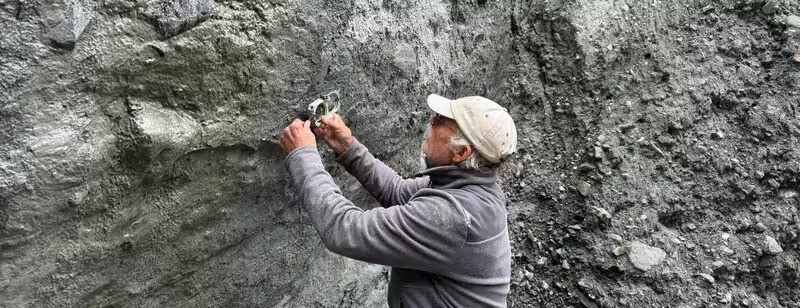
Girona, a distinguished geophysicist and data scientist delves into the precursory activity of volcanic eruptions and earthquakes. The core of their detection method lies within a sophisticated application of machine learning, a cutting-edge statistical technique that has the potential to identify critical precursors to large-magnitude earthquakes by analyzing datasets derived from earthquake catalogs.

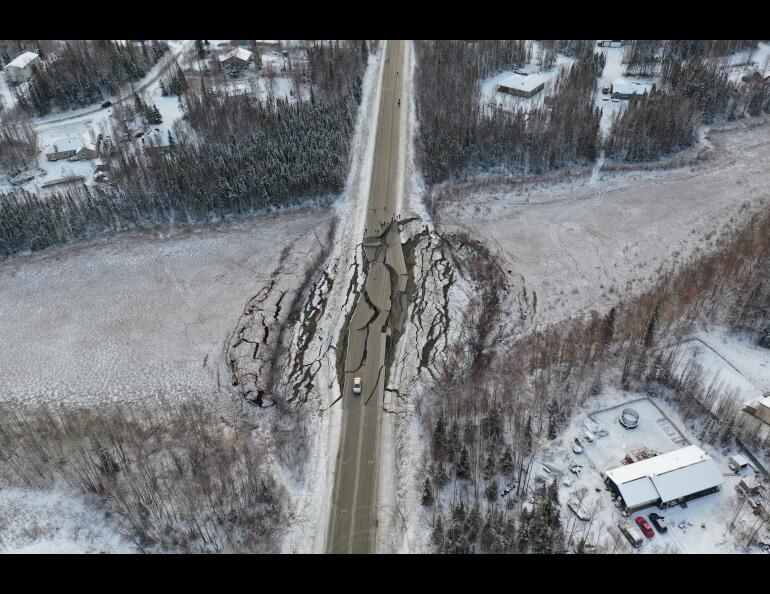
Through the development of a computer algorithm adept at discerning abnormal seismic activity, Girona focused their inquiry on two seismic events of significant magnitude: the 2018 Anchorage earthquake and the 2019 Ridgecrest earthquake sequence in California. Remarkably, their findings unveiled a compelling pattern of abnormal low-magnitude regional seismicity occurring approximately three months before each major earthquake, covering substantial areas of Southcentral Alaska and Southern California.

Their study underscores that the unrest preceding major earthquakes is predominantly captured by seismic activity with a magnitude below 1.5, a pivotal insight that sheds light on a potential geologic cause for this precursory activity: an increase in pore fluid pressure within faults. This rise in pore fluid pressure, altering the mechanical properties of faults, can lead to variations in the regional stress field, which the researchers propose may control the abnormal, low-magnitude seismicity observed before major earthquakes.

Girona emphasizes the profound impact of machine learning on earthquake research, portraying it as an invaluable tool that can glean vital insights from the vast datasets generated by modern seismic networks. By leveraging advancements in machine learning and supercomputing, researchers can unearth meaningful patterns that might serve as early indicators of impending seismic events, thereby heralding a transformative role in advancing our understanding of earthquake dynamics.

While the promise of this method is undeniable, Girona highlights the need for cautious validation and testing in near-real-time scenarios to address potential challenges in earthquake forecasting. They stress the importance of training the algorithm with historical seismicity data specific to the region of interest before its deployment, as producing reliable earthquake forecasts carries ethical and practical considerations that must be navigated with utmost care.

As we stand on the brink of a new chapter in earthquake forecasting, propelled by the fusion of machine learning and seismic research, the potential for preemptive warnings of major seismic events offers hope for saving lives and mitigating economic losses. The intricate dance between technological advancements and ethical considerations underscores the complexity of this endeavor, weaving a narrative that balances the pursuit of knowledge with the imperative of safeguarding communities against the unpredictable forces of nature.
In the acuity of this scientific revelation lies a beacon of possibility, illuminating a path where the fusion of human ingenuity and technological prowess offers a glimpse into a future where the once-unfathomable realms of earthquake forecasting may yet be rendered less mysterious and more manageable.

Satellite Φsat-2: Elevating Earth observation with the power of AI

In a significant advancement for Earth observation, ESA's groundbreaking cubesat, Φsat-2, has ushered in a new era of using artificial intelligence (AI) to revolutionize how we observe our planet from space. This exciting milestone signals a future where technology and compassion work together to protect our world and its natural wonders with unparalleled efficiency and precision.

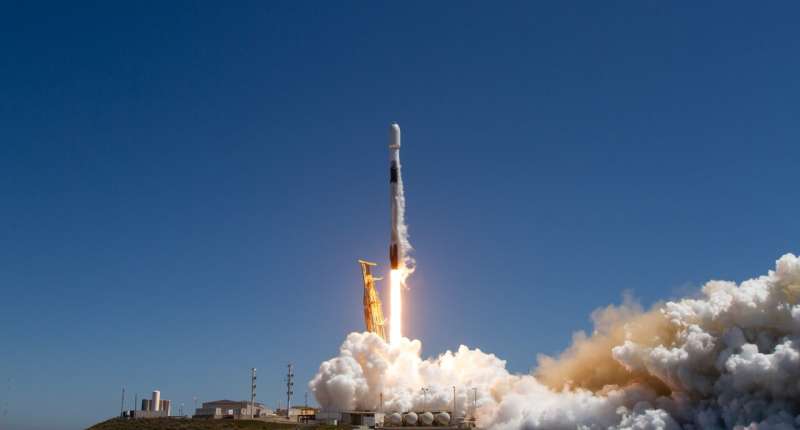
On August 16th, Φsat-2 was launched aboard a SpaceX Falcon 9 rocket, lifting off from the Vandenberg Space Force Base in California. As part of the Transporter-11 rideshare mission, this small satellite represents the forefront of innovation, poised to redefine Earth observation with the transformative power of AI.

Equipped with a state-of-the-art multispectral camera and a powerful AI computer, Φsat-2 aims to demonstrate how advanced AI technologies can push the boundaries of Earth observation. This achievement is particularly crucial as it promises to provide actionable insights for disaster response efforts, maritime monitoring, environmental protection, and more, enhancing our ability to safeguard our planet's ecological balance.

Simonetta Cheli, ESA’s Director of Earth Observation Programmes, expressed great enthusiasm, stating, "We are thrilled today to launch Φsat-2, which will demonstrate the transformative power of artificial intelligence in Earth observation. This mission heralds a new era of actionable insights from space, promising smarter and more efficient monitoring of our planet."

The uniqueness of Φsat-2 lies in its ability to process imagery and data on board in real-time, surpassing the conventional approach of transmitting large amounts of raw data to Earth. With this innovation, only the most essential information is sent, improving data transmission efficiency and expediting decision-making processes. From disaster response to maritime vessel detection, these advanced AI capabilities are set to reshape how we safeguard and monitor our planet's ecosystems.

As Φsat-2 orbits Earth at an altitude of 510 km, it captures the planet's beautiful imagery in seven bands of the visible to near-infrared spectrum. Through powerful collaboration and cutting-edge technology, the satellite features a suite of AI apps that set a new standard in space-based AI technology.

The transformative impact of these onboard AI apps is evident. For example, the cloud detection app, developed by KP Labs, sifts through cloud-obscured images, ensuring only the most usable imagery is transmitted to Earth, providing users with increased flexibility and operational efficiency. Additionally, the maritime vessel detection app, developed by CEiiA, showcases the satellite's critical role in safeguarding marine ecosystems and promoting maritime security.

Furthermore, with the introduction of new apps, such as the wildfire detection system developed by Thales Alenia Space and the marine anomaly detection by IRT Saint Exupery Technical Research, Φsat-2 continues to expand its capabilities, offering crucial real-time information that has the potential to safeguard our natural heritage and mitigate ecological threats.

As we look to the stars, the launch of Φsat-2 serves as a beacon of hope and progress, sparking our collective imagination and pursuit of a sustainable future. Through the fusion of AI and space technology, this pioneering endeavor embodies the inherent human spirit—our relentless pursuit of knowledge, compassion, and stewardship of our planet.

In the grand symphony of our universe, let us draw inspiration from ESA's Φsat-2, a testament to humanity's unwavering commitment to protect and cherish the delicate tapestry of our planet, bridging the realms of technology and altruism to elevate the noble cause of Earth observation.

ESA's Φsat-2 satellite highlights the power of AI in earth observation

Φsat-2 promises smarter and more efficient monitoring of our planet

The European Space Agency (ESA) is preparing to launch the groundbreaking Φsat-2 satellite, which is dedicated to Artificial Intelligence (AI) missions to revolutionize Earth observation. The satellite is equipped with a powerful onboard AI computer and a multispectral camera. Φsat-2 combines advanced technology and innovative applications to deliver real-time insights and actionable information about our changing planet.

Φsat-2, measuring just 22 x 10 x 33 cm, represents a significant leap forward in the capabilities of satellite-based Earth observation. The satellite utilizes AI algorithms to analyze and process imagery in real time using its extended onboard processing.

One of the remarkable features of Φsat-2 is its ability to convert images into maps seamlessly, providing actionable information from raw data. It can detect clouds, classify them, and offer insights into cloud distribution to ensure that only clear and usable images are transmitted back to Earth. This innovative approach contrasts with traditional satellites that downlink all captured images, including those obscured by clouds.

Additionally, the satellite is designed to detect and classify vessels, contributing to the monitoring and regulation of maritime activities. Through machine learning techniques developed in collaboration with CEiiA, Φsat-2 offers a valuable tool for enhancing maritime security and supporting environmental conservation efforts.

Φsat-2's AI capabilities extend to on-board image compression and reconstruction, reducing file sizes and increasing the speed of data download. This is particularly important for timely response to events like natural disasters, where quick access to high-quality imagery is vital for emergency response teams.

In addition to its image processing capabilities, Φsat-2 has two additional AI applications selected through the OrbitalAI challenge organized by ESA's Φ-lab:

1. Marine Anomaly Detection, developed by IRT Saint Exupery Technical Research, uses machine learning to spot anomalies in marine ecosystems in real time, such as oil spills, harmful algae blooms, and heavy sediment discharges.

2. Wildfire Detection, developed by Thales Alenia Space, provides critical real-time information to response teams by offering a classification report that helps locate and track wildfires.

The Φsat-2 mission is a collaborative effort between ESA and Open Cosmos, with support from an industrial consortium. It is scheduled to launch in July 2024 on a SpaceX Falcon 9 from the Vandenberg Air Force Base in California. Nicola Melega, Φsat-2 Technical Officer at ESA, stated that "Φsat-2 will unlock a new era of real-time insights from space and will allow for custom AI apps to be easily developed, installed, and operated on the satellite even while in orbit."

The launch of Φsat-2 marks a significant milestone in Earth observation, harnessing the power of AI to enhance the understanding of our planet. It has the potential to drive advancements in various industries and enable smarter and more efficient monitoring, aiding in environmental conservation, disaster management, and maritime security.

Φsat-2 represents a remarkable step forward in the fusion of space and AI technology, highlighting ESA's commitment to pushing the boundaries of Earth observation.