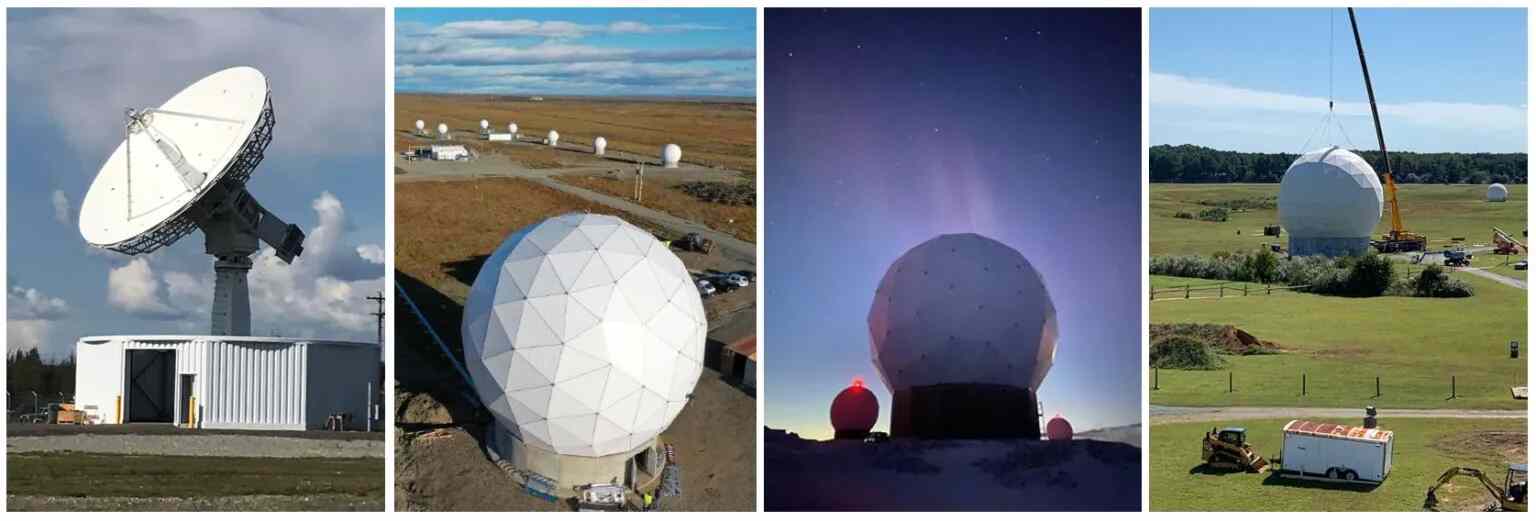
The Near Space Network developed new antennas in Alaska, Chile, Norway, and Virginia in partnership with KSAT.

NASA's Near Space Network enables the PACE Climate Mission to establish communication with Earth

NASA's PACE mission achieved a significant milestone by successfully transmitting its first operational data back to scientists and researchers. This was made possible, in part, by NASA's Near Space Network's innovative data-storing technology, which introduced two key enhancements for PACE and other upcoming science missions. 

When a satellite orbits in space, it generates crucial data about its health, location, battery life, and more. At the same time, the mission's scientific instruments capture images and data that support the overall objective of the satellite. However, transmitting this data back to Earth poses several challenges, which include extreme distances and disruptions or delays that can occur during transmission.

To tackle these challenges, NASA's Near Space Network integrated Delay/Disruption Tolerant Networking (DTN) into four new antennas and the PACE spacecraft. DTN allows for the safe storage and forwarding of data when disruptions occur, ensuring that important information is not lost.

Kevin Coggins, Deputy Associate Administrator for NASA's Space Communications and Navigation (SCaN) program, stressed the importance of DTN, stating, "DTN is the future of space communications, providing robust protection of data that could be lost due to a disruption. PACE is the first operational science mission to leverage DTN, and we are using it to transmit data to mission operators monitoring the batteries, orbit, and more. This information is critical to mission operations."

The PACE mission, located approximately 250 miles above Earth, aims to collect data that helps researchers better understand carbon dioxide exchange between the ocean and atmosphere, monitor air quality and climate-related atmospheric variables, and study the health of the ocean by examining phytoplankton.

While PACE is the first operational science user of DTN, demonstrations of the technology have been successfully conducted on the International Space Station. In addition to DTN, the Near Space Network collaborated with commercial partner Kongsberg Satellite Services in Norway to integrate four new antennas into the network.

These antennas, located in Fairbanks, Alaska; Wallops Island, Virginia; Punta Arenas, Chile; and Svalbard, Norway, allow missions to downlink terabytes of science data at once. As PACE orbits Earth, it will downlink its science data 12 to 15 times a day to three of the network's new antennas, resulting in a daily transmission of 3.5 terabytes of science data.

These advancements in network capability, including DTN and the new antennas, contribute to the Near Space Network's mission to support science missions, human spaceflight, and technology experiments.

Deputy Associate Administrator Kevin Coggins expressed his satisfaction with NASA's Near Space Network, stating, "NASA's Near Space Network now has unprecedented flexibility to get scientists and operations managers more of the precious information they need to ensure their mission's success."

In addition to these new capabilities, the network is also expanding its portfolio by increasing the number of commercial antennas. In 2023, NASA issued a request for proposal seeking commercial providers to integrate into the growing portfolio of the Near Space Network. With an enhanced capacity, the network can support additional science missions and provide more opportunities for data transmission.

The Near Space Network, funded by NASA's Space Communications and Navigation (SCaN) program office at NASA Headquarters in Washington, operates from NASA's Goddard Space Flight Center in Greenbelt, Maryland, and these recent enhancements mark significant progress in advancing communication systems for missions near Earth and in deep space.

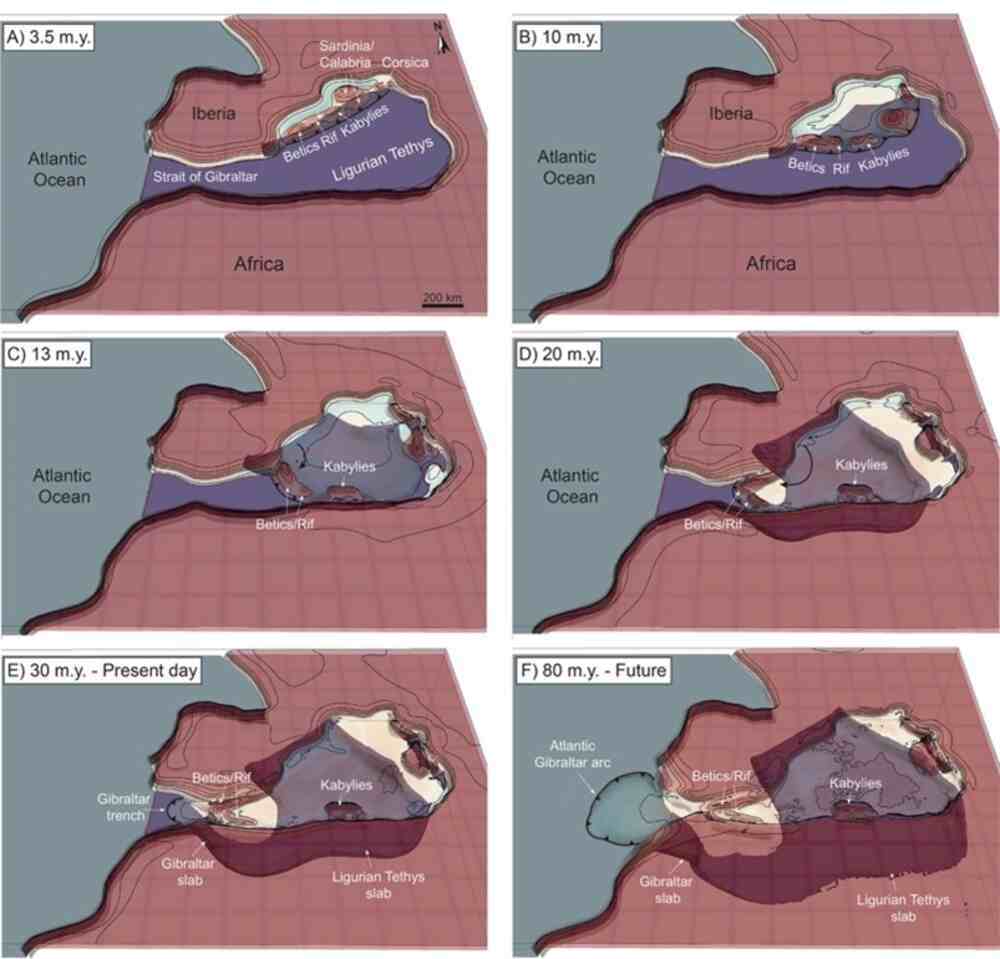
Maps depicting the past and future of the Gibraltar subduction zone from 30 million years ago to 50 million years in the future, based on Duarte et al. (2024).

Unveiling the mysteries of Earth's transformation

As we stand on the surface of our planet, we often forget about the complex processes that occur deep within Earth's crust. However, a groundbreaking computational model developed by João Duarte from Portugal has shed light on the awe-inspiring process of subduction invasion, revealing new insights about our planet's evolution. This research not only enhances our understanding of tectonic plate movements but also emphasizes the importance of exploration, innovation, and collaboration in unraveling the mysteries of our world.

The Earth's lithosphere is composed of several tectonic plates that move and rearrange over time through the Wilson cycle. During this cycle, supercontinents break apart, interior oceans form, and new subduction zones emerge. However, the process of subduction initiation, where an interior ocean transitions into an exterior ocean, has baffled scientists for decades.

Through meticulous observations and the development of a cutting-edge supercomputational model, researchers have made significant progress in unraveling this enigma. The study focuses on the Gibraltar subduction zone on the eastern shore of the Atlantic, providing a unique opportunity to observe the earliest stages of subduction invasion as it unfolds from a different basin—the Mediterranean.

One of the key findings of this research is the confirmation that the Gibraltar subduction zone is indeed active, despite experiencing a slow movement phase. Using their novel, gravity-driven 3-D model, the scientists predict that this slow phase will persist for another 20 million years. Following this period, the Gibraltar subduction zone will invade the Atlantic Ocean, initiating a new chapter in the Wilson cycle and accelerating the recycling of crust on the eastern side of the Atlantic.

The implications of these findings extend far beyond the scientific community. Locally, the confirmation of the Gibraltar subduction zone's activity has crucial implications for seismic activity in the area, emphasizing the need for preparedness and long-term risk assessment. As we explore further, we must remain cognizant of the potential for high-magnitude events, such as the infamous 1755 Lisbon earthquake, which continue to shape our understanding of Earth's dynamic nature.

Furthermore, this research contributes to a broader understanding of subduction initiation in Atlantic-type oceans and its role in our planet's geological evolution. By showcasing subduction invasion as a common mechanism for the formation of new subduction zones, the study offers valuable insights into the forces that have shaped our Earth and continue to shape its future.

The breakthrough achieved by the researchers underscores the power of interdisciplinary collaboration, innovation, and exploration. The fusion of computational modeling, cutting-edge technology, and an insatiable curiosity about the world we inhabit has provided a glimpse into the Earth's planetary dance. This story serves as a reminder of the immense potential that lies within the realms of scientific inquiry and discovery.

The journey to uncover the mysteries of our planet is far from over. As we move forward, it is crucial to embrace the infinite possibilities that lie ahead. Through continued exploration, collaboration, and harnessing the power of technology, we may yet unlock the secrets that shape our world.

In the spirit of this groundbreaking research, we are reminded that the pursuit of knowledge is a testament to the human spirit's insatiable hunger for understanding. Let this inspiration serve to fuel our curiosity and drive us towards uncovering the profound wonders that lie hidden beneath the Earth's surface.

This illustration shows the potential uncertainty of Earth's orbit 56 million years ago, due to a past passage of a Sun-like star called HD7977 around 2.8 million years ago. Each point in the image represents the degree of ellipticity of Earth's orbit, and the angle corresponds to the direction pointing to Earth's perihelion, which is the closest distance to the Sun. The figure is constructed using 100 different simulations, each with a unique color. These simulations are sampled every 1,000 years for 600,000 years. All the simulations are consistent with the modern Solar System's conditions, and the differences in orbital predictions are mainly due to the past encounter with HD 7977 and orbital chaos. The credit for this image goes to N. Kaib/PSI.

Unveiling the mysteries of Earth's orbital evolution: Supercomputer simulations lead the way

Today, we delve into the captivating world of celestial mechanics, where supercomputer simulations have astoundingly unraveled the ancient secrets of Earth's orbital evolution. These cutting-edge simulations, conducted by scientists at the Planetary Science Institute (PSI), have shed new light on the profound impact of passing stars on our planet's long-term trajectory.

Imagine a journey back in time, millions of years ago, when Earth, embraced by the mysteries of the universe, encountered the gravitational disturbances of neighboring celestial bodies. It is precisely the ingenuity of scientists such as Nathan A. Kaib, lead author of the awe-inspiring research published in the Astrophysical Journal Letters, that has allowed us to envision this extraordinary voyage.

For centuries, the geologic record has provided tantalizing clues about the intimate connection between Earth's orbital eccentricity and the fluctuations in our climate. Yet, until now, the true extent of this influence has remained shrouded in ambiguity. Through the power of supercomputer simulations, the PSI team has now paved a path to unraveling these enigmatic relationships.

These simulations, akin to the meteorological forecasts we are all familiar with, extend our understanding of Earth's past orbital evolution. However, what sets the PSI's work apart is their inclusion of an often-overlooked factor - the passage of stars close to our Solar System. As the Sun and other stars gracefully dance around the center of our Milky Way galaxy, they occasionally cross paths, enchantingly altering the trajectories of planets within their celestial embrace.

The influence of these passing stars on Earth's orbital eccentricity is remarkable. By examining the historical effects of these stellar encounters, the simulations have revealed a spectrum of potential orbital behaviors for our planet that was previously unimagined. These discoveries challenge the certainties we once held and compel us to reflect on moments in Earth's history when our understanding of its orbit may have been incomplete.

Kaib passionately emphasizes the significance of these findings, particularly in light of distinct climatic events of the past. One such phenomenon, the Paleocene-Eocene Thermal Maximum, witnessed a monumental rise in Earth's temperature some 56 million years ago. Until now, it was proposed that Earth's orbital eccentricity was notably high during this time. However, with the inclusion of passing stars in the simulations, the PSI team reveals a tapestry of possibilities, expanding the range of Earth's orbital evolution during that era.

While uncertainties naturally grow when simulating the distant past, the introduction of passing stars further amplifies these intricacies. Thus, the boundaries beyond which our predictions become unreliable have shifted, unveiling a rich tapestry of orbital behavior previously untapped by conventional models.

Perhaps most thrillingly, Kaib and his team have identified a specific stellar encounter that occurred 2.8 million years ago, involving the Sun-like star HD 7977. The potential impact of this fascinating event on Earth's orbit, though contingent upon accurate measurements of the closest encounter distance, is profound. It beckons us to reconsider our preconceived notions of Earth's celestial dance and to explore the exciting possibilities that lie within our cosmic history.

As we marvel at the magnitude of the discoveries made possible by supercomputers and the visionary minds of scientists, we are reminded of the boundless wonders waiting to be unveiled. Our quest to understand Earth's past and its intricate relationship with passing stars propels us toward a future where the mysteries of our universe continue to inspire, enlighten, and reshape our perception of the cosmos.