

SUPERCOMPUTING NEWS SUPERCOMPUTING NEWS
    • MEDIA KIT
    • MOST READ
    • RSS FEED
    • ACADEMIA
    • AEROSPACE
    • APPLICATIONS
    • ASTRONOMY
    • AUTOMOTIVE
    • BIG DATA
    • BIOLOGY
    • CHEMISTRY
    • CLIENTS
    • CLOUD
    • DEFENSE
    • DEVELOPER TOOLS
    • EARTH SCIENCES
    • ECONOMICS
    • ENGINEERING
    • ENTERTAINMENT
    • GAMING
    • GOVERNMENT
    • HEALTH
    • OIL & GAS
    • INDUSTRY
    • INTERCONNECTS
    • MANUFACTURING
    • MIDDLEWARE
    • MOVIES
    • NETWORKS
    • PHYSICS
    • PROCESSORS
    • RETAIL
    • SCIENCE
    • STORAGE
    • SYSTEMS
    • VISUALIZATION
    • AcyMailing subscription form

    • ADD YOUR VIDEOS
    • MANAGE VIDEOS
    • CONVERSATION INBOX
    • SOCIAL ADVERTISER
    • SOCIAL NETWORK VIDEOS
    • SURVEYS
    • GROUPS
    • PAGES
    • MARKETPLACE LISTINGS
    • APPLICATIONS BROWSER
    • PRIVACY CONFIRM REQUEST
    • PRIVACY CREATE REQUEST
    • LEADERBOARD
    • POINTS LISTING
      • BADGES
    • TRADE SHOWS
Sign In
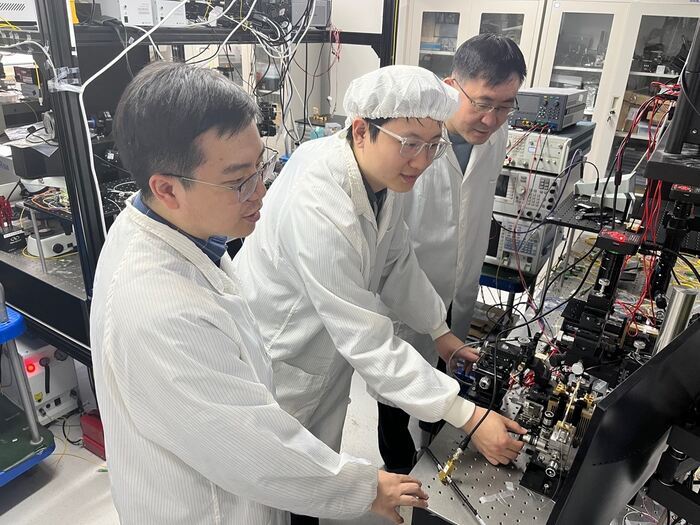
(from left) Researchers Haowen Shu, Zihan Tao and Xingjun Wang performing an experiment to test their microwave photonic filter.
Tyler O'Neal, Staff Editor ACADEMIA April 11, 2023, 8:00 am

China demos photonic filter that separates signals from noise to support future 6G wireless communication

The multi-functional filter could help advance autonomous driving and the Internet of Things

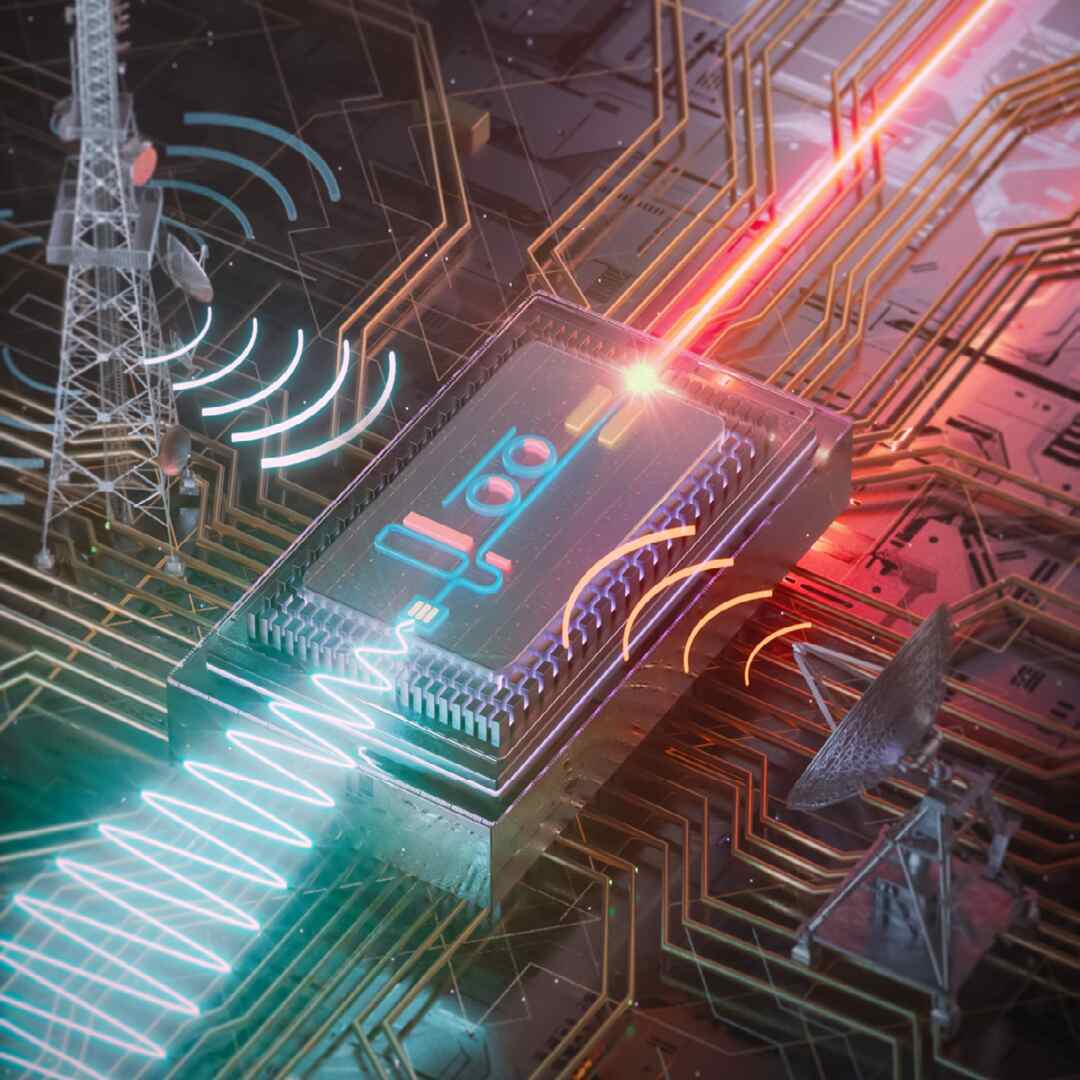
Researchers have developed a new chip-sized microwave photonic filter to separate communication signals from noise and suppress unwanted interference across the full radio frequency spectrum. The device is expected to help next-generation wireless communication technologies efficiently convey data in an environment that is becoming crowded with signals from devices such as cell phones, self-driving vehicles, internet-connected appliances, and smart city infrastructure. Illustration of how the integrated microwave photonic filter helps to separate signals of interest from background noise or unwanted interference in complex electromagnetic environments.
“This new microwave filter chip has the potential to improve wireless communication, such as 6G, leading to faster internet connections, better overall communication experiences, and lower costs and energy consumption for wireless communication systems,” said researcher Xingjun Wang from Peking University. “These advancements would, directly and indirectly, affect daily life, improving the overall quality of life and enabling new experiences in various domains, such as mobility, smart homes, and public spaces.”

In the Photonics Research journal co-published by Chinese Laser Press and Optica Publishing Group, the researchers describe how their new photonic filter overcomes the limitations of traditional electronic devices to achieve multiple functionalities on a chip-sized device with low power consumption. They also demonstrate the filter’s ability to operate across a broad radio frequency spectrum extending to over 30 GHz, showing its suitability for envisioned 6G technology.

“As the electro-optic bandwidth of optoelectronic devices continues to increase unstoppably, we believe that the integrated microwave photonics filter will certainly be one of the important solutions for future 6G wireless communications,” said Wang. “Only a well-designed integrated microwave photonics link can achieve low cost, low power consumption, and superior filtering performance.”

Stopping interference

6G technology is being developed to improve upon currently-deployed 5G communications networks. To convey more data faster, 6G networks are expected to use millimeter wave and even terahertz frequency bands. As this will distribute signals over an extremely wide frequency spectrum with an increased data rate, there is a high likelihood of interference between different communication channels.

To solve this problem, researchers have sought to develop a filter to protect signal receivers from various types of interference across the full radio frequency spectrum. To be cost-effective and practical for widespread deployment, this filter needs to be small, consume little power, achieve multiple filtering functions, and be integrated into a chip. However, previous demonstrations have been limited by their few functions, large size, limited bandwidth, or requirements associated with electrical components.

For the new filter, researchers created a simplified photonic architecture with four main parts. First, a phase modulator serves as the input of the radio frequency signal, which modulates the electrical signal onto the optical domain. Next, the double-ring acts as a switch to shape the modulation format. An adjustable microring is the core unit for processing the signal. Finally, a photodetector serves as the output of the radio frequency signal and recovers the radio frequency signal from the optical signal.

“The greatest innovation here is breaking the barriers between devices and achieving mutual collaboration between them,” said Wang. “The collaborative operation of the double-ring and microring enables the realization of the intensity-consistent single-stage-adjustable cascaded-microring (ICSSA-CM) architecture. Owing to the high reconfigurability of the proposed ICSSA-CM, no extra radio frequency device is needed for the construction of various filtering functions, which simplifies the whole system composition.”

Demonstrating performance

To test the device, researchers used high-frequency probes to load a radio frequency signal into the chip and collected the recovered signal with a high-speed photodetector. They used an arbitrary waveform generator and directional antennas to simulate the generation of 2Gb/s high-speed wireless transmission signals and a high-speed oscilloscope to receive the processed signal. By comparing the results with and without using the filter, the researchers demonstrated the filter’s performance.

Overall, the findings show that the simplified photonic architecture achieves comparable performance with lower loss and system complexity compared with previous programmable integrated microwave photonic filters composed of hundreds of repeating units. This makes it more robust, energy-efficient, and easier to manufacture than previous devices.

The researchers plan to further optimize the modulator and improve the overall filter architecture to achieve a high dynamic range and low noise while ensuring high integration at both the device and system levels.
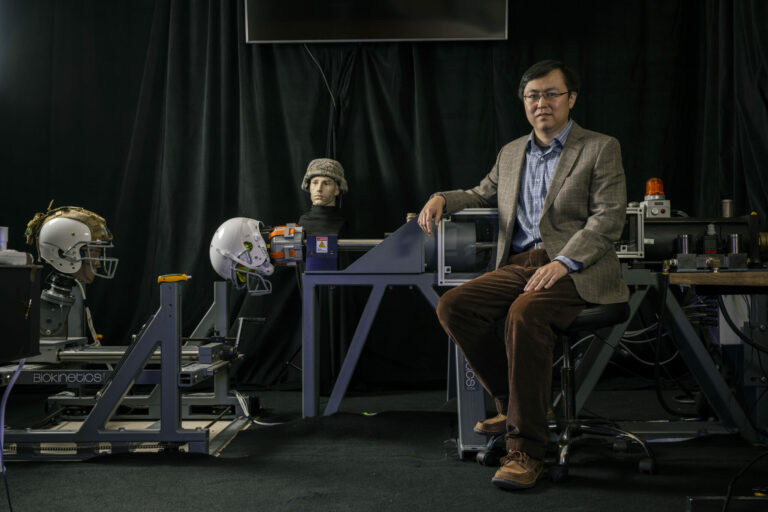
Dr. Jie Huang is developing fiber optic sensors that can be used in a variety of harsh conditions, such as inside the helmets of soldiers or football players. Photo by Michael Pierce/Missouri S&T.

S&T prof Huang wins over $14M in funding to develop fiber optic sensors for harsh, extreme conditions

Tyler O'Neal, Staff Editor ACADEMIA April 10, 2023, 2:46 pm

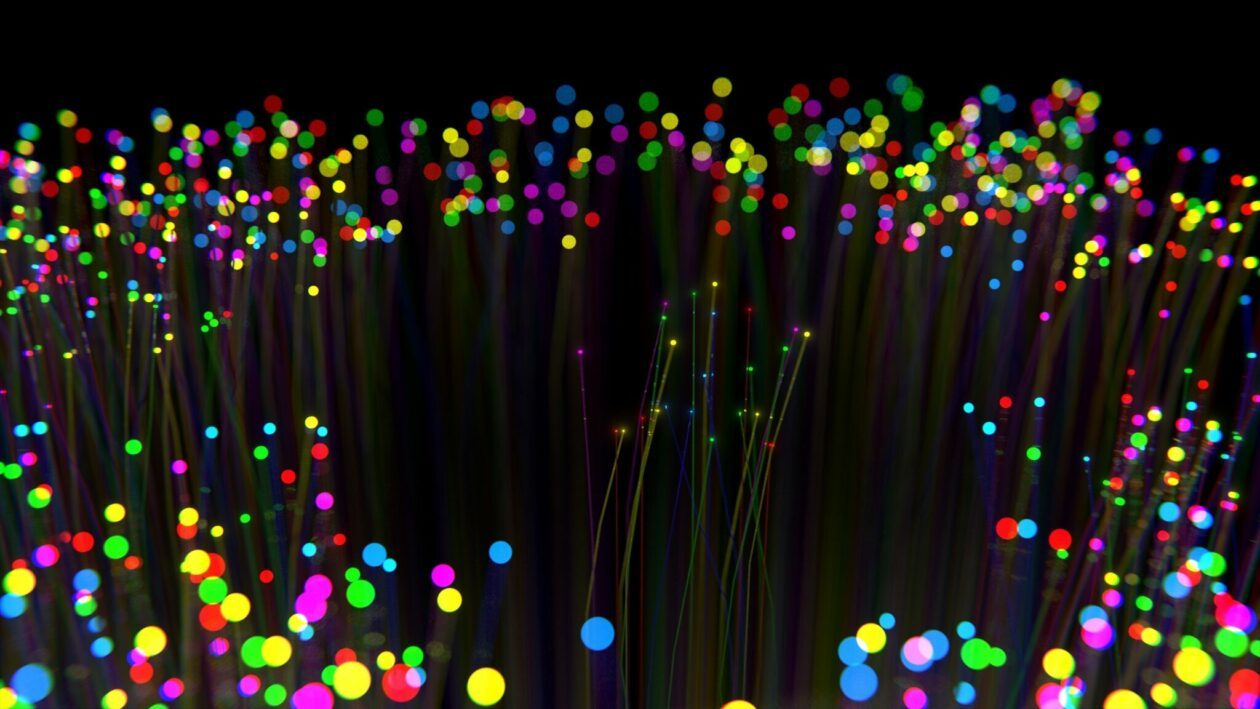
A researcher at Missouri University of Science and Technology is leading the charge on developing fiber optic sensors that can be used in harsh and extreme environments, and he says this could open a new world of data that were previously either unavailable or difficult to obtain. Fiber optic sensors allow researchers to analyze data that was previously unavailable or difficult to measure. Photo from Rawpixel/creative commons.

“Think of a cable that is as thin as a human hair that is made with silica glass or crystals, and it can have a large number of sensors,” says Dr. Jie Huang, the Roy E. Wilkens Endowed Associate Professor of electrical engineering at Missouri S&T. “That is what we are using, and this robust technology should allow us to have datasets that can benefit multiple industries.”Over the past few years, Huang has either been a principal investigator (PI) or co-PI on multiple fiber-optic-related projects, with total federal grant funding over $14 million. Some of his research is related to the battlefield. In partnership with the United States military, Huang and his team are developing metal-organic framework (MOF) single crystals with an optical fiber that can detect smells, such as dangerous gases or chemicals. The sensors could potentially detect the presence of nearby explosive materials as well. Huang previously worked with the military to develop a helmet that can measure blunt-force impacts to alert soldiers and their leaders about potential traumatic brain injuries. Moreover, he is exploring the steelmaking industry with Dr. Ronald O’Malley, the F. Kenneth Iverson Endowed Chair of Steelmaking Technologies and director of the Kent D. Peaslee Steel Manufacturing Research Center at Missouri S&T.  

“We are embedding optical fiber sensors for monitoring spatially distributed temperature measurements in the major sections of an industrial-scale continuous casting machine,” Huang says. “This includes the furnace, tundish, nozzle, mold, and roller support. We also embed optical fibers for measuring strain at strategic locations along the casting line.”

The temperature sensors made from sapphire optical fibers have metered temperatures as high as 1,600 degrees Celsius. Huang says the data his team collects can help make steelmaking industry operations more strategic.  

“This data allows the steel producers to modify their productions to make the best steel in the most cost-efficient manner,” Huang says. Huang’s work has also involved fiberoptics to monitor electric power grids and using an inclinometer with fiber optic sensors to monitor the tilt of buildings and surfaces, which he says is constantly shifting.“There are so many possible applications for the fiber optic inclinometer, as it can detect even the smallest of changes,” he says. “Consider a submarine in the ocean. We could use this tool to detect the submarine’s movement. It is possible to cloak submarines in some ways, but this movement in the water could not be hidden.”Although Huang and the researchers he has worked with at S&T and other institutions have focused on a variety of topics, he says everything ultimately shares a common theme.“We are obtaining data that was not previously available,” he says. “This allows leaders to make the most informed decisions possible in their respective fields.”

Machine learning of brain-behavior dimensions reveals four subtypes of autism spectrum disorder linked to distinct molecular pathways. Here, the 3D prism cube represents the machine learning of the three brain-behavior dimensions, etched onto the prism's glass. White light or “data” passes into the prism or "machine learning algorithm," splitting into four colored light paths that represent the spectrum of autistic people in the four autism subtypes. The painted background of a sequencing array represents the molecular associations of the autism subtypes. Credit: Dr. Amanda Buch

Weill Cornell Medicine leverages ML to identify four different autism subtypes

Tyler O'Neal, Staff Editor ACADEMIA April 7, 2023, 10:00 am

People with autism spectrum disorder can be classified into four distinct subtypes based on their brain activity and behavior, according to a study from Weill Cornell Medicine investigators in New York City.

The study leveraged machine learning to analyze newly available neuroimaging data from 299 people with autism and 907 neurotypical people. They found patterns of brain connections linked with behavioral traits in people with autism, such as verbal ability, social effect, and repetitive or stereotypic behaviors. They confirmed that the four autism subgroups could also be replicated in a separate dataset and showed that differences in regional gene expression and protein-protein interactions explain the brain and behavioral differences.

“Like many neuropsychiatric diagnoses, individuals with autism spectrum disorder experience many different types of difficulties with social interaction, communication, and repetitive behaviors. Scientists believe there are probably many different types of autism spectrum disorder that might require different treatments, but there is no consensus on how to define them,” said co-senior author Dr. Conor Liston, an associate professor of psychiatry and of neuroscience in the Feil Family Brain and Mind Research Institute at Weill Cornell Medicine. “Our work highlights a new approach to discovering subtypes of autism that might one day lead to new approaches for diagnosis and treatment.”

A previous study published by Dr. Liston and colleagues in Nature Medicine in 2017 used similar machine-learning methods to identify four biologically distinct subtypes of depression, and subsequent work has shown that those subgroups respond differently to various depression therapies.

“If you put people with depression in the right group, you can assign them the best therapy,” said lead author Dr. Amanda Buch, a postdoctoral associate of neuroscience in psychiatry at Weill Cornell Medicine.

Building on that success, the team set out to determine if similar subgroups exist among individuals with autism, and whether different gene pathways underlie them. She explained that autism is a highly heritable condition associated with hundreds of genes that have diverse presentations and limited therapeutic options. To investigate this, Dr. Buch pioneered new analyses for integrating neuroimaging data with gene expression data and proteomics, introducing them to the lab and enabling testing and developing hypotheses about how risk variants interact in the autism subgroups.

“One of the barriers to developing therapies for autism is that the diagnostic criteria are broad, and thus apply to a large and phenotypically diverse group of people with different underlying biological mechanisms,” Dr. Buch said. “To personalize therapies for individuals with autism, it will be important to understand and target this biological diversity. It is hard to identify the optimal therapy when everyone is treated as being the same when they are each unique.”

Until recently, there were not large enough collections of functional magnetic resonance imaging data of people with autism to conduct large-scale machine learning studies, Dr. Buch noted. But a large dataset created and shared by Dr. Adriana Di Martino, research director of the Autism Center at the Child Mind Institute, as well as other colleagues across the country, provided the large dataset needed for the study.

“New methods of machine learning that can deal with thousands of genes, brain activity differences, and multiple behavioral variations made the study possible,” said co-senior author Dr. Logan Grosenick, an assistant professor of neuroscience in psychiatry at Weill Cornell Medicine, who pioneered machine-learning techniques used for biological subtyping in the autism and depression studies.

Those advances allowed the team to identify four clinically distinct groups of people with autism. Two of the groups had above-average verbal intelligence. One group also had severe deficits in social communication but less repetitive behaviors, while the other had more repetitive behaviors and less social impairment. The connections between the parts of the brain that process visual information and help the brain identify the most salient incoming information were hyperactive in the subgroup with more social impairment. These same connections were weak in the group with more repetitive behaviors.

“It was interesting on a brain circuit level that there were similar brain networks implicated in both of these subtypes, but the connections in these same networks were atypical in opposite directions,” said Dr. Buch, who completed her doctorate from Weill Cornell Graduate School of Medical Sciences in Dr. Liston’s lab and is now working in Dr. Grosenick’s lab. 

The other two groups had severe social impairments and repetitive behaviors but had verbal abilities at the opposite ends of the spectrum. Despite some behavioral similarities, the investigators discovered completely distinct brain connection patterns in these two subgroups.

The team analyzed gene expression that explained the atypical brain connections present in each subgroup to better understand what was causing the differences and found many were genes previously linked with autism. They also analyzed network interactions between proteins associated with the atypical brain connections, and looked for proteins that might serve as a hub. Oxytocin, a protein previously linked with positive social interactions, was a hub protein in the subgroup of individuals with more social impairment but relatively limited repetitive behaviors. Studies have looked at using intranasal oxytocin as a therapy for people with autism with mixed results, Dr. Buch said. She said it would be interesting to test whether oxytocin therapy is more effective in this subgroup.

“You could have treatment that is working in a subgroup of people with autism, but that benefit washes out in the larger trial because you are not paying attention to subgroups,” Dr. Grosenick said.

The team confirmed their results on a second human dataset, finding the same four subgroups. As a final verification of the team’s results, Dr. Buch conducted an unbiased text-mining analysis she developed of biomedical literature that showed other studies had independently connected the autism-linked genes with the same behavioral traits associated with the subgroups.

The team will next study these subgroups and potential subgroup-targeted treatments in mice. Collaborations with several other research teams with large human datasets are also underway. The team is also working to refine their machine-learning techniques further.

“We are trying to make our machine learning more cluster-aware,” Dr. Grosenick said.

In the meantime, Dr. Buch said they’ve received encouraging feedback from individuals with autism about their work. One neuroscientist with autism spoke to Dr. Buch after a presentation and said his diagnosis was confusing because his autism was so different than others but that her data helped explain his experience.

“Being diagnosed with a subtype of autism could have been helpful for him,” Dr. Buch said.    

  1. UT Arlington researcher aims to improve online safeguards that protect user privacy
  2. Brown-built model shows how non-drug interventions for patients with Alzheimer’s are both effective, economical

Page 30 of 123

  • 25
  • 26
  • 27
  • 28
  • 29
  • 30
  • 31
  • 32
  • 33
  • 34
POPULAR RIGHT NOW
  • Supercomputers uncover a new class of cosmic explosions hidden in plain sight
    Supercomputers uncover a new class of cosmic explosions hidden in plain sight
  • AI supercharges the hunt for stronger magnets: Iowa State researchers launch a new era of intelligent materials discovery
    AI supercharges the hunt for stronger magnets: Iowa State researchers launch a new era of intelligent materials discovery
  • IBM's Historic stock collapse raises questions for the future of enterprise supercomputing
    IBM's Historic stock collapse raises questions for the future of enterprise supercomputing
  • Could a novel dark matter theory simultaneously resolve multiple cosmic enigmas? Supercomputer simulations provide a compelling, albeit currently unverified, potential solution
    Could a novel dark matter theory simultaneously resolve multiple cosmic enigmas? Supercomputer simulations provide a compelling, albeit currently unverified, potential solution
  • Melting icebergs may be reshaping Earth’s greatest ocean current
    Melting icebergs may be reshaping Earth’s greatest ocean current
  • Supercomputers replace ‘bathtub’ flood maps with physics-based digital twins of Britain’s coastline
    Supercomputers replace ‘bathtub’ flood maps with physics-based digital twins of Britain’s coastline
  • Supercomputers push neural quantum simulation beyond previous limits
    Supercomputers push neural quantum simulation beyond previous limits
  • Intel’s AI supercomputing revival: Q2 financial surge signals new era for CPU-powered HPC infrastructure
    Intel’s AI supercomputing revival: Q2 financial surge signals new era for CPU-powered HPC infrastructure
  • AI infrastructure financing fears shake semiconductor sector
    AI infrastructure financing fears shake semiconductor sector
  • AWS supercomputing investment reaches historic scale as Amazon’s AI strategy powers record financial results
    AWS supercomputing investment reaches historic scale as Amazon’s AI strategy powers record financial results
THIS YEAR'S MOST READ
  • Wall Street wants to trade supercomputing power like oil
    Wall Street wants to trade supercomputing power like oil
  • Cosmic ambition at scale: UK’s supercomputer unlocks a 2.5 petabytes universe
    Cosmic ambition at scale: UK’s supercomputer unlocks a 2.5 petabytes universe
  • Hidden order, revealed at scale: Supercomputing, electron ptychography uncover the inner workings of relaxor ferroelectrics
    Hidden order, revealed at scale: Supercomputing, electron ptychography uncover the inner workings of relaxor ferroelectrics
  • Beamforming the future: BeammWave's 6G push signals the rise of orbital-terrestrial wireless networks
    Joakim Axmon
    Joakim Axmon
  • Intel's Q1 results signal supercomputing surge driving Xeon momentum
    Intel's Q1 results signal supercomputing surge driving Xeon momentum
  • When stars fall apart: Supercomputing reveals the hidden physics of black holes
    When stars fall apart: Supercomputing reveals the hidden physics of black holes
  • Multi-layer simulations reveal the hidden supply chain of solar prominences
    Multi-layer simulations reveal the hidden supply chain of solar prominences
  • Japanese scientists decode dolphin speed with supercomputing: Turbulence, vortices, and the hidden physics of propulsion
    Japanese scientists decode dolphin speed with supercomputing: Turbulence, vortices, and the hidden physics of propulsion
  • Cosmic feedback at scale: Supercomputing reveals how quasars regulate the early Universe
    Cosmic feedback at scale: Supercomputing reveals how quasars regulate the early Universe
  • Modeling life at the microscopic scale: A computational breakthrough in oxygen transport
    Modeling life at the microscopic scale: A computational breakthrough in oxygen transport
MOST READ OF ALL-TIME
  • Largest Computational Biology Simulation Mimics The Ribosome
    Details
    112108
    The amino acid (green) slithers into the chemical reaction center, moving through an evolutionarily ancient corridor of the ribosome (purple). The amino acid is delivered to the reaction core by the transfer RNA molecule (yellow).
    The amino acid (green) slithers into the chemical reaction center, moving through an evolutionarily ancient corridor of the ribosome (purple). The amino acid is delivered to the reaction core by the transfer RNA molecule (yellow).
  • Silicon 'neurons' may add a new dimension to chips
    Details
    80994
    Silicon 'neurons' may add a new dimension to chips
  • Linux Networx Accelerators Expected to Drive up to 4x Price/Performance
    Details
    75538
  • Complex Concepts That Really Add Up
    Details
    73637
    Complex Concepts That Really Add Up
  • Blue Sky Studios Donates Animation SuperComputer to Wesleyan
    Details
    68141
    Each rack holds 52 Angstrom Microsystem-brand “blades,” with a memory footprint of 12 or 24 gigabytes each. (Photos by Olivia Bartlett Drake)
    Each rack holds 52 Angstrom Microsystem-brand “blades,” with a memory footprint of 12 or 24 gigabytes each. (Photos by Olivia Bartlett Drake)
  • Humanities, HPC connect at NERSC
    Details
    57947
  • TeraGrid ’09 'Call for Participation'
    Details
    54952
  • Turbulence responsible for black holes' balancing act
    Details
    52312
  • Cray Wins $52 Million SuperComputer Contract
    Details
    50140
  • SDSC Researchers Accurately Predict Protein Docking
    Details
    46080
  • FRONTPAGE
  • LATEST
  • POPULAR
  • REGISTER
  • SOCIAL
  • VIDEO
  • SUBSCRIPTION
  • RSS
  • GUIDELINES
  • PRIVACY
  • TOS
  • ABOUT
  • +1 (816) 799-4488
  • editorial@supercomputingonline.com
© 2001 - 2026 SuperComputingOnline.com, LLC. All rights reserved. This material may not be published, broadcast, rewritten or redistributed without permission.
Sign In
  • FRONT PAGE
  • LATEST
    • MEDIA KIT
    • MOST READ
    • RSS FEED
    • ACADEMIA
    • AEROSPACE
    • APPLICATIONS
    • ASTRONOMY
    • AUTOMOTIVE
    • BIG DATA
    • BIOLOGY
    • CHEMISTRY
    • CLIENTS
    • CLOUD
    • DEFENSE
    • DEVELOPER TOOLS
    • EARTH SCIENCES
    • ECONOMICS
    • ENGINEERING
    • ENTERTAINMENT
    • HEALTH
    • INDUSTRY
    • INTERCONNECTS
    • GAMING
    • GOVERNMENT
    • MANUFACTURING
    • MIDDLEWARE
    • MOVIES
    • NETWORKS
    • OIL & GAS
    • PHYSICS
    • PROCESSORS
    • RETAIL
    • SCIENCE
    • STORAGE
    • SYSTEMS
    • VISUALIZATION
  • VIDEOS
    • ADD YOUR VIDEOS
    • MANAGE VIDEOS
  • COMMUNITY
    • TRADE SHOWS
    • SOCIAL NETWORK VIDEOS
    • SURVEYS
    • APPLICATIONS BROWSER
    • CONVERSATION INBOX
    • SOCIAL ADVERTISER
    • GROUPS
    • MARKETPLACE LISTINGS
    • PAGES
    • LEADERBOARD
    • POINTS LISTING
      • BADGES
    • PRIVACY CONFIRM REQUEST
    • PRIVACY CREATE REQUEST

Hey there! We noticed you’re using an ad blocker.