SUPERCOMPUTING NEWS SUPERCOMPUTING NEWS
    • MEDIA KIT
    • MOST READ
    • RSS FEED
    • ACADEMIA
    • AEROSPACE
    • APPLICATIONS
    • ASTRONOMY
    • AUTOMOTIVE
    • BIG DATA
    • BIOLOGY
    • CHEMISTRY
    • CLIENTS
    • CLOUD
    • DEFENSE
    • DEVELOPER TOOLS
    • EARTH SCIENCES
    • ECONOMICS
    • ENGINEERING
    • ENTERTAINMENT
    • GAMING
    • GOVERNMENT
    • HEALTH
    • OIL & GAS
    • INDUSTRY
    • INTERCONNECTS
    • MANUFACTURING
    • MIDDLEWARE
    • MOVIES
    • NETWORKS
    • PHYSICS
    • PROCESSORS
    • RETAIL
    • SCIENCE
    • STORAGE
    • SYSTEMS
    • VISUALIZATION
    • AcyMailing subscription form

    • ADD YOUR VIDEOS
    • MANAGE VIDEOS
    • CONVERSATION INBOX
    • SOCIAL ADVERTISER
    • SOCIAL NETWORK VIDEOS
    • SURVEYS
    • GROUPS
    • PAGES
    • MARKETPLACE LISTINGS
    • APPLICATIONS BROWSER
    • PRIVACY CONFIRM REQUEST
    • PRIVACY CREATE REQUEST
    • LEADERBOARD
    • POINTS LISTING
      • BADGES
    • TRADE SHOWS
Sign In
Tyler O'Neal, Staff Editor APPLICATIONS June 21, 2021, 12:00 pm

NC State prof shows how common perovskite superfluoresces at high temperatures can be used as the basic building blocks for quantum applications

A commonly studied perovskite can superfluoresce at temperatures that are practical to achieve and at timescales long enough to make it potentially useful in quantum supercomputing applications. The finding from North Carolina State University researchers also indicates that superfluorescence may be a common characteristic for this entire class of materials.

Superfluorescence is an example of quantum phase transition – when individual atoms within a material all move through the same phases in tandem, becoming a synchronized unit. 

For example, when atoms in an optical material such as a perovskite are excited they can individually radiate light, create energy, and fluoresce. Each atom will start moving through these phases randomly, but given the right conditions, they can synchronize in a macroscopic quantum phase transition. That synchronized unit can then interact with external electric fields more strongly than any single atom could, creating a superfluorescent burst.

“Instances of spontaneous synchronization are universal, occurring in everything from planetary orbits to fireflies synchronizing their signals,” says Kenan Gundogdu, professor of physics at NC State and corresponding author of the research. “But in the case of solid materials, these phase transitions were thought to only happen at extremely low temperatures. This is because the atoms move out of phase too quickly for synchronization to occur unless the timing is slowed by cooling.”

Gundogdu and his team observed superfluorescence in the perovskite methylammonium lead iodide, or MAPbI3 while exploring its lasing properties. Perovskites are materials with a crystal structure and light-emitting properties useful in creating lasers, among other applications. They are inexpensive, relatively simple to fabricate, and are used in photovoltaics, light sources, and scanners.

“When trying to figure out the dynamics behind MAPbI3’s lasing properties, we noticed that the dynamics we observed couldn’t be described simply by lasing behavior,” Gundogdu says. “Normally in lasing, one excited particle will emit light, stimulate another one, and so on in a geometric amplification. But with this material we saw synchronization and a quantum phase transition, resulting in superfluorescence.”

But the most striking aspects of the superfluorescence were that it occurred at 78 Kelvin and had a phase lifetime of 10 to 30 picoseconds.

“Generally superfluorescence happens at extremely cold temperatures that are difficult and expensive to achieve, and it only lasts for femtoseconds,” Gundogdu says. “But 78 K is about the temperature of dry ice or liquid nitrogen, and the phase lifetime is two to three orders of magnitude longer. This means that we have macroscopic units that last long enough to be manipulated.”

The researchers think that this property may be more widespread in perovskites generally, which could prove useful in quantum applications such as computer processing or storage.

“Observation of superfluorescence in solid-state materials is always a big deal because we’ve only seen it in five or six materials thus far,” Gundogdu says. “Being able to observe it at higher temperatures and longer timescales opens the door to many exciting possibilities.”
Brazilian niobium supplier CBMM uses Dassault Systèmes’ 3DEXPERIENCE platform to develop safer, more energy efficient automotive applications

Tyler O'Neal, Staff Editor APPLICATIONS February 10, 2021, 4:35 pm

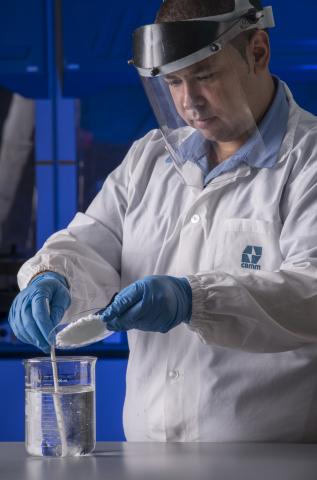
Dassault Systèmes has announced that CBMM, the Brazil-based leading supplier of niobium products and technology, is using the 3DEXPERIENCE platform on the cloud to optimize the development of new applications of niobium for the automotive industry. Niobium, a readily available, reliable, soft metal that is ductile, malleable and highly resistant to corrosion, can improve material properties, leading to increased energy efficiency, safety and performance of end products.

CBMM aims to test and increase the use of niobium with other materials such as steel more quickly, to reduce costs and the sales cycle, as well as accelerate its time to market. The 3DEXPERIENCE platform enables it to unify its design, engineering, testing and manufacturing data in a single, fully collaborative digital environment. CBMM can simulate and experience the use of materials and their applications in different product parts, analyze their durability, toughness and efficiency, and optimize their design. It can also create a knowledge base of the many tests and simulations that can be accessed and shared by its international teams to work and innovate more collaboratively. Slide 82 4559b{module INSIDE STORY}

Projects already underway include the development of new truck structures, road implements, and modern brake systems with more efficient discs and supports.

“Through Dassault Systèmes’ solutions, we will optimize the development time of niobium applications and improve our performance,” said Rodrigo Barjas Amado, Head of Strategy & New Business Development, CBMM. “Developing an application, including its physical tests, takes up to five years. The 3DEXPERIENCE platform will allow us to carry out this same development in less than a year. Digitalized testing processes will also enable automotive manufacturers to access data on the advantages of using new materials and parts with niobium, expanding its use.”

“CBMM has a robust technology program to expand and diversify the global niobium market, in addition to exploring its synergies with graphene. A fully integrated digital approach on the cloud with the 3DEXPERIENCE platform helps them comply with sustainability requirements, reduce deadlines, and improve production performance,” said Thomas Grand, Vice President, Energy & Materials Industry, Dassault Systèmes. “CBMM can also extend its use of the 3DEXPERIENCE platform to automate and accelerate simulations of supply chain management, workforce planning and mine automation to mitigate social, governance and environmental risks or negative impacts.”

Novel crystal confines electrons to one dimension for spintronic applications

Tyler O'Neal, Staff Editor APPLICATIONS January 4, 2021, 5:57 pm

Spintronics refers to a suite of physical systems which may one day replace many electronic systems. To realize this generational leap, material components that confine electrons in one dimension are highly sought after. For the first time, researchers created such a material in the form of a special bismuth-based crystal known as a high-order topological insulator.

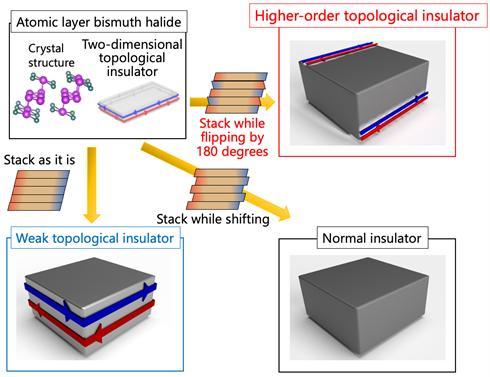
To create spintronic devices, new materials need to be designed that take advantage of quantum behaviors not seen in everyday life. You are probably familiar with conductors and insulators, which permit and restrict the flow of electrons, respectively. Semiconductors are common but less familiar to some; these usually insulate, but conduct under certain circumstances, making them ideal miniature switches. CAPTION Subtle changes in the arrangement of component materials can have a stronger knock-on effect to the bulk material than was previously thought.  CREDIT © 2020 Kondo et al{module INSIDE STORY}

For spintronic applications, a new kind of electronic material is required and it's called a topological insulator. It differs from these other three materials by insulating throughout its bulk, but conducting only along its surface. And what it conducts is not the flow of electrons themselves, but a property of them known as their spin or angular momentum. This spin current, as it's known, could open up a world of ultrahigh-speed and low-power devices.

However, not all topological insulators are equal: Two kinds, so-called strong and weak, have already been created, but have some drawbacks. As they conduct spin along their entire surface, the electrons present tend to scatter, which weakens their ability to convey a spin current. But since 2017, a third kind of topological insulator called a higher-order topological insulator has been theorized. Now, for the first time, one has been created by a team at the Institute for Solid State Physics at the University of Tokyo.

"We created a higher-order topological insulator using the element bismuth," said Associate Professor Takeshi Kondo. "It has the novel ability of being able to conduct a spin current along only its corner edges, essentially one-dimensional lines. As the spin current is bound to one dimension instead of two, the electrons do not scatter so the spin current remains stable."

To create this three-dimensional crystal, Kondo and his team stacked two-dimensional slices of crystal one atom thick in a certain way. For strong or weak topological insulators, crystal slices in the stack are all oriented the same way, like playing cards face down in a deck. But to create the higher-order topological insulator, the orientation of the slices was alternated, the metaphorical playing cards were faced up then down repeatedly throughout the stack. This subtle change in arrangement makes a huge change in the behavior of the resultant three-dimensional crystal.

The crystal layers in the stack are held together by a quantum mechanical force called the van der Waals force. This is one of the rare kinds of quantum phenomena that you actually do see in daily life, as it is partly responsible for the way that powdered materials clump together and flow the way they do. In the crystal, it adheres the layers together.

"It was exciting to see that the topological properties appear and disappear depending only on the way the two-dimensional atomic sheets were stacked," said Kondo. "Such a degree of freedom in material design will bring new ideas, leading toward applications including fast and efficient spintronic devices, and things we have yet to envisage."

  1. European Commission launches EXPLORE project to develop AI, interactive visualization applications in astrophysics, planetary science
  2. The UK spends £1.2 billion for the world’s most powerful weather, climate supercomputer

Page 45 of 66

  • 40
  • 41
  • 42
  • 43
  • 44
  • 45
  • 46
  • 47
  • 48
  • 49
POPULAR RIGHT NOW
  • Supercomputers uncover a new class of cosmic explosions hidden in plain sight
    Supercomputers uncover a new class of cosmic explosions hidden in plain sight
  • AI supercharges the hunt for stronger magnets: Iowa State researchers launch a new era of intelligent materials discovery
    AI supercharges the hunt for stronger magnets: Iowa State researchers launch a new era of intelligent materials discovery
  • IBM's Historic stock collapse raises questions for the future of enterprise supercomputing
    IBM's Historic stock collapse raises questions for the future of enterprise supercomputing
  • Could a novel dark matter theory simultaneously resolve multiple cosmic enigmas? Supercomputer simulations provide a compelling, albeit currently unverified, potential solution
    Could a novel dark matter theory simultaneously resolve multiple cosmic enigmas? Supercomputer simulations provide a compelling, albeit currently unverified, potential solution
  • Melting icebergs may be reshaping Earth’s greatest ocean current
    Melting icebergs may be reshaping Earth’s greatest ocean current
  • Supercomputers replace ‘bathtub’ flood maps with physics-based digital twins of Britain’s coastline
    Supercomputers replace ‘bathtub’ flood maps with physics-based digital twins of Britain’s coastline
  • Supercomputers push neural quantum simulation beyond previous limits
    Supercomputers push neural quantum simulation beyond previous limits
  • Intel’s AI supercomputing revival: Q2 financial surge signals new era for CPU-powered HPC infrastructure
    Intel’s AI supercomputing revival: Q2 financial surge signals new era for CPU-powered HPC infrastructure
  • AI infrastructure financing fears shake semiconductor sector
    AI infrastructure financing fears shake semiconductor sector
  • AWS supercomputing investment reaches historic scale as Amazon’s AI strategy powers record financial results
    AWS supercomputing investment reaches historic scale as Amazon’s AI strategy powers record financial results
THIS YEAR'S MOST READ
  • Wall Street wants to trade supercomputing power like oil
    Wall Street wants to trade supercomputing power like oil
  • Cosmic ambition at scale: UK’s supercomputer unlocks a 2.5 petabytes universe
    Cosmic ambition at scale: UK’s supercomputer unlocks a 2.5 petabytes universe
  • Hidden order, revealed at scale: Supercomputing, electron ptychography uncover the inner workings of relaxor ferroelectrics
    Hidden order, revealed at scale: Supercomputing, electron ptychography uncover the inner workings of relaxor ferroelectrics
  • Beamforming the future: BeammWave's 6G push signals the rise of orbital-terrestrial wireless networks
    Joakim Axmon
    Joakim Axmon
  • Intel's Q1 results signal supercomputing surge driving Xeon momentum
    Intel's Q1 results signal supercomputing surge driving Xeon momentum
  • When stars fall apart: Supercomputing reveals the hidden physics of black holes
    When stars fall apart: Supercomputing reveals the hidden physics of black holes
  • Multi-layer simulations reveal the hidden supply chain of solar prominences
    Multi-layer simulations reveal the hidden supply chain of solar prominences
  • Japanese scientists decode dolphin speed with supercomputing: Turbulence, vortices, and the hidden physics of propulsion
    Japanese scientists decode dolphin speed with supercomputing: Turbulence, vortices, and the hidden physics of propulsion
  • Cosmic feedback at scale: Supercomputing reveals how quasars regulate the early Universe
    Cosmic feedback at scale: Supercomputing reveals how quasars regulate the early Universe
  • Modeling life at the microscopic scale: A computational breakthrough in oxygen transport
    Modeling life at the microscopic scale: A computational breakthrough in oxygen transport
MOST READ OF ALL-TIME
  • Largest Computational Biology Simulation Mimics The Ribosome
    Details
    112108
    The amino acid (green) slithers into the chemical reaction center, moving through an evolutionarily ancient corridor of the ribosome (purple). The amino acid is delivered to the reaction core by the transfer RNA molecule (yellow).
    The amino acid (green) slithers into the chemical reaction center, moving through an evolutionarily ancient corridor of the ribosome (purple). The amino acid is delivered to the reaction core by the transfer RNA molecule (yellow).
  • Silicon 'neurons' may add a new dimension to chips
    Details
    80994
    Silicon 'neurons' may add a new dimension to chips
  • Linux Networx Accelerators Expected to Drive up to 4x Price/Performance
    Details
    75538
  • Complex Concepts That Really Add Up
    Details
    73637
    Complex Concepts That Really Add Up
  • Blue Sky Studios Donates Animation SuperComputer to Wesleyan
    Details
    68141
    Each rack holds 52 Angstrom Microsystem-brand “blades,” with a memory footprint of 12 or 24 gigabytes each. (Photos by Olivia Bartlett Drake)
    Each rack holds 52 Angstrom Microsystem-brand “blades,” with a memory footprint of 12 or 24 gigabytes each. (Photos by Olivia Bartlett Drake)
  • Humanities, HPC connect at NERSC
    Details
    57947
  • TeraGrid ’09 'Call for Participation'
    Details
    54952
  • Turbulence responsible for black holes' balancing act
    Details
    52311
  • Cray Wins $52 Million SuperComputer Contract
    Details
    50140
  • SDSC Researchers Accurately Predict Protein Docking
    Details
    46079
  • FRONTPAGE
  • LATEST
  • POPULAR
  • REGISTER
  • SOCIAL
  • VIDEO
  • SUBSCRIPTION
  • RSS
  • GUIDELINES
  • PRIVACY
  • TOS
  • ABOUT
  • +1 (816) 799-4488
  • editorial@supercomputingonline.com
© 2001 - 2026 SuperComputingOnline.com, LLC. All rights reserved. This material may not be published, broadcast, rewritten or redistributed without permission.
Sign In
  • FRONT PAGE
  • LATEST
    • MEDIA KIT
    • MOST READ
    • RSS FEED
    • ACADEMIA
    • AEROSPACE
    • APPLICATIONS
    • ASTRONOMY
    • AUTOMOTIVE
    • BIG DATA
    • BIOLOGY
    • CHEMISTRY
    • CLIENTS
    • CLOUD
    • DEFENSE
    • DEVELOPER TOOLS
    • EARTH SCIENCES
    • ECONOMICS
    • ENGINEERING
    • ENTERTAINMENT
    • HEALTH
    • INDUSTRY
    • INTERCONNECTS
    • GAMING
    • GOVERNMENT
    • MANUFACTURING
    • MIDDLEWARE
    • MOVIES
    • NETWORKS
    • OIL & GAS
    • PHYSICS
    • PROCESSORS
    • RETAIL
    • SCIENCE
    • STORAGE
    • SYSTEMS
    • VISUALIZATION
  • VIDEOS
    • ADD YOUR VIDEOS
    • MANAGE VIDEOS
  • COMMUNITY
    • TRADE SHOWS
    • SOCIAL NETWORK VIDEOS
    • SURVEYS
    • APPLICATIONS BROWSER
    • CONVERSATION INBOX
    • SOCIAL ADVERTISER
    • GROUPS
    • MARKETPLACE LISTINGS
    • PAGES
    • LEADERBOARD
    • POINTS LISTING
      • BADGES
    • PRIVACY CONFIRM REQUEST
    • PRIVACY CREATE REQUEST

Hey there! We noticed you’re using an ad blocker.