

New model enhances our understanding of cell-to-cell communication

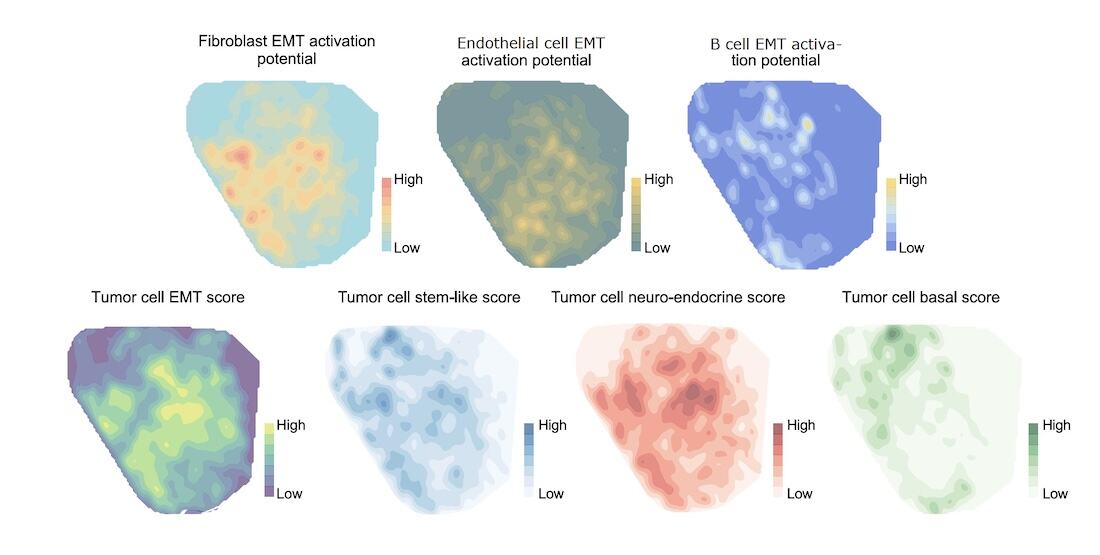
In a groundbreaking study published in Nature Methods, researchers at UT Southwestern Medical Center have introduced a state-of-the-art supercomputer model called Spacia. This innovative model is designed to revolutionize the detection and analysis of cell-to-cell communication (CCC). It holds significant potential to advance insights into various diseases, including cancers, autoimmune disorders, infectious diseases, and developmental abnormalities.

Cell-to-cell communication is a fundamental process vital for the function and regulation of living organisms. With Spacia, developed by the distinguished team of Dr. Tao Wang and Dr. Yang Xie, researchers possess a powerful tool to decode the complexities of CCC more effectively than ever before. By leveraging spatially resolved transcriptomics (SRT) data, Spacia offers a new approach to elucidate intricate cellular interactions that underpin biological processes and disease progression.

The pivotal aspect of Spacia lies in its utilization of multi-instance learning (MIL), a specialized technique within machine learning, to extract accurate CCC relationships from SRT data. The researchers conducted comprehensive investigations using Spacia across various contexts, yielding profound insights. For instance, in analyzing data from different cancer types, including prostate, breast, colon, skin, and lung cancers, Spacia uncovered crucial cellular interactions critical to disease progression and treatment response.

Dr. Xie emphasized the transformative potential of Spacia in translating molecular insights into clinical applications, ultimately enhancing patient care. This interdisciplinary research effort not only sheds light on hidden cellular interactions contributing to disease pathogenesis but also underscores the importance of integrating spatial and transcriptomic data to advance personalized medicine.

Furthermore, the collaborative nature of this study involving a diverse team of researchers underscores the interdisciplinary approach required to drive groundbreaking scientific discoveries. The contributions of researchers from various backgrounds, ranging from computational biology to oncology, highlight the collective effort needed to propel scientific innovation and improve patient outcomes.

As we witness the remarkable capabilities of Spacia in unraveling the complexities of cell-to-cell communication, the implications extend beyond biological research to potentially revolutionize clinical practice. The study's success underscores the critical role of advanced computational models in enhancing our understanding of cellular interactions and disease mechanisms, offering new avenues for targeted therapies and personalized treatments.

The research conducted by the UT Southwestern Medical Center team not only showcases the power of computational modeling in deciphering cellular communication networks but also underscores the importance of collaborative, multidisciplinary research in driving scientific progress. With Spacia paving the way for enhanced insights into cell-to-cell communication, the future holds promising prospects for unraveling the intricacies of disease and advancing precision medicine.

In conclusion, the introduction of Spacia represents a significant milestone in the field of computational biology and biomedical research, opening up new possibilities for understanding and targeting disease mechanisms at the cellular level. This study serves as a testament to the transformative potential of innovative technologies in advancing medical science and improving patient outcomes.
Hewlett Packard Enterprise reports impressive server sales

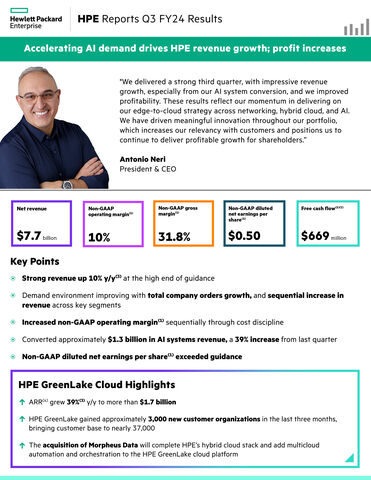
Hewlett Packard Enterprise (HPE) recently announced its financial achievements for the third quarter ending on July 31, 2024. The company saw significant growth in various segments, with a particular focus on a 35% increase to $4.3 billion in server revenue. This growth is attributed to HPE's strategic initiatives and investments in key areas to meet market demands.

HPE's success in the server segment demonstrates its innovation and ability to capture a significant market share. The increase in server revenue reflects the growing reliance on data centers and infrastructure solutions, especially amid increasing digital transformation efforts across industries. This performance underscores HPE's strength in delivering reliable and high-quality server solutions to meet business needs globally.

The positive growth in server revenue significantly contributed to HPE's overall revenue of $7.7 billion, marking a substantial 10% increase from the prior year period. The company's commitment to driving innovation and relevance in its product portfolio is reflected in its strong financial results for the quarter.

While the surge in server revenue is a notable achievement for HPE, other segments had varied performances. Intelligent Edge revenue witnessed a decline of 23%, Hybrid Cloud revenue decreased by 7%, and Financial Services revenue increased by 1%. These diverse outcomes across segments underscore the dynamic nature of the technology market and the importance of strategic decision-making to adapt to changing customer needs and market conditions.

In response to these results, HPE's leadership expressed confidence in the company's momentum and its ability to deliver profitable growth for shareholders. The positive outlook for the fourth quarter and the fiscal year 2024 highlights HPE's strategic planning and execution to navigate the competitive landscape and seize opportunities for growth in key business areas.

Looking ahead, HPE's focus on continued innovation, efficiency, and customer-centric solutions will be critical in sustaining its momentum and driving success in a rapidly evolving industry. The company's commitment to delivering value to customers and shareholders positions it as a leading player in the technology sector with a resilient strategy to navigate challenges and capitalize on emerging trends.

Hewlett Packard Enterprise's impressive performance in the third quarter of fiscal 2024, especially in the server revenue segment, showcases its resilience, innovation, and strategic approach to driving growth in a competitive market environment. As the company moves forward, its ability to adapt to changing market dynamics and deliver impactful solutions will be crucial in sustaining its position as a key player in the supercomputing technology landscape.

Astronomers make groundbreaking cosmological catalog with data from MeerKAT telescope

A group of international astronomers from the MeerKAT Absorption Line Survey (MALS) collaboration recently completed a groundbreaking project using the MeerKAT radio telescope. With its exceptional sensitivity and imaging fidelity, the telescope produced a catalog of radio sources from over 391 telescope pointings, making it the largest catalog from any MeerKAT survey to date. The researchers identified over one million sources, a significant achievement in radio astronomy.

MALS focused on depth rather than sky coverage, allowing it to detect many sources for the first time. The images and catalogs were analyzed and prepared for public release at the Max Planck Institute for Radio Astronomy (MPIfR) in Germany by Jonah Wagenveld, the lead author of the paper.

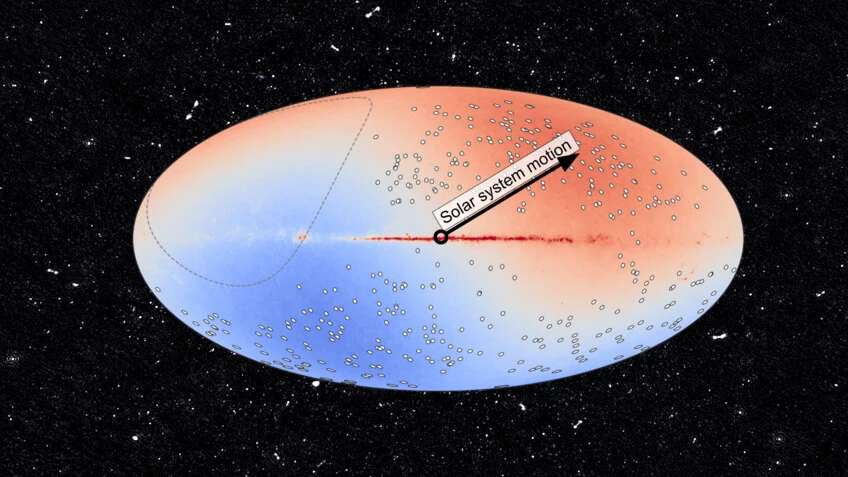
To produce deep images from the vast amounts of raw data, a complex processing pipeline and data storage facility were established at the Inter-University Centre for Astronomy and Astrophysics (IUCAA) in India. This extensive catalog allowed MALS to conduct a cosmological dipole measurement, which can be used to understand the structure of the universe. The findings suggest that the observed dipole effect might not be solely due to the motion velocity of the Solar system, but rather a genuine difference in the density of sources in different areas of the sky, contrary to current cosmological models.

This study showcases the remarkable sensitivity and accuracy of the MeerKAT radio telescope. The conclusion also underscores the precision of the sophisticated processing pipeline and data storage facility at IUCAA in India, highlighting their significance in deriving accurate and insightful results from large and complex data sets.

The milestone measurement sets the stage for future large-scale radio surveys and accuracy measurements. It allows for more effective observations of galaxy structures, contributing to a better understanding of the universe and our place in it. These findings demonstrate significant advancements in cosmology achievable through advanced technologies and techniques, as demonstrated in this study by MALS.