SUPERCOMPUTING NEWS SUPERCOMPUTING NEWS
    • MEDIA KIT
    • MOST READ
    • RSS FEED
    • ACADEMIA
    • AEROSPACE
    • APPLICATIONS
    • ASTRONOMY
    • AUTOMOTIVE
    • BIG DATA
    • BIOLOGY
    • CHEMISTRY
    • CLIENTS
    • CLOUD
    • DEFENSE
    • DEVELOPER TOOLS
    • EARTH SCIENCES
    • ECONOMICS
    • ENGINEERING
    • ENTERTAINMENT
    • GAMING
    • GOVERNMENT
    • HEALTH
    • OIL & GAS
    • INDUSTRY
    • INTERCONNECTS
    • MANUFACTURING
    • MIDDLEWARE
    • MOVIES
    • NETWORKS
    • PHYSICS
    • PROCESSORS
    • RETAIL
    • SCIENCE
    • STORAGE
    • SYSTEMS
    • VISUALIZATION
    • AcyMailing subscription form

    • ADD YOUR VIDEOS
    • MANAGE VIDEOS
    • CONVERSATION INBOX
    • SOCIAL ADVERTISER
    • SOCIAL NETWORK VIDEOS
    • SURVEYS
    • GROUPS
    • PAGES
    • MARKETPLACE LISTINGS
    • APPLICATIONS BROWSER
    • PRIVACY CONFIRM REQUEST
    • PRIVACY CREATE REQUEST
    • LEADERBOARD
    • POINTS LISTING
      • BADGES
    • TRADE SHOWS
Sign In
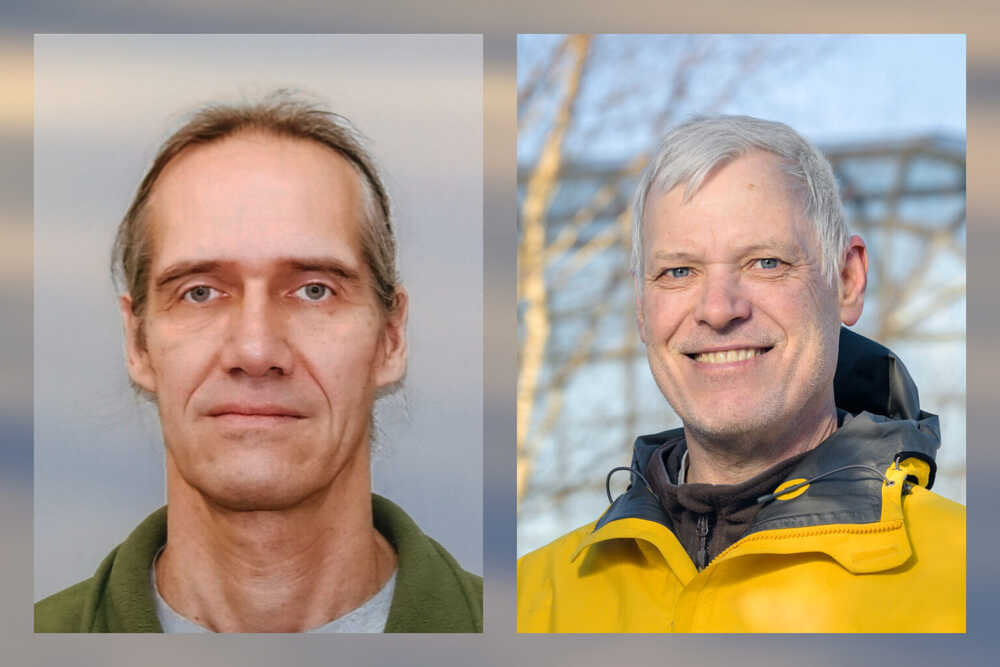
Ralf Greve (left) and John C. Moore (right), authors of the study. (Photo: Ralf Greve, John Moore)
Tyler O'Neal, Staff Editor ENGINEERING January 31, 2024, 8:00 am

Geoengineering may slow Greenland ice sheet loss, but scientists are skeptical

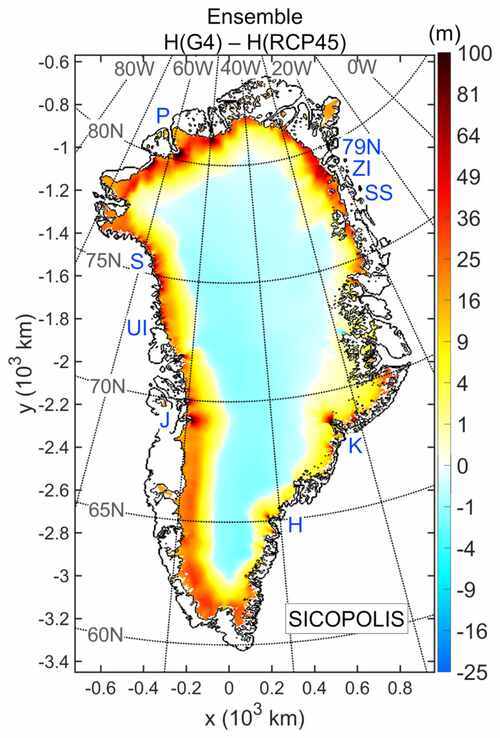
A recent study suggests that geoengineering might help slow the loss of the Greenland Ice Sheet, which could potentially reduce the rise in sea levels caused by ice melt. The study, led by Professor John C. Moore and Professor Ralf Greve, used supercomputer modeling to examine the impact of a geoengineering technique called stratospheric aerosol injection on the Greenland Ice Sheet. The technique involves adding aerosols to the stratosphere to increase the Earth's albedo and create a cooling effect. The following information is about the results obtained from SICOPOLIS simulations that compared the changes in the thickness of the Greenland Ice Sheet between GeoMIP G4 and RCP4.5. According to the study conducted by John C. Moore, Ralf Greve, et al. and published in the Journal of Geophysical Research: Earth Surface on November 27, 2023, the injection of sulfur dioxide into the stratosphere will have a significant protective effect on the margins of the ice sheet. As a result of this injection, the thickness of the ice sheet's margins, represented in yellow and red, will remain thicker.

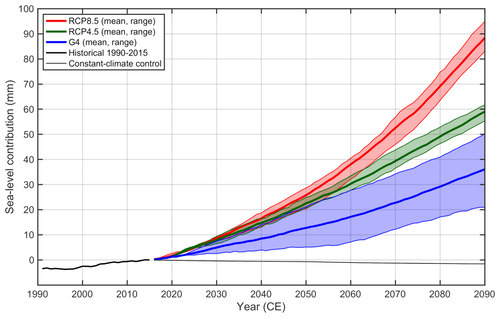
The study found that adding five million metric tons of sulfur dioxide to the stratosphere each year could limit ice loss to around 37.6 millimeters of sea-level rise, compared to the 90 millimeters projected under the worst-case scenario. However, scientists have warned that geoengineering is a highly contentious topic and more research and diverse perspectives are needed before considering such interventions. This image shows the estimated loss of mass from the Greenland ice sheet between 1990 and 2090, expressed as a contribution to sea level rise. It represents the impact of three different conditions: RCP8.5 (red line), which represents the worst-case scenario of unabated warming, RCP4.5 (green line), which is an intermediate scenario that could be achievable under current conditions, and GeoMIP G4 (blue line), which is RCP4.5 plus the injection of 5 million metric tons of sulfur dioxide per year into the stratosphere during 2020–2070. The image was created by Ralf Greve.

Critics argue that geoengineering diverts attention and resources away from the urgent need to reduce greenhouse gas emissions and address the root causes of climate change. Moreover, the potential unintended consequences and ethical implications of altering global weather patterns are concerning.

While the study provides valuable insights into the possible effects of stratospheric aerosol injection, it is essential to approach these findings with caution and consider the broader implications of climate interventions. Ultimately, a wide range of mitigation strategies must be explored, and a sustainable, holistic approach prioritized to address the root causes of global warming.

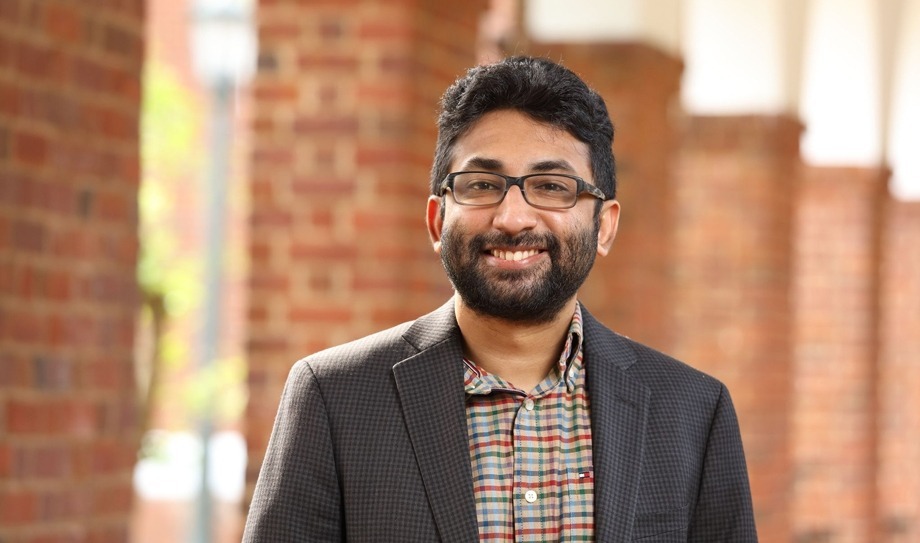
Ashish Venkat, an assistant professor of computer science and expert in cybersecurity, received an NSF CAREER Award to develop a hardware and software system for rapid and secure mitigation of cyberattacks, including zero-day events.

UVA engineering researcher receives Career Award for a groundbreaking plan to defeat next big cyberattack

Tyler O'Neal, Staff Editor ENGINEERING November 3, 2023, 11:00 am

Dr. Ashish Venkat is developing a decoupled security response system to mitigate zero-day attacks faster and protect computer programs

Dr. Ashish Venkat, a researcher at UVA Engineering, has received the prestigious CAREER Award from the National Science Foundation for his innovative approach to combat the next major cyberattack. With the rise of zero-day attacks, which exploit previously unknown vulnerabilities and catch victims off guard, Dr. Venkat is determined to revolutionize cybersecurity defense.

The digital landscape is increasingly threatened by zero-day attacks, with a new attack discovered approximately every 17 days. These attacks pose significant challenges to cybersecurity experts, as developers have zero days to fix the flaw before it is exploited. The average response time to patch these vulnerabilities is 15 days, which leads to substantial costs for companies and individuals. Additionally, the process of patching these vulnerabilities often introduces new vulnerabilities, leaving systems exposed.

Dr. Venkat's solution aims to reduce attack response time and protect programs from emerging cyber threats. He plans to develop a "decoupled" security response system, combining hardware and software components to create a holistic security-centric stack. This approach will enable technicians to fix vulnerabilities promptly through a separate security entrance, even while the system is under attack.

By creating a dedicated security tunnel within the system, Dr. Venkat's decoupled approach ensures that technicians can rapidly locate and fix vulnerable components without opening new entry points for bad actors. With the implementation of this innovative solution, he aims to stop emerging zero-day cyberattacks within 24 to 48 hours, significantly faster than the current average response time. Moreover, Dr. Venkat's system could dramatically reduce the time and financial costs associated with frequent patching, redeployment, and hardware upgrades.

Sandhya Dwarkadas, the Walter N. Munster Professor and chair of computer science at UVA, expressed her excitement about Dr. Venkat's project, stating that "Ashish's proposed stack is an innovative use of integrated hardware and software components dedicated to security functions. His project addresses a critical need, and I look forward to following his progress."

In addition to his research, Dr. Venkat aims to improve cybersecurity curricula and awareness among high school, vocational, and college students. His team will establish a mentorship program for undergraduate students, including those traditionally underrepresented in engineering and computer science, contributing to the development of a skilled cybersecurity workforce for the future.

Dr. Venkat's innovative approach doesn't stop at cybersecurity defense; he is also using offensive tactics, known as ethical or "white hat" hacking. By ethically hacking systems, his team aims to identify potential vulnerabilities and strengthen the security of modern systems.

Dr. Venkat's previous research has gained significant attention, including the discovery of a security vulnerability that impacted millions of computers with Intel and AMD processors. His work on hardware Trojan attacks has also been nominated for a best paper award at the DATE 2023 conference.

Global threats such as the WannaCry ransomware attack in 2017 have highlighted the urgency of developing effective cybersecurity measures. Dr. Venkat emphasizes that these attacks can impact anyone, not just large corporations. Small businesses and individuals are also at risk, and the repercussions can be devastating.

Dr. Venkat's ultimate goal is to create cost-effective cybersecurity solutions that are accessible to individuals and small businesses alike. He believes that it is essential to design systems that prioritize security from the outset and to enhance the security of existing vulnerable systems.

In conclusion, Dr. Ashish Venkat's receipt of the CAREER Award recognizes his pioneering work in combating zero-day attacks and improving cybersecurity. With the development of his decoupled security response system, he aims to provide faster mitigation for emerging cyber threats while reducing costs and protecting vital computer programs. His dedication to building a skilled cybersecurity workforce and his use of ethical hacking tactics demonstrate his commitment to ensuring the safety and security of individuals and businesses in an increasingly digital world.


Image Source: Unsplash

MSK researchers build new open-source method to improve decoding of single-cell data

Tyler O'Neal, Staff Editor ENGINEERING October 6, 2023, 5:06 am

In a groundbreaking development, researchers at Memorial Sloan Kettering Cancer Center (MSK) have introduced a new open-source computational method called Spectra, which significantly improves the analysis of single-cell transcriptomic data. This method, developed by a team of experts led by Dr. Dana Pe'er, has the potential to revolutionize our understanding of complex cell interactions and enhance the effectiveness of cancer treatments, particularly immunotherapy.

Over the past decade, single-cell technologies have transformed our understanding of health and disease. These innovative techniques allow scientists to study individual cells within a tissue sample, providing insights into cell types, gene expression patterns, and interactions between cells. However, the vast amount of data generated by single-cell methods presents a challenge in accurately interpreting and analyzing the information.

Analyzing gene programs across multiple cell types within a tissue is particularly challenging. The interactions between cancer cells and immune cells, for example, involve highly overlapping gene programs, leading to statistical complexities and potentially misleading results. To address this issue, the team at MSK developed Spectra, an open-source computational method that guides data analysis and identifies functionally relevant gene expression programs.

Spectra harnesses the power of existing scientific knowledge by utilizing libraries of gene programs generated from previous data. This starting knowledge acts as a guide for single-cell data analysis and can be adapted to identify new and modified gene programs. The method also considers information about the genes that define different cell types, allowing for a more accurate identification of gene programs underlying cellular functions.

Spectra has the potential to transform various fields of research, particularly in immuno-oncology. By overcoming the limitations of traditional analyses, Spectra enables the identification of novel biomarkers and drug targets. It also facilitates the study of large patient cohorts, leading to clinically meaningful insights. The method has already been adopted by teams from various institutions and is being used to study diseases beyond cancer.

One of the significant advantages of Spectra is its open-source nature. The MSK team has made the method freely available to researchers worldwide, encouraging collaboration and further advancements in the field. Additionally, the researchers have developed a user-friendly interface, making it accessible to scientists with varying levels of expertise.

Dr. Dana Pe'er, the senior author of the study, emphasizes the importance of developing robust and accessible tools for the scientific community. As a computer scientist, she aims to create methods that can be used in various contexts, enabling biological discoveries by a wider audience. Dr. Pe'er's vision extends beyond making new biological discoveries herself, as she finds equal satisfaction in building foundational tools to empower others in their research.

Spectra's potential impact is immense. By enhancing the analysis of single-cell data, researchers can gain a deeper understanding of cell interactions and uncover new insights into disease mechanisms. Collaborations between experts in statistics, computational biology, and immunology, as demonstrated in the development of Spectra, can lead to innovative approaches and exciting discoveries.

The development of Spectra by MSK researchers represents a significant breakthrough in the analysis of single-cell transcriptomic data. This open-source computational method has the potential to revolutionize our understanding of complex cellular interactions, particularly in the context of cancer and immunotherapy. By making Spectra freely available to researchers worldwide, the team at MSK has paved the way for collaborative research and the advancement of scientific knowledge in this field. With Spectra, we are one step closer to unlocking the full potential of single-cell technologies and improving patient outcomes in the fight against cancer.

  1. Japanese astronomers discover the first step towards planet formation; Unveiling the secrets of protostellar disks
  2. Ancient carbon in rocks releases as much Carbon Dioxide as the world’s volcanoes

Page 18 of 78

  • 13
  • 14
  • 15
  • 16
  • 17
  • 18
  • 19
  • 20
  • 21
  • 22
POPULAR RIGHT NOW
  • Supercomputers replace ‘bathtub’ flood maps with physics-based digital twins of Britain’s coastline
    Supercomputers replace ‘bathtub’ flood maps with physics-based digital twins of Britain’s coastline
  • Supercomputers push neural quantum simulation beyond previous limits
    Supercomputers push neural quantum simulation beyond previous limits
  • Intel’s AI supercomputing revival: Q2 financial surge signals new era for CPU-powered HPC infrastructure
    Intel’s AI supercomputing revival: Q2 financial surge signals new era for CPU-powered HPC infrastructure
  • AI infrastructure financing fears shake semiconductor sector
    AI infrastructure financing fears shake semiconductor sector
  • AWS supercomputing investment reaches historic scale as Amazon’s AI strategy powers record financial results
    AWS supercomputing investment reaches historic scale as Amazon’s AI strategy powers record financial results
  • Catching the wave of the future: Supercomputers unlock the hidden dynamics of Venus
    Catching the wave of the future: Supercomputers unlock the hidden dynamics of Venus
  • NCAR supercomputers run planet scale climate experiments impossible in the real world
    NCAR supercomputers run planet scale climate experiments impossible in the real world
  • AI hunts the cosmos: Machine learning helps astronomers discover the first ‘Wandering’ supermassive black hole caught destroying a star
    AI hunts the cosmos: Machine learning helps astronomers discover the first ‘Wandering’ supermassive black hole caught destroying a star
  • Supercomputing for the masses: Meta's vision of a personal superintelligence for everyone
    Supercomputing for the masses: Meta's vision of a personal superintelligence for everyone
  • NVIDIA helps turn AI compute into a new asset class as Wall Street mobilizes $500 billion
    NVIDIA helps turn AI compute into a new asset class as Wall Street mobilizes $500 billion
THIS YEAR'S MOST READ
  • Wall Street wants to trade supercomputing power like oil
    Wall Street wants to trade supercomputing power like oil
  • Beamforming the future: BeammWave's 6G push signals the rise of orbital-terrestrial wireless networks
    Joakim Axmon
    Joakim Axmon
  • Cosmic ambition at scale: UK’s supercomputer unlocks a 2.5 petabytes universe
    Cosmic ambition at scale: UK’s supercomputer unlocks a 2.5 petabytes universe
  • Hidden order, revealed at scale: Supercomputing, electron ptychography uncover the inner workings of relaxor ferroelectrics
    Hidden order, revealed at scale: Supercomputing, electron ptychography uncover the inner workings of relaxor ferroelectrics
  • Intel's Q1 results signal supercomputing surge driving Xeon momentum
    Intel's Q1 results signal supercomputing surge driving Xeon momentum
  • When stars fall apart: Supercomputing reveals the hidden physics of black holes
    When stars fall apart: Supercomputing reveals the hidden physics of black holes
  • MIT develops computational framework to probe dark matter via gravitational waves
    MIT develops computational framework to probe dark matter via gravitational waves
  • Explainable AI moves into the watershed: FAMU-FSU engineers build predictive framework for real-time E. coli forecasting
    FAMU-FSU College of Engineering Assistant Professor Nasrin Alamdari. (Scott Holstein/FAMU-FSU College of Engineering)
    FAMU-FSU College of Engineering Assistant Professor Nasrin Alamdari. (Scott Holstein/FAMU-FSU College of Engineering)
  • Multi-layer simulations reveal the hidden supply chain of solar prominences
    Multi-layer simulations reveal the hidden supply chain of solar prominences
  • Japanese scientists decode dolphin speed with supercomputing: Turbulence, vortices, and the hidden physics of propulsion
    Japanese scientists decode dolphin speed with supercomputing: Turbulence, vortices, and the hidden physics of propulsion
  • FRONTPAGE
  • LATEST
  • POPULAR
  • REGISTER
  • SOCIAL
  • VIDEO
  • SUBSCRIPTION
  • RSS
  • GUIDELINES
  • PRIVACY
  • TOS
  • ABOUT
  • +1 (816) 799-4488
  • editorial@supercomputingonline.com
© 2001 - 2026 SuperComputingOnline.com, LLC. All rights reserved. This material may not be published, broadcast, rewritten or redistributed without permission.
Sign In
  • FRONT PAGE
  • LATEST
    • MEDIA KIT
    • MOST READ
    • RSS FEED
    • ACADEMIA
    • AEROSPACE
    • APPLICATIONS
    • ASTRONOMY
    • AUTOMOTIVE
    • BIG DATA
    • BIOLOGY
    • CHEMISTRY
    • CLIENTS
    • CLOUD
    • DEFENSE
    • DEVELOPER TOOLS
    • EARTH SCIENCES
    • ECONOMICS
    • ENGINEERING
    • ENTERTAINMENT
    • HEALTH
    • INDUSTRY
    • INTERCONNECTS
    • GAMING
    • GOVERNMENT
    • MANUFACTURING
    • MIDDLEWARE
    • MOVIES
    • NETWORKS
    • OIL & GAS
    • PHYSICS
    • PROCESSORS
    • RETAIL
    • SCIENCE
    • STORAGE
    • SYSTEMS
    • VISUALIZATION
  • VIDEOS
    • ADD YOUR VIDEOS
    • MANAGE VIDEOS
  • COMMUNITY
    • TRADE SHOWS
    • SOCIAL NETWORK VIDEOS
    • SURVEYS
    • APPLICATIONS BROWSER
    • CONVERSATION INBOX
    • SOCIAL ADVERTISER
    • GROUPS
    • MARKETPLACE LISTINGS
    • PAGES
    • LEADERBOARD
    • POINTS LISTING
      • BADGES
    • PRIVACY CONFIRM REQUEST
    • PRIVACY CREATE REQUEST

Hey there! We noticed you’re using an ad blocker.