

ASU researchers store information, design uncrackable codes with DNA

For billions of years, Nature has used DNA as a molecular bank vault; a place to store her most coveted secrets: the design blueprints essential to life.

Now, researchers at ASU's Biodesign Institute are exploring the unique information-carrying capacities of DNA, hoping to produce microscopic forms whose ability to encrypt, store and retrieve information rival those of the silicon-based semiconductor memories found in most computers.

If successful, DNA-based storage technologies could one day encode everything from a late quartet of Beethoven to a season of Westworld. The information can be imprinted in digital form in sequence strands of DNA capable of joining together with other DNA segments and self-assembling into a desired target structure, through the base-pairing properties of DNA's four nucleotides.

The technique of DNA origami permits the construction of arbitrary nanostructures in a two-step process. A long segment of single-stranded DNA, whose sequence has been designed to fold into a desired nanostructure through base-pairing, is produced. This is known as the scaffold strand. Step 2 involves the addition of shorter staple strands, which guide the folding and hold the resulting nanostructure together. The method allows the construction of a virtually endless array of forms.

Molecular cryptography with DNA origami nanostructures involves digitally encoding desired information as spot patterns within DNA strands. The encrypted data held in these information strands can subsequently be recovered when complimentary staple strands induce the DNA structure to spontaneously fold into a pre-determined pattern. Hence, the staple strands act like encryption keys. Without them, the information can not be retrieved.

The enormous variability in terms of sequence length and binding location of the staple strands used for message deciphering allows for exceptionally powerful molecular cryptography, resistant to code-breaking. Indeed, fully exploiting the encryption potential of DNA origami would permit an encryption key size of ~1500 bits, a five-fold improvement over the existing Advanced Encryption Standard (AES). Hao Yan, director the Biodesign Center for Molecular Design and Biomimetics is the Milton D. Glick Distinguished Professor at ASU and researcher in the School of Molecular Sciences.{module INSIDE STORY}
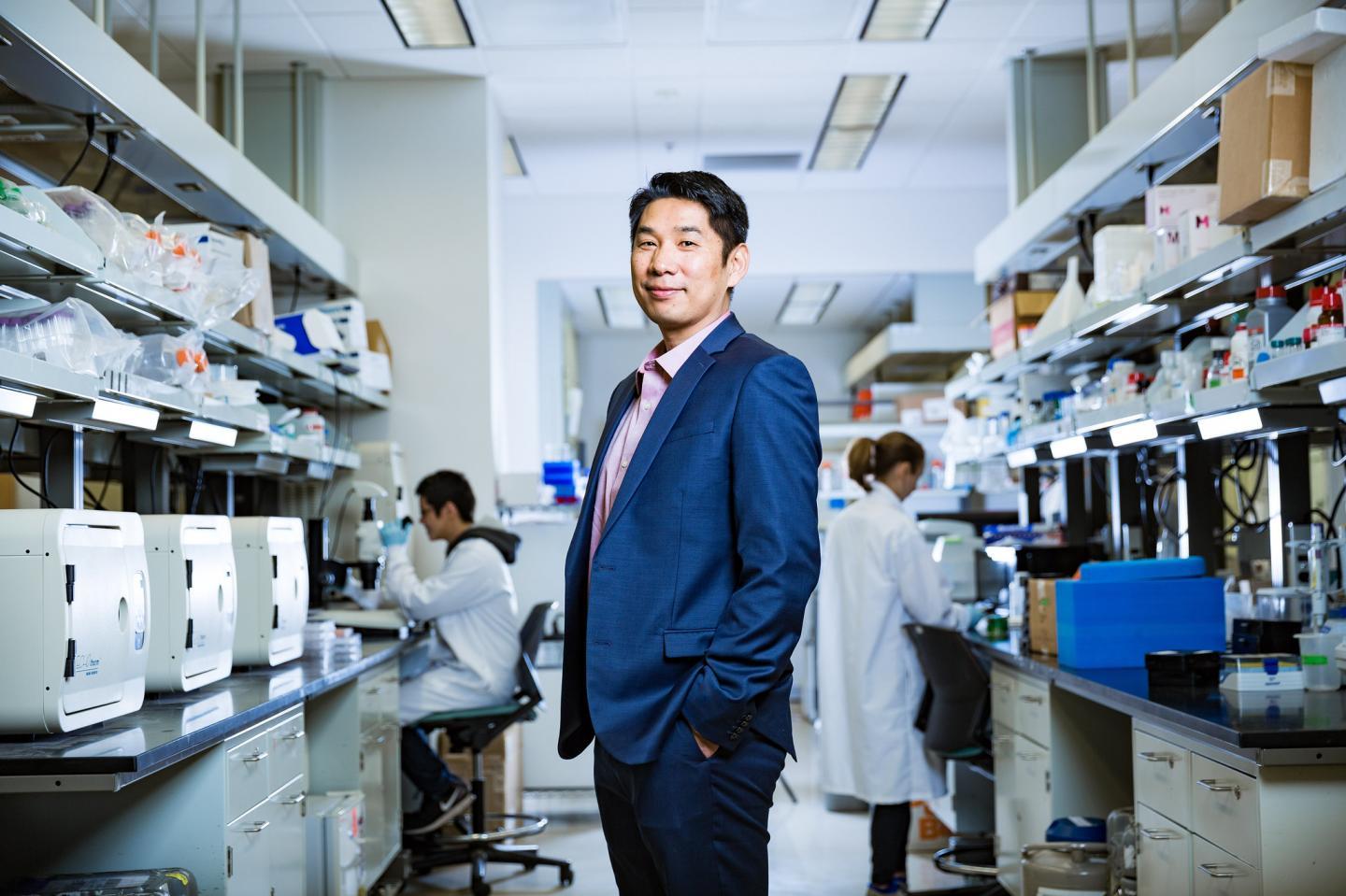
The National Science Foundation has recently approved $1.5 million toward the ambitious project, which will leverage the skills of a diverse collection of scientists including researchers in chemistry, biology, physics, materials science, and engineering.

Hao Yan, director of the Biodesign Center for Molecular Design and Biomimetics and a leading figure in the field of structural DNA nanotechnology, is the Principal Investigator of the new project: "It is a truly interdisciplinary pursuit. The project combines chemistry, optics, solid-state physics, electronics, and machine learning," Yan said. (Yan is also the Milton D. Glick Distinguished Professor at ASU and researcher in the School of Molecular Sciences.)

Two notable hurdles exist to the realization of DNA information storage technologies, each of which is addressed in the new project. First, the readout for conventional DNA-based memories has had to rely on expensive, cumbersome, and error-prone methods of DNA sequencing. For the encrypted nanostructures, sapphire-based nanopores will enable rapid readout of the ultrafine nanoscopic patterns on the DNA structures, which is critical to high-security encryption, maximizing temporal readout resolution while minimizing readout noise and resultant errors.

This advance is accomplished by replacing silicon, conventionally used as a basic material in device construction but conductive and prone to high noise, with sapphire, an insulating crystal with low-noise performance. Additionally, this type of nanopore readout has the potential to be deployed as a portable device, similar to a USB dongle, and directly plugged into a computer for decoding into CDs, movies, etc.

The second major obstacle involves the accurate characterization of the resulting DNA nanostructures. This will be accomplished using a method known as DNA-PAINT, a state-of-the-art super-resolution microscopy technique that allows researchers to observe the minute DNA nanoforms well below the classic diffraction limit of light. This advance will improve the encryption throughput by a few orders of magnitude when compared with previously used atomic force microscopy.

In addition to Yan, the project includes co-PIs Rizal Hariadi and Chao Wang. All PIs are members of the Biodesign Center for Molecular Design and Biomimetics at ASU. Co-PI Hariadi is also affiliated with the Department of Physics. Co-PI Wang is from the School of Electrical, Computer & Energy Engineering.
UNIGE scientists show embryos taking shape via buckling

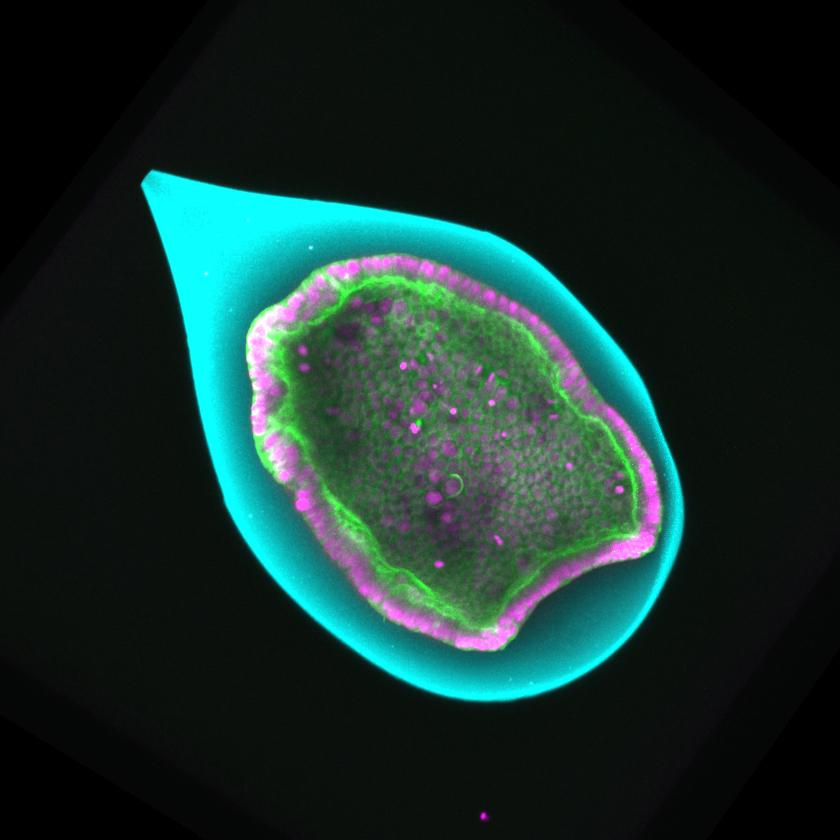
The embryo of an animal first looks like a hollow sphere. Invaginations then appear at different stages of development, which will give rise to the body’s structures (the brain, digestive tract, etc.). According to a hypothesis that dates back more than a century, buckling could be the dominant mechanism that triggers invagination – buckling being a term that describes the lateral deformation of a material under compression. Although this explanation has long won the support of biologists, it has never been subjected to formal proof, mainly because of the difficulty – if not the impossibility – of measuring the tiny forces involved. This gap has finally been filled thanks to a study carried out by a multidisciplinary team of scientists from the University of Geneva (UNIGE). This tour de force, published in the journal Developmental Cell, owes its success to a long collaboration between specialists in biological experimentation, analytical theoretical physics, and supercomputer simulation.

“The basic question underpinning our work is to find out how to shape cellular tissue,” begins Aurélien Roux, a professor in the Department of Biochemistry in UNIGE’s Faculty of Science. Observing embryo development has made it possible to describe several mechanisms that are at work. One of these is apical constriction: a local curvature of the surface of the embryo under the effect of a coordinated deformation of the cells themselves (their “apex” tightens and their “base” relaxes). But, as Professor Roux continues: “This mechanism is by no means powerful enough to explain the appearance of major invaginations during the development of the blastocyst (one of the early stages of the embryo).” A proliferating epithelium encapsulated in a hollow sphere spontaneously invaginates.

A century ago, biologists suggested that buckling is the physical mechanism that generates these deep folds. The same phenomenon is observed when you flatten a sheet of paper and bring the two opposite edges together: the middle of the sheet rises. In the case of embryos, the lateral force comes from cells that, when they proliferate, exert increasing pressure on the surface. Moreover, this surface is confined in a vitelline envelope, which – although it is elastic – prevents any spatial expansion.

Since the description of the phenomenon is quite eloquent and the analogies in nature are legion, the explanation easily won consensus in the biologist community. It has long been unthinkable to measure the forces present on the surface of embryos in order to verify that it really is a question of buckling (which obeys the well-known laws of material physics) and not another mechanism. 

Analytical, IT, and biological approaches

Nevertheless, the Geneva scientists – keen to provide quantitative proof of the phenomenon – conducted a long-term study. Anastasiya Trushko, a researcher in the Department of Biochemistry, and Professor Roux managed to manufacture small envelopes with all the physical properties of the natural vitelline. They also succeeded in growing a monolayer formed of a hundred cells on the inner surface. These small models, less than half a millimeter in diameter, were perfectly controlled under laboratory conditions and were used to recreate the phenomenon of invagination in vitro and to study it under a microscope. The forces involved were determined in particular thanks to small variations in the thickness of the envelope of the artificial embryos.

Meanwhile, Carles Blanch-Mercader and Karsten Kruse, respectively a researcher and professor in UNIGE’s Departments of Biochemistry and Theoretical Physics, used the measurements to show that the relationship between the strength and shape of the artificial embryos was as expected for buckling. With the help of material physics equations, they were able to extract the macroscopic mechanical parameters from the cellular tissues, such as their stiffness.

Finally, in order to link these macroscopic characteristics to biological processes at the cellular level, Aziza Merzouki and Bastien Chopard – respectively a researcher and professor in the Computer Science Department at UNIGE – simulated the development of the embryo by computer, viewing it as a set of independent cells. “The IT approach gives the unique possibility of observing certain aspects of the phenomenon that are normally inaccessible,” explains Bastien. “We can then follow in detail the temporal evolution of the buckling and, above all, understand how the biological processes (proliferation, contractility) at cell level modify the mechanical parameters of the tissue.”

Repeated round trips

There were endless round trips between the three researchers and their teams to determine the correct values for the numerous parameters that come into play and so that the three approaches arrived at the same result, i.e. as close as possible to reality. It took six years of painstaking work to get there.

“By quantifying buckling as precisely as possible, we were able to demonstrate that it is a potential mechanism for explaining the formation of invagination in embryos,” concludes Professor Roux, before adding: “It is likely that other mechanisms, such as apical constriction, initiate the folding and that the buckling accentuates it before finally obtaining the expected result.”

Unraveling 66 million years of climate history from ocean sediments

Based on extensive data analysis, an international team publishes global reference curve in the academic journal Science

"Our goal was to create a new reference of past climate over the last 66 million years, which not only incorporates the highest-resolution data but is also more accurately dated," explains first author Thomas Westerhold of MARUM. "We now know more accurately when it was warmer or colder on the planet and we also have a better understanding of the underlying dynamics."

"Our mathematical analyses revealed what is at first invisible in the sediment - the hidden relationships and recurring patterns in the climate," says Norbert Marwan of PIK. "So the view into the past is also a glimpse into the future. We can learn something about the staggeringly rapid anthropogenic changes of our present century from the slow natural climate fluctuations occurring over millions of years." The climatic changes of the past 66 million years can be studied like a colorful barcode. {module INSIDE STORY}

Layers of sediment on the ocean floor have been cored across the world for more than five decades through internationally coordinated scientific ocean drilling expeditions of the International Ocean Discovery Program (IODP) and its predecessor programs (DSDP, ODP, IODP). By studying these sediments and the microfossils within, scientists are able to reconstruct and analyze global climate changes into the distant past. They examine the evidence preserved in oxygen and carbon isotopes, which provides information about the past deep-sea temperatures, global ice volumes and the carbon cycle. These clues are stored in the shells of microorganisms that once lived on the sea floor. They represent an archive of past climate conditions that researchers use to draw comparisons between the past, present and future.

The framework of a global climate reference curve has existed since 2001, although the data coverage older than 34 million years was generally poor. Since that pioneering work, however, the climate records obtained from many new sediment cores have improved, both quantitatively and qualitatively. Particularly over the past two decades, scientific drilling programs have targeted their drilling into older geological strata. Researchers therefore now have access to higher quality, more complete sediment archives, and are able to reconstruct global climate in much more detail than ever before.

The new climate reference curve, called CENOGRID (CENOzoic Global Reference benthic foraminifer carbon and oxygen Isotope Dataset), is a reconstruction of the Earth's climate since the last great extinction 66 million years ago, which introduced a new Era, the Cenozoic. "It is a tremendous joint effort by many colleagues internationally to recover the sample material, analyze it and compile it into an integrated curve," explains Westerhold.

The age model is the key component of the new reference curve. Recurring patterns in the sediment cores, called Milankovi cycles, reflect changes in the Earth's orbit around the sun. Like a metronome, these fluctuations have dictated the cyclic patterns of climate change. By identifying these astronomical cycles, the climate of the past 66 million years has now been timed continuously for the first time, allowing it to be dated much more accurately than ever before. "We have radically improved the data and age models for the time older than 34 million years in particular," says Westerhold. This is important because paleoclimate research is always concerned with finding parallels in the past to our current climate. "We want to understand what climate conditions existed in the past, what processes lay behind them, and how they proceeded. The time from 66 to 34 million years ago, when the planet was significantly warmer than it is today, is especially interesting."

Innovations in drilling strategy and technology in the early 90's helped over the past few decades to recover the high quality sediment archives required to produce a detailed global climate dataset. With new statistics, the CENOGRID makes it possible to apply advanced procedures for analyzing complex data. In the study, these are now making a significant contribution toward determining and better understanding the climate conditions and dynamics of the past. "We can thus show that there were four predominant climatic modes in the Cenozoic - hothouse, warmhouse, coolhouse and icehouse," explains Marwan. "In broad terms, this classification has been known for some time, but it was only through data analysis that we were able to identify the fundamental states with statistical precision and reveal their characteristic dynamics."

The key to this is the advanced statistical method of recurrence analysis. "Recurrence analysis reveals the dynamics of the complex climate system, including changes and hidden patterns," according to Norbert Marwan. "This, therefore, goes far beyond the direct data analyses from the drill cores." This kind of analysis also makes it possible to draw inferences about the probability of events, provided there is a large amount of data and long data series. The long time span of 66 million years is advantageous for various reasons, "because only then can we investigate whether climatic events or patterns recur and are therefore determined by natural processes. Or whether they are anomalous and therefore a cause for concern."

In the future, the new climate reference curve CENOGRID can serve as a basis for researchers worldwide to accurately correlate their data within the context of climate history. With more data, it is now possible to not only further refine the picture of the climatic past, but also to identify regional intricacies. The authors emphasize that this is fundamental for testing the reliability of climate models for the future.