

NAU researcher wins $3.75 million NCI grant for advanced cancer research software

New supercomputing technologies will analyze and archive data focused on the interplay between the human microbiome and diverse types of cancer

Greg Caporaso, director of the Center for Applied Microbiome Science, part of the Pathogen and Microbiome Institute (PMI) at Northern Arizona University, has been awarded a $3.75 million grant by the National Cancer Institute (NCI) to build software capable of analyzing and archiving data focused on the interplay between the human microbiome (the trillions of microorganisms living in and on the human body) and diverse types of cancer.

"The development of certain types of cancer - gastric cancer and cervical cancer, for example - have well-established microbial links," said Caporaso. "Our technologies for studying the human microbiome have rapidly advanced over the past two decades and continue to advance daily. As a result, we now have many new techniques to generate data on the composition and activities of the human microbiome, and many cancer researchers are working to use this information to understand new microbial links. 
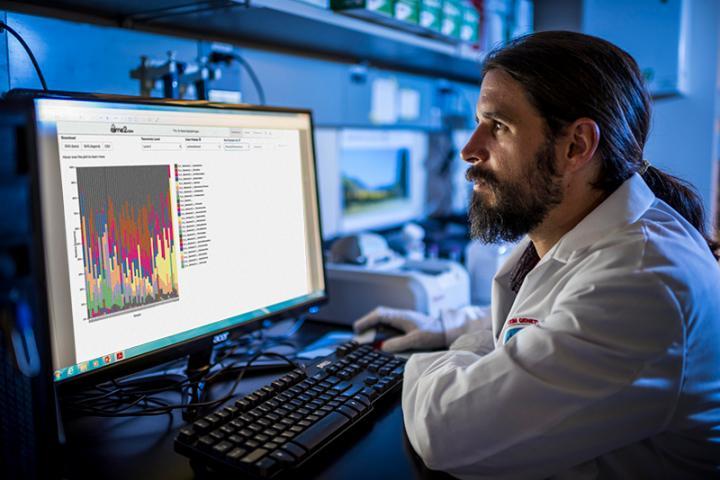
Northern Arizona University Associate Professor Greg Caporaso{module INSIDE STORY}"However, since the analytic methods are so new, the software needed to turn this data into new knowledge is currently lacking. With this funding, we'll fill that software gap with the development of new open-source software for relating the human microbiome to cancer. We expect that that will ultimately allow us to better understand cancer development, to detect cancer earlier, and to improve cancer treatment and recovery."

The NCI-funded project will enable Caporaso and his team to enhance QIIME 2, the bioinformatics software platform that they first released in late 2016, to improve access to cancer microbiome bioinformatics methods and data. Caporaso's team at NAU includes graduate and undergraduate students and full-time software engineers.

Matthew Dillon and Evan Bolyen, two research software engineers in Caporaso's lab and co-first authors on the QIIME 2 paper, will be centrally involved in all of the design and development aspects of this project. The team plans to develop QIIME 2 into a microbiome multi-omics bioinformatics platform, supporting analysis and integration of genomic, metagenomic, metabolomics, and other "omics" data, driven by the needs of the cancer research community.

"Many important cancer microbiome projects have made advances by integrating different data types, yet considerable technical hurdles remain to make microbiome multi-omics bioinformatics accessible by all researchers whose projects would benefit from these methods," Caporaso said.

With a background in software engineering, Caporaso's previous project, QIIME 1, was started 12 years ago in collaboration with his post-doctorate advisor Rob Knight. QIIME 1 was designed to facilitate their own studies into microbiomes - such as those found in humans or in the soil - but also to make these methods accessible to all microbiome researchers.

Caporaso joined the faculty of NAU in 2011, where he continued his work on QIIME 1. Through his work with the Partnership for Native American Cancer Prevention, and subsequently, during a sabbatical at the NCI, Caporaso realized the potential importance of the human microbiome to cancer. His primary papers on QIIME 1 and 2 have now been cited nearly 25,000 times in the primary research literature, making him one of the most highly cited researchers at NAU, according to Google Scholar, and Caporaso notes that nearly 20 percent of those citations are from studies about cancer. This led him to begin focusing efforts on better supporting the cancer research community with QIIME, and ultimately to this five-year award from the NCI.

"This is exciting for cancer researchers because it's going to enable a new type of study in microbiome research," he said. "QIIME has typically been used to generate a taxonomic understanding of the microbiome--which microbes are present in this environment, and how communities of microbiomes compare to each other based on their taxonomic composition. New technologies are beginning to be applied to help us consider other factors, such as what biological activities the microbes are engaged in, and the metabolic products of those activities. Integrating these data, along with data about the host such as their genome, is sure to lead us to new mechanistic understandings of the role of the microbiome in cancer."

QIIME 2 will support the analysis of new types of data, such as metagenomics and metabolomics, to answer questions regarding the activity of microbes. This will include information on the functional genes encoded in microbial genomes and the metabolites present in the environment - small molecules like caffeine or ethanol and products produced by microbes - and how they might be impacting the host.

"With microbiome profiling, we're getting an idea of the biology; with metabolite profiling, we're getting a picture of the chemistry. That helps us understand the bigger, more holistic view of what's going on in this infinitely complex environment of the gut microbiome where you've got trillions of cells interacting with each other and their environments, all creating and consuming metabolites, which impact their behavior and the behavior of our cells. We'll be able to know not only who is there in terms of microorganisms, but what they are doing, where they are living and how they are interacting."

As with QIIME 1, QIIME 2 is an open-source software platform, free and available for use by anyone. QIIME 2 was designed to expand automated methods of tracking and reporting to improve research reproducibility, and with this funding the team will create new tools to assist with long-term data archiving. Updates to QIIME 2 are released quarterly by Caporaso's team, and they have already begun working toward some of the aims of this grant.

"This is an incredibly exciting project for the cancer microbiome research community," said Melissa Herbst-Kralovetz, associate professor at the University of Arizona Cancer Center and director of the Women's Health Research Program at The UA College of Medicine-Phoenix. "My lab investigates the role of microbiota in gynecologic cancer, sexually transmitted infections and women's health. At present, we're leveraging 3D in vitro human models to better understand the role of microbiota in cancer development and progression, which relies on integrating diverse data types from clinical samples and our lab-based 3D models. The new functionality being developed for QIIME 2 will help us to assess the accuracy of these models, and ultimately translate the information we gain from these 3D models back to the clinic to fight cancer."

"When we're able to start connecting the host biology, the microbiology, and the chemistry, that's when we're really going to be able to figure out some of the missing links between the microbiome and cancer development or cancer treatment," Caporaso said.
Gao’s SIS patch modeling shows impact of human mobility on disease spread

Due to continual improvements in transportation technology, people travel more extensively than ever before. Although this strengthened connection between faraway countries comes with many benefits, it also poses a serious threat to disease control and prevention. When infected humans travel to regions that are free of their particular contagions, they might inadvertently transmit their infections to local residents and cause disease outbreaks. This process has occurred repeatedly throughout history; some recent examples include the SARS outbreak in 2003, the H1N1 influenza pandemic in 2009, and—most notably—the ongoing COVID-19 pandemic.

Imported cases challenge the ability of nonendemic countries—countries where the disease in question does not occur regularly—to entirely eliminate the contagion. When combined with additional factors such as genetic mutation in pathogens, this issue makes the global eradication of many diseases exceedingly difficult, if not impossible. Therefore, reducing the number of infections is generally a more feasible goal. But to achieve control of a disease, health agencies must understand how travel between separate regions impacts its spread.

In a paper publishing on Tuesday in the SIAM Journal of Applied Mathematics, Daozhou Gao of Shanghai Normal University investigated the way in which human dispersal affects disease control and total extent of an infection’s spread. Few previous studies have explored the impact of human movement on infection size or disease prevalence—defined as the proportion of individuals in a population that are infected with a specific pathogen—in different regions. This area of research is especially pertinent during severe disease outbreaks, when governing leaders may dramatically reduce human mobility by closing borders and restricting travel. During these times, it is essential to understand how limiting people’s movements affects the spread of disease.

To examine the spread of disease throughout a population, researchers often use mathematical models that sort individuals into multiple distinct groups, or “compartments.” In his study, Gao utilized a particular type of compartmental model called the susceptible-infected-susceptible (SIS) patch model. He divided the population in each patch—a group of people such as a community, city, or country—into two compartments: infected people who currently have the designated illness, and people who are susceptible to catching it. Human migration then connects the patches. Gao assumed that the susceptible and infected subpopulations spread out at the same rate, which is generally true for diseases like the common cold that often only mildly affect mobility.

Each patch in Gao’s SIS model has a certain infection risk that is represented by its basic reproduction number — the quantity that predicts how many cases will be caused by the presence of a single contagious person within a susceptible population. “The larger the reproduction number, the higher the infection risk,” Gao said. “So the patch reproduction number of a higher-risk patch is assumed to be higher than that of a lower-risk patch.” However, this number only measures the initial transmission potential; it can rarely predict the true extent of infection.

Gao first used his model to investigate the effect of human movement on disease control by comparing the total infection sizes that resulted when individuals dispersed quickly versus slowly. He found that if all patches recover at the same rate, large dispersal results in more infections than small dispersal. Surprisingly, an increase in the amount by which people spread can actually reduce the basic reproduction number while still increasing the total amount of infections.  

The SIS patch model can also help elucidate how dispersal impacts the distribution of infections and prevalence of the disease within each patch. Without diffusion between patches, a higher-risk patch will always have a higher prevalence of disease, but Gao wondered if the same was true when people can travel to and from that high-risk patch. The model revealed that diffusion can decrease infection size in the highest-risk patch since it exports more infections than it imports, but this consequently increases infections in the patch with the lowest risk. However, it is never possible for the highest-risk patch to have the lowest disease prevalence.

Using a numerical simulation based on the common cold—the attributes of which are well-studied—Gao delved deeper into human migration’s impact on the total size of an infection. When Gao incorporated just two patches, his model exhibited a wide variety of behaviors under different environmental conditions. For example, the dispersal of humans often led to a larger total infection size than no dispersal, but rapid human scattering in one scenario actually reduced the infection size. Under different conditions, small dispersal was detrimental but large dispersal ultimately proved beneficial to disease management. Gao completely classifies the combinations of mathematical parameters for which dispersal causes more infections when compared to a lack of dispersal in a two-patch environment. However, the situation becomes more complex if the model incorporates more than two patches. {module INSIDE STORY}

Further investigation into Gao’s SIS patch modeling approach could reveal more nuanced information about the complexities of travel restrictions’ impact on disease spread, which is relevant to real-world situations — such as border closures during the COVID-19 pandemic. “To my knowledge, this is possibly the first theoretical work on the influence of human movement on the total number of infections and their distribution,” Gao said. “There are numerous directions to improve and extend the current work.” For example, future work could explore the outcome of a ban on only some travel routes, such as when the U.S. banned travel from China to impede the spread of COVID-19 but failed to block incoming cases from Europe. Continuing research on these complicated effects may help health agencies and governments develop informed measures to control dangerous diseases.

Computational study of famous fossil reveals evolution of locomotion in 'ruling reptiles'

New modeling of ancient fossil movement reveals an important step in the evolution of posture in the ancestors of dinosaurs and crocodiles

Scientists from the University of Bristol and the Royal Veterinary College (RVC) used three-dimensional computer modeling to investigate the hindlimb of Euparkeria capensis-a small reptile that lived in the Triassic Period 245 million years ago-and inferred that it had a "mosaic" of functions in locomotion.

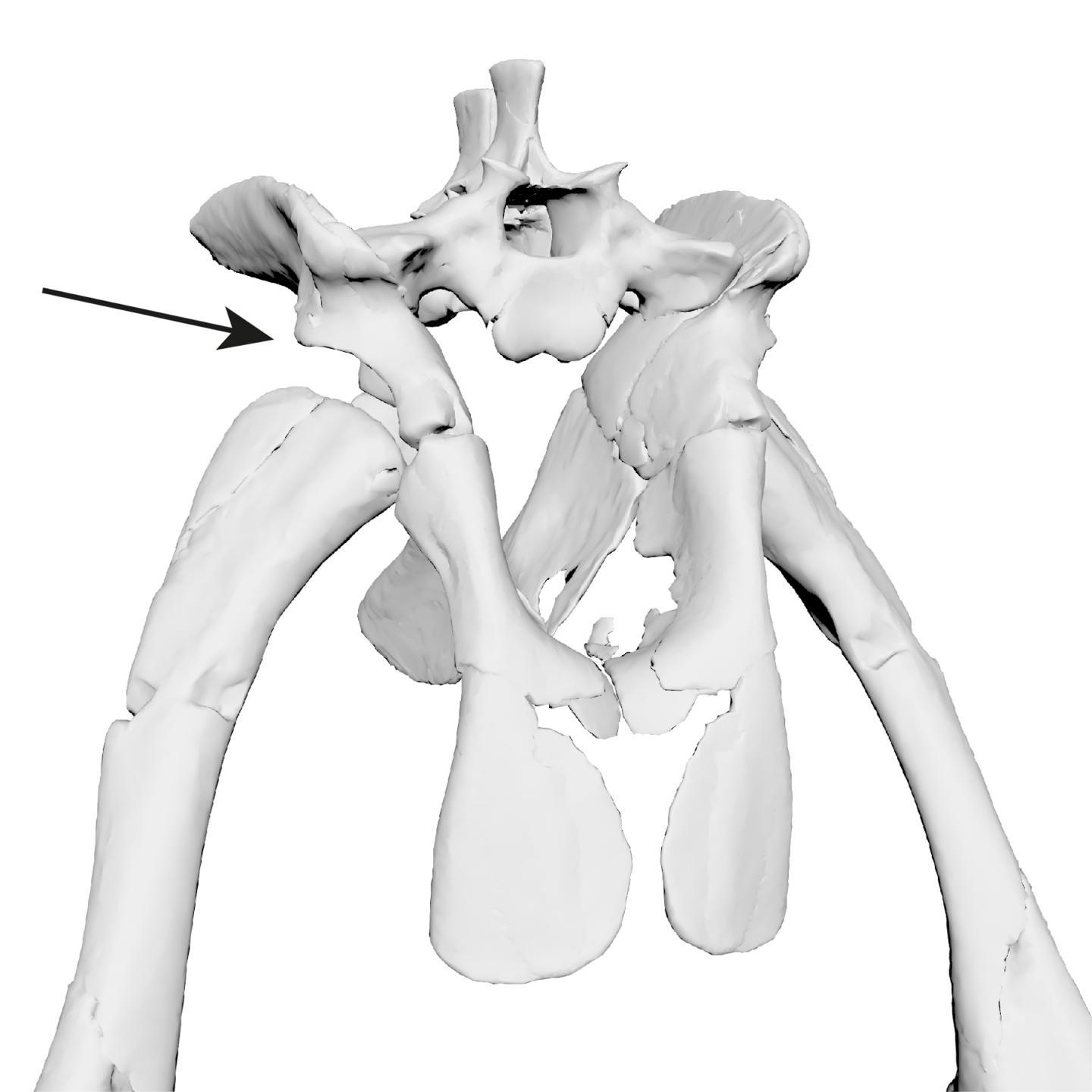
The study, which was published today in Scientific Reports, was led by researcher Oliver Demuth, joined by Professors Emily Rayfield (Bristol) and John Hutchinson (RVC). Their new micro-computed tomography scans of multiple specimens revealed unprecedented information about the previously hidden shape of the hip bones and structure of the foot and ankle joint. CAPTION This projection of the hip bone above the hip joint is called

Euparkeria has been known from numerous fossil specimens since the early 1900s and was found to be a close relative of the last common ancestor of both crocodiles and birds. While birds and crocodiles show different locomotion strategies, two-legged birds with an upright (erect) posture, shared with two and four-legged dinosaurs, and crocodiles having a four-legged (quadrupedal) sprawling posture, their ancestor once shared a common mode of locomotion and Euparkeria can provide vital insight into how these differences came to be.

The authors' new reconstruction of the hip structure showed that Euparkeria had a distinctive bony rim on the pelvis, called a supra-acetabular rim, covering the top of the hip joint. This feature was previously known only from later archosaurs on the line to crocodiles and often was used to infer a more erect posture for these animals; reversed in crocodiles as they became more amphibious. The hooded rim allowed the pelvis to cover the top of the thigh bone and support the body with the limbs in a columnar arrangement; hence this type of joint is called 'pillar-erect'. Euparkeria is so far the earliest reptile with this structure preserved. Could it, therefore, have assumed a more erect, rather than more sprawling, posture as well?

To test how the hindlimb could or could not have moved in life, the team estimated how far the thigh bone could have rotated until it collided with the hip bones, and their models addressed how the ankle joint could have been posed, too. The supercomputer simulations suggested that while the thigh bone could have been held in an erect posture, the foot could not have been placed steadily on the ground due to the way the foot rotates around the ankle joint, implying a more sprawling posture. However, the bony rim covering the hip joint restricted the movement of the thigh bone in a way that is unknown in any living animal capable of a more sprawling gait, hinting at a more upright posture.

The team's simulations thus revealed seemingly contradictory patterns in the hip and ankle joint. While Euparkeria is so far the earliest reptile with this peculiar hip structure, an ankle joint allowing a more erect posture appeared later on in Triassic archosaurs. Dr. John Hutchinson, Professor of Evolutionary Biomechanics at the RVC, commented:

"The mosaic of structures present in Euparkeria, then, can be seen as a central stepping-stone in the evolution of locomotion in archosaurs."

First author Oliver Demuth, a research technician at the RVC and former Masters student at the University of Bristol commented:

"The hip structure of Euparkeria was extremely surprising, especially as it functionally contradicts the ankle joint. Previously it was thought that both were linked and evolved synchronously. However, we were able to demonstrate that these traits were in fact decoupled and evolved in a step-wise fashion."

Dr. Emily Rayfield, Professor of Palaeobiology at the University of Bristol commented:

"This approach is exciting because Using CT scan datasets and computer models of how the bones and joints fitted together have allowed us to test long-standing ideas of how these ancient animals moved and how the limbs of the earliest ancestors of birds, crocodiles, and dinosaurs may have evolved"