OU's Crossley wins $2 million NSF grant to advance polymer recycling tech

Young researcher to explore the advancement of polymer recycling technologies in hopes of sending less multi-layer plastics to landfills

Steven Crossley, associate professor at the University of Oklahoma School of Chemical, Biological and Materials Engineering, has been awarded a four-year, $2 million collaborative grant by the Emerging Frontiers in Research and Innovation program of the National Science Foundation to advance polymer recycling technologies in hopes of sending less multi-layer plastics to landfills.

Not all plastics are created equally - from milk jugs and soda bottles, which are readily recyclable, to multi-layered packaging that increases shelf life and requires less material but is less recyclable - the challenge is for researchers to design a process that allows more of the plastics we use in our everyday lives to end up in our recycling bins rather than the local landfill. But not only does this require scientists to design innovative ways to break down these various types of plastic, but it also must be economical for the plastic producers and recyclers. crossly 9af6e{module INSIDE STORY}

Impurities, such as food and drink in the bottom of a plastic container, is another challenge scientists face in the recycling process. These contaminants are difficult to eliminate, and once melted down, degrade the quality of the recycled material.

"But, what if," Crossley asks, "we could design catalysts that target and convert those impurities to either make them more compatible with the rest of the plastic - or convert them selectively to carbon dioxide or light gases that could easily be removed, producing a pure stream of higher value."

Crossley's research group's efforts will be complemented by computational simulations led by Bin Wang, associate professor, and experimental efforts in a scaled-up continuous system led by Lance Lobban, professor, both in the School of Chemical, Biological and Materials Engineering at the University of Oklahoma.

In addition to the upgrading of mixed plastic waste streams using catalysts, Adam Feltz, associate professor of psychology at OU, will incorporate public perception surveys to determine

how best to motivate appropriate public participation in plastic waste collection systems.

The project includes an outreach component for underrepresented and middle and high school students to attend a summer camp, led by Lobban.

Crossley, a registered Native American and faculty advisor to OU's American Indian Science and Engineering Society chapter, will also involve underrepresented undergraduate students in the research during the course of the project.

Christos Maravelias, professor of chemical and biological engineering at Princeton University, and his team will focus on modeling of economic scenarios. These cost estimates will be invaluable as the project evaluates the fiscal efficiencies of these potential new processes.
Iowa State researchers make sense of a universe of corn based on genomics, data analytics

Seed banks across the globe store and preserve the genetic diversity of millions of varieties of crops. This massive collection of genetic material ensures crop breeders access to a wealth of genetics with which to breed crops that yield better or resist stress and disease.

But, with a world of corn genetics at their disposal, how do plant breeders know which varieties are worth studying and which ones aren't? For most of history, that required growing the varieties and studying their performance in the real world. But innovative data analytics and genomics could help plant breeders predict the performance of new varieties without having to go to the effort of growing them.

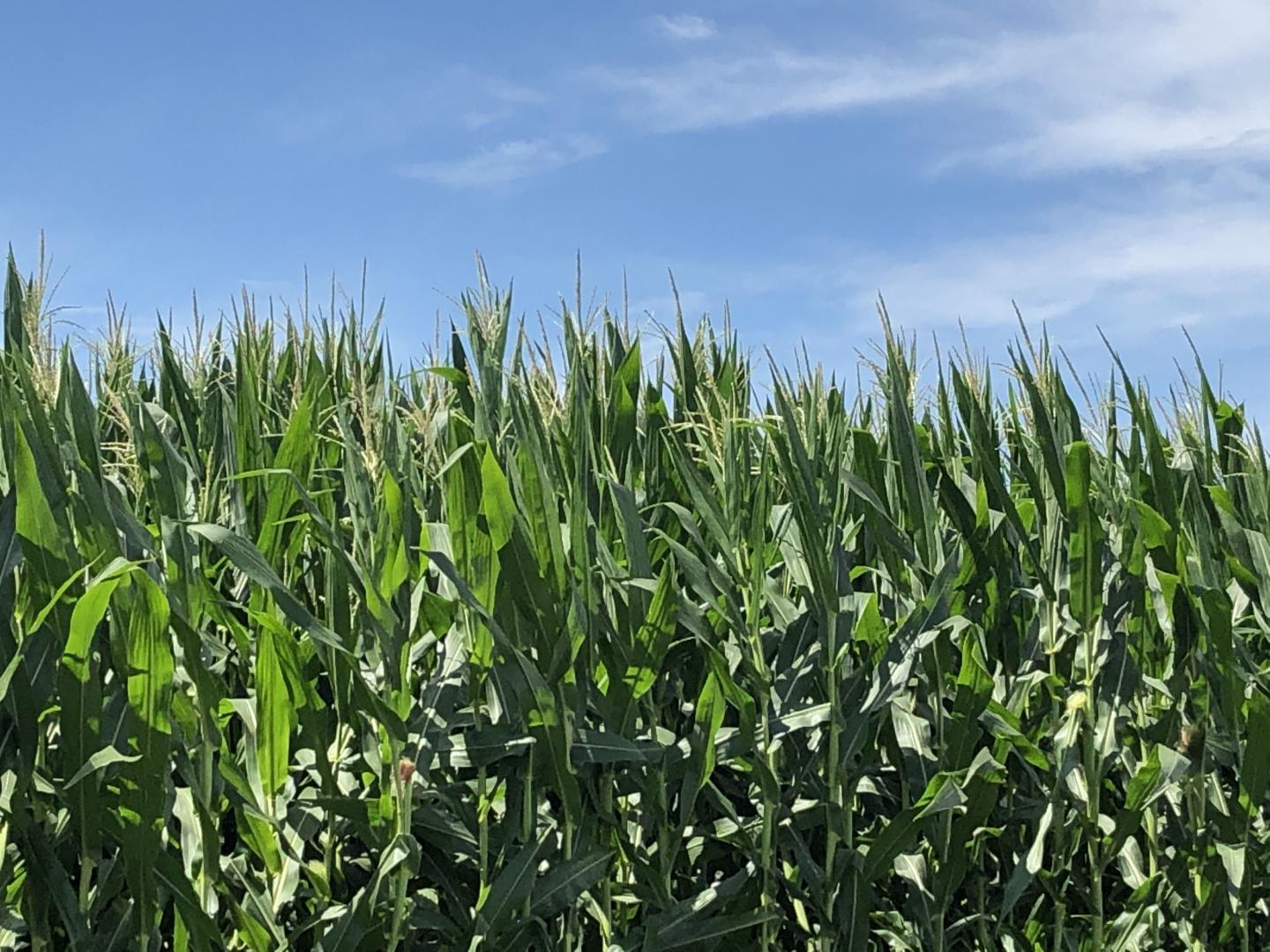
Jianming Yu, a professor of agronomy at Iowa State University and the Pioneer Distinguished Chair in Maize Breeding, has devoted much of his research to "turbocharging" the seemingly endless amount of genetic stocks contained in the world's seed banks. Yu and his colleagues have published an article in the Plant Biotechnology Journal, a scientific publication, that details their latest efforts to predict traits in corn-based on genomics and data analytics. CAPTION Seed banks across the globe store and preserve the genetic diversity of millions of varieties of crops, including corn. Iowa State University researchers are developing ways to predict the traits of corn varieties based on their genomes  CREDIT Jianming Yu{module INSIDE STORY}

Plant breeders searching for varieties to test might feel lost in a sea of genomic material. Yu said applying advanced data analytics to all those genomes can help breeders narrow down the number of varieties they're interested in much faster and more efficiently.

"We're always searching for the best genetic combinations, and we search the various combinations to see what varieties we want to test," said Xiaoqing Yu (no relation), a former postdoctoral research associate in Yu's lab and the first author of the study. "Having these predictions can guide our searching process."

The study focused on predicting eight corn traits based on the shoot apical meristem (SAM), a microscopic stem cell niche that generates all the above-ground organs of the plant. The researchers used their analytical approach to predict traits in 2,687 diverse maize inbred varieties based on a model they developed from studying 369 inbred varieties that had been grown and had their shoot apical meristems pictured and measured under the microscope.

The researchers then validated their predictions with data obtained from 488 inbreds to determine their prediction accuracy ranged from 37% to 57% across the eight traits they studied.

"We wanted to connect the research in foundational biological mechanisms of cell growth and differentiation with the agronomic improvement of corn," said Mike Scanlon, a professor of developmental biology at Cornell University and the lead investigator of the multi-institutional team behind the study. "SAM morphometric measurements in corn seedlings allow quick completion of the study cycle. It not only enables that connection but also extends the practice of genomic prediction into the microphenotypic space."

Jianming Yu said plant breeders can bump up the accuracy of those genomic predictions by increasing the number of plants per inbred for measurement and findings-improved prediction algorithms. More importantly, plant breeders can finetune their selection process for which inbreds to study closely by leveraging the "U values," a statistical concept that accounts for the reliability of estimates. Yu said the study shows that implementing a selection process that accounts for prediction and statistical reliability can help plant breeders zero in on desirable crop genetics faster.

For instance, analytical models might predict a particular inbred to have the modest potential for a given trait, but the U value, or the upper bound for reliability, might indicate a high degree of unreliability in those predictions. So plant breeders might elect to test inbreds that don't do as well in the predictive model simply because of their genetic uniqueness, being less related to those used in building the prediction models.

"We found that there can be a balance between selecting for optimizing short-term gain and mining diversity," Yu said. "It's a tricky balance for plant breeders. Those considerations sometimes go in different directions. Genetic improvement can be viewed as space exploration, either of the vast amounts of existing genetic materials in seed banks or of the innumerable breeding progenies constantly being generated. We want to develop better tools to guide those decisions in the process."

Researchers supercomputer simulations prove water has multiple liquid states

A newly published Science journal paper reveals that water can exist as two liquids of differing density

Water is a ubiquitous liquid with many highly unique properties. The way it responds to changes in pressure and temperature can be completely different from other liquids that we know, and these properties are essential to many practical applications and particularly to life as we know it. What causes these anomalies have long been a source of scientific inspiration with various theoretical explanations, but now an international team of researchers, which includes Nicolas Giovambattista, a professor at The Graduate Center, CUNY and chair for the Department of Physics at Brooklyn College, has proved that water can exist in two different liquid states -- a finding that can explain many of water's anomalous properties. Their research appears in a paper published in today's issue of the journal Science.

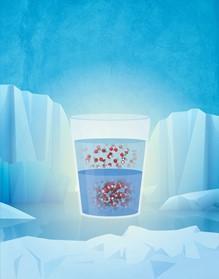
The possibility that water could exist in two different liquid states was proposed approximately 30 years ago, based on results obtained from supercomputer simulations," Giovambattista said. "This counterintuitive hypothesis has been one of the most important questions in the chemistry and physics of water, and a controversial scenario since its beginnings. This is because experiments that can access the two liquid states in water have been very challenging due to the apparently unavoidable ice formation at the conditions where the two liquids should exist." CAPTION The above graphic offers a conceptual view of how water can exist in two liquid states separated by a thin interface. The bottom liquid is more dense than the one on top, because it is composed of water molecules that are more cosely packed.  CREDIT Jerker Lokrantz and Anders Nilsson {module INSIDE STORY} 

The usual "liquid" state of water that we are all familiar with corresponds to liquid water at normal temperatures (approximately 25 centigrade). However, the paper shows that water at low temperatures (approximately -63 centigrade) exists in two different liquid states, a low-density liquid at low pressures and a high-density liquid at high pressures. These two liquids have noticeably different properties and differ by 20% in density. The results imply that at appropriate conditions, water should exist as two immiscible liquids separated by a thin interface similar to the coexistence of oil and water.

Because water is one of the most important substances on Earth -- the solvent of life as we know it -- its phase behavior plays a fundamental role in different fields, including biochemistry, climate, cryopreservation, cryobiology, material science, and in many industrial processes where water acts as a solvent, product, reactant, or impurity. It follows that unusual characteristics in the phase behavior of water, such as the presence of two liquid states, can affect numerous scientific and engineering applications.

"It remains an open question how the presence of two liquids may affect the behavior of aqueous solutions in general, and in particular, how the two liquids may affect biomolecules in aqueous environments," Giovambattista said. "This motivates further studies in the search for potential applications."

Giovambattista is a member of the Physics and Chemistry Ph.D. programs at The Graduate Center of The City University of New York (CUNY).

The international team, led by Anders Nilsson, professor of chemical physics at Stockholm University, used complex experiments and supercomputer simulations to prove this theory. The experiments, described as "science-fiction-like" by Giovambattista, were performed by colleagues at Stockholm University in Sweden, POSTECH University in Korea, PAL-XFEL in Korea, and SLAC national accelerator laboratory in California. The supercomputer simulations were performed by Giovambattista and Peter H. Poole, professor at St. Francis Xavier University in Canada. The supercomputer simulations played an important role in the interpretation of the experiments since these experiments are extremely complex and some observables are not accessible during the experiments.