VTT, Xanadu support scale-up of Xanadu’s photonic quantum supercomputer

VTT Technical Research Centre of Finland was selected by Canadian full-stack photonic quantum supercomputing company Xanadu as a partner to accelerate the development of their photonic quantum supercomputers.

With over two decades of experience in superconducting technologies, VTT will leverage its expertise in quantum technology, photonics, and microelectronics integration to provide Xanadu with the volume and quality of components required to build Xanadu’s fault-tolerant universal quantum supercomputer.

The first project in this partnership is focused on scalable manufacturing of superconducting photon detectors, which are used in Xanadu’s quantum computer to measure entangled quantum states of light. These detectors count how many photons are present in each output of Xanadu’s photonic chips. The number of photons encodes information that enables the synthesis of error-corrected qubits for fault-tolerant quantum super computation.

“At VTT, we are committed to advancing the field of quantum technologies through research and strategic partnerships with companies that have the ambition to be pioneers in their fields. We see a lot of potential in our partnership with Xanadu to continue and grow in the future,” said Tauno Vähä-Heikkilä, VTT’s Vice President of Microelectronics and Quantum Technology.

Xanadu, which was founded in 2016, recently closed a EUR 88 million (USD $100 million) Series B funding round led by Bessemer Venture Partners. It brings Xanadu’s total investment to date to EUR 129 million (USD $145 million) to accelerate the progress toward building a fault-tolerant quantum computer with one million physical qubits.

“We have searched globally for the right manufacturing partners. We chose to work with VTT based on their experience in fabrication, combined with their capability to manufacture our needed components in significant quantities. Their technical expertise as well as their openness and business-friendly manner, make us confident that this technology partnership will bring us closer to a fault-tolerant quantum computer, capable of solving the world’s biggest computation problems,” said Matthew Collins, Xanadu’s Low-Temperature Team Lead.
Finland deploys its first quantum supercomputer

With this milestone, VTT and IQM take a step closer to making quantum supercomputers manufacturable, scalable, and more accessible for everyone.

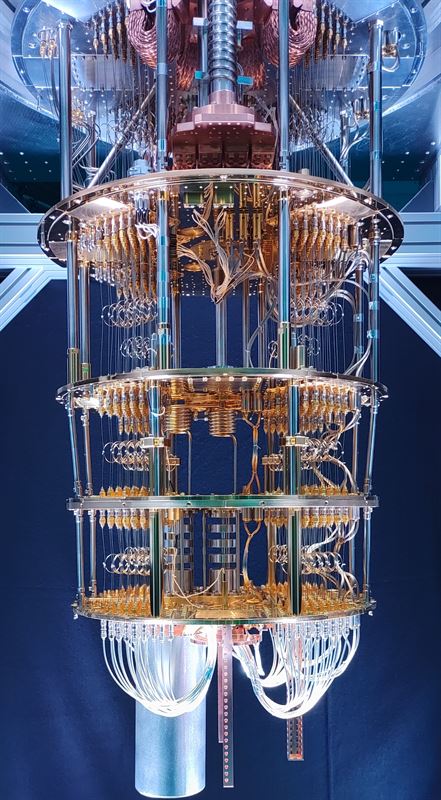
The VTT Technical Research Centre of Finland has announced that the country’s first operational 5-qubit quantum supercomputer is up and running. Together with the quantum supercomputing hardware startup IQM, VTT has taken its first steps to enable the building of quantum supercomputers that will be both scalable and easier to manufacture, allowing more organizations to begin their quantum supercomputing journey. Quantum Computers at IQM Fabrication Facility – 2

The incredible computing performance of quantum supercomputers makes it possible to solve problems that are beyond the capabilities of modern supercomputers. In the future, quantum supercomputers will be used, for instance, to accurately model viruses and drugs or used to design materials that are challenging to design with today’s technology.

“The development of quantum computing will affect all industries. Our experience in building the quantum computer, and our know-how in developing quantum algorithms will help us develop quantum foresight to, for example, identify future trends and support companies in understanding how and when their business will be affected,” says Pekka Pursula, Research Manager at VTT. “The best way to do this will be for companies to work together with VTT, and actually use our new hardware.”

The now-unveiled 5-qubit quantum supercomputer is located at Micronova, part of OtaNano, the national research infrastructure for micro and nanotechnology, jointly run by VTT and Aalto University.

The big challenge in quantum supercomputing is scalability. Quantum physicists and engineers around the world are trying to figure out how to scale quantum supercomputing hardware to include hundreds and thousands of qubits, scale up the production in an economically efficient way, and scale algorithms and use of quantum supercomputing in real-life applications.

VTT has 30 years of expertise in quantum technology research and excellent facilities to work on hardware scaling. The scaling of the use requires VTT to work hand-in-hand with the companies to develop algorithms for specific applications.

“Today’s announcement marks an important milestone for IQM and the European quantum initiatives. With the completion of this phase, IQM will become one of the very few quantum companies that can deliver an on-premises quantum computer to a customer. I congratulate our partners, VTT, and also the entire IQM team who has managed to deliver this ambitious milestone during the pandemic. This is just the first phase of the delivery and because of our ability to upgrade the systems, we are looking forward to working with VTT on delivering the 20-qubit and the 50-qubit systems,” says Dr. Jan Goetz, CEO, and co-founder of IQM

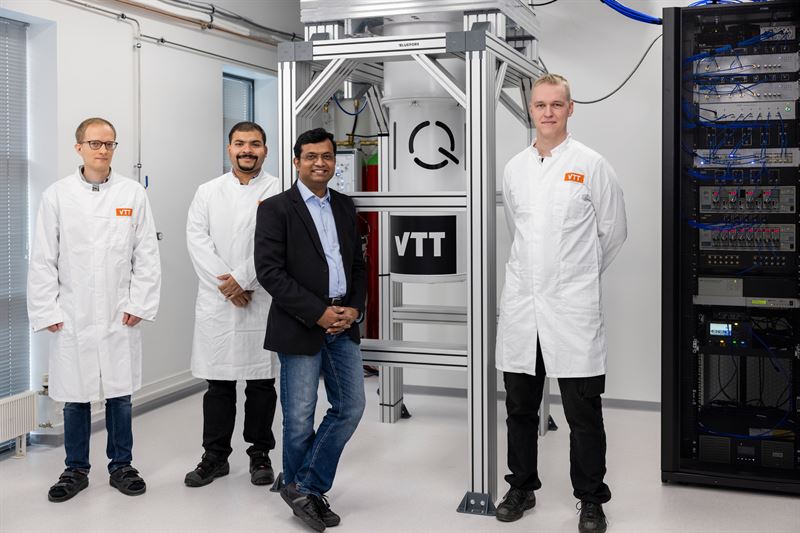
The 5-qubit quantum supercomputer is part of a larger initiative. VTT and IQM aim to build together a much more powerful 50-qubit quantum supercomputer by 2024 and further develop Finland’s long-lasting technology and expertise in quantum supercomputing. Senior Scientist Visa Vesterinen, Research Scientist Debopam Datta, Lead, Quantum Programmes Himadri Majumdar and Research Scientist Lassi Lehtisyrjä from VTT together with Finland's first quantum com

Cardiff builds AI to accurately predict tsunamis

A reliable early warning system to detect tsunamis could be a step closer thanks to research from Cardiff University.

Researchers say their analysis of ocean soundwaves triggered by underwater earthquakes has enabled them to develop artificial intelligence (AI) that allows prediction of when a tsunami might occur. GettyImages 168351395 1 0d8f4

It is hoped this technology could assist experts in gaining accurate real-time assessments of these geological events.

Dr. Usama Kadri, from Cardiff University’s School of Mathematics, said: “Tsunamis have a devastating impact on communities. Developing accurate methods to detect them quickly is key to saving lives.

“Our findings show we are able to classify the type of earthquake and retrieve its main properties from acoustic signals, in near real-time. These methods will complement existing technology for real-time tsunami analysis and provide another tool for experts working to detect them.

“This work is an integral part of a larger project for creating a more reliable early tsunami warning system.”

For their research, the team analyzed deep ocean sound recordings following 201 earthquakes that happened in the Pacific and the Indian Ocean.

Tsunamis often occur after vertical earthquakes, where tectonic plates on the earth’s surface move mainly up and down rather than horizontally. This motion causes the displacement of a large amount of water, creating very long waves that can cause widespread damage onshore.

The vertical motion results in compressing the water layer which sends specific sound signals that carry information on the dynamics and geometry of the fault. Mr. Bernabe Gomez, a Ph.D. student in the research team, used this information to train artificial intelligence (AI) algorithms to recognize when a vertical earthquake has occurred, which, they say, could be used to pinpoint future tsunamis in real-time.

Dr. Kadri added: “Tectonic movements are very complicated, with horizontal and vertical elements. Some earthquakes have a higher capability to generate tsunamis than others. Employing digital signal processing techniques, we can analyze sound recordings of underwater earthquakes, that train artificial intelligence (AI) algorithms to classify the type of earthquake and its moment magnitude. This is a significant step for a reliable early tsunami warning system since the type of earthquake can dictate if a tsunami will be generated at all.”