

DTU Nanolab designs graphene with less than 10-nanometer precision

Ranked among Europe's leading engineering institutions, DTU, Technical University of Denmark, and Graphene Flagship researchers have taken the art of patterning nanomaterials to the next level. Precise patterning of 2D materials is a route to computation and storage using 2D materials, which can deliver better performance and much lower power consumption than today's technology.

One of the most significant recent discoveries within physics and material technology is two-dimensional materials such as graphene. Graphene is stronger, smoother, lighter, and better at conducting heat and electricity than any other known material.

Their most unique feature is perhaps their programmability. By creating delicate patterns in these materials, we can change their properties dramatically and possibly make precisely what we need. Crystals of the material hexagonal boron nitride can be etched so that the pattern you draw at the top transforms into a smaller and razor-sharp version at the bottom. These perforations can be used as a shadow mask to draw components and circuits in graphene. This process enables a precision that is impossible with even the best lithographic techniques today. To the right are images of triangular and square holes taken with an electron microscope. Illustration: Peter Bøggild, Lene Gammelgaard og Dorte Danielsen.

At DTU, scientists have worked on improving state of the art for more than a decade in patterning 2D materials, using sophisticated lithography machines in the 1500 m2 cleanroom facility. Their work is based in DTU's Center for Nanostructured Graphene, supported by the Danish National Research Foundation and a part of The Graphene Flagship.

The electron beam lithography system in DTU Nanolab can write details down to 10 nanometers. Computer calculations can predict exactly the shape and size of patterns in the graphene to create new types of electronics. They can exploit the charge of the electron and quantum properties such as spin or valley degrees of freedom, leading to high-speed calculations with far less power consumption. These calculations, however, ask for higher resolution than even the best lithography systems can deliver: atomic resolution.

"If we really want to unlock the treasure chest for future quantum electronics, we need to go below 10 nanometers and approach the atomic scale," says professor and group leader at DTU Physics, Peter Bøggild.

And that is exactly what the researchers have succeeded in doing."We showed in 2019 that circular holes placed with just 12-nanometer spacing turn the semimetallic graphene into a semiconductor. Now we know how to create circular holes and other shapes such as triangles, with nanometer sharp corners. Such patterns can sort electrons based on their spin and create essential components for spintronics or valleytronics. The technique also works on other 2D materials. With these supersmall structures, we may create very compact and electrically tunable metalenses to be used in high-speed communication and biotechnology," explains Peter Bøggild.


Razor-sharp triangle

The research was led by postdoc Lene Gammelgaard, an engineering graduate of DTU in 2013 who has since played a vital role in the experimental exploration of 2D materials at DTU, "The trick is to place the nanomaterial hexagonal boron-nitride on top of the material you want to pattern. Then you drill holes with a particular etching recipe," says Lene Gammelgaard, and continues "The etching process we developed over the past years down-size patterns below our electron beam lithography systems' otherwise unbreakable limit of approximately 10 nanometers. Suppose we make a circular hole with a diameter of 20 nanometers; the hole in the graphene can then be downsized to 10 nanometers. While if we make a triangular hole, with the round holes coming from the lithography system, the downsizing will make a smaller triangle with self-sharpened corners. Usually, patterns get more imperfect when you make them smaller. This is the opposite, and this allows us to recreate the structures the theoretical predictions tell us are optimal."

One can e.g. produce flat electronic meta-lenses - a kind of super-compact optical lens that can be controlled electrically at very high frequencies, and which according to Lene Gammelgaard can become essential components for the communication technology and biotechnology of the future.

Pushing the limits

The other key person is a young student, Dorte Danielsen. She got interested in nanophysics after a 9th-grade internship in 2012, won a spot in the final of a national science competition for high school students in 2014, and pursued studies in Physics and Nanotechnology under DTU's honors program for elite students.

She explains that the mechanism behind the "super-resolution" structures is still not well understood, "We have several possible explanations for this unexpected etching behavior, but there is still much we don't understand. Still, it is an exciting and highly useful technique for us. At the same time, it is good news for the thousands of researchers around the world pushing the limits for 2D nanoelectronics and nanophotonics."

Supported by the Independent Research Fund Denmark, within the METATUNE project, Dorte Danielsen will continue her work on extremely sharp nanostructures. Here, the technology she helped develop, will be used to create and explore optical metalenses that can be tuned electrically.
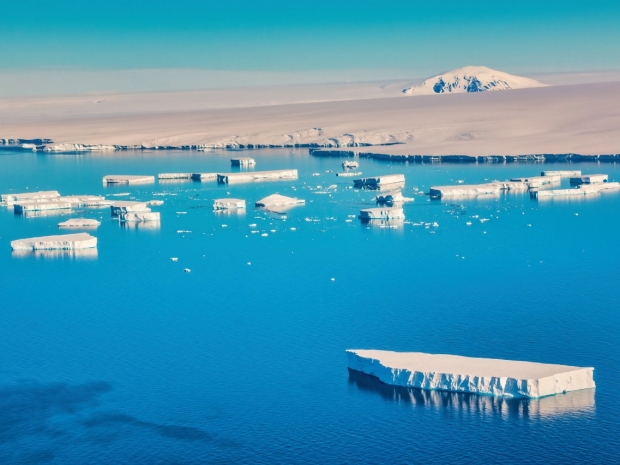
UK launches Pushing the Frontiers projects to study fundamental earth, environmental mysteries

The ambitious studies, led by some of the UK’s leading scientists, are each tackling fundamental questions about the earth and our environment, including how we interact with our planet. The studies will establish whether the Earth's Core has multiple layers by building supercomputer models to explain seismic and magnetic field data. The research could change our understanding of processes that generate our planet’s protective magnetic field. 

A project, led by Dr. Christopher Davies at the University of Leeds, is establishing the origin of Earth's magnetic field that is crucial for understanding planetary habitability and evolution and is widely recognized as a fundamental goal in Earth Science. The field has shielded the surface environment from solar radiation for billions of years and now helps mitigate against space weather events, which can significantly impact telecommunications and power grids. Yet the field is generated in the iron core, an ocean of liquid metal 2800 km below the surface, and so the changes we experience at Earth’s surface reflect dynamics in the most remote region of our planet.

The standard model of Earth’s core cannot explain crucial observations from seismology and geomagnetism and therefore lacks essential physics. Dr. Davies believes that the observations can be explained by viewing the Earth’s Core as a system of coupled layers, each with its own unique dynamics. To test this hypothesis, he will develop a new model of the core that requires major enhancements to existing supercomputer codes and solutions of new and complex systems of equations.

The Natural Environment Research Council (NERC) has invested a total of £8 million in the research as part of a unique pilot scheme to fund high-risk and innovative science. This is the first time NERC has launched a project of this kind.

The Pushing the Frontiers project aims to facilitate truly adventurous and ambitious science and exploit new technologies and approaches.

The projects will be funded for between three and four years.

UK Science Minister Amanda Solloway said, “If the UK is to lead the world in achieving scientific breakthroughs, it’s vital that we give our most pioneering scientists and researchers license to go where others haven’t before by driving forward high-risk, high-reward research.

“That’s why we are backing these five ambitious studies to the tune of £8m, to help solve unanswered questions about our Universe – from the origins of Earth to whether there is life on Mars - all while helping to secure the UK’s status as a global science superpower.” 

Robyn Thomas, Associate Director of Research and Skills at NERC, said, “These highly innovative research projects could advance our understanding of fundamental questions in environmental and earth science, and lead to important scientific breakthroughs. The grants are the outcome of an exciting new pilot scheme to encourage and fund some of the UK’s most exceptional environmental scientists to lead more risky and transformational research.”  

NYU develops the next generation of climate models with machine learning to improve predictions

Center aims to improve climate projections and to motivate investment in policies and infrastructure to confront rising seas and warmer temperatures

New York University will join a new, National Science Foundation-supported center that will develop the next generation of data-driven, physics-based climate models, with the larger aim of providing actionable information for societies to adapt to climate change and to protect vulnerable populations.

The center, Learning the Earth with Artificial Intelligence and Physics (LEAP), will be housed at Columbia University and is supported by a five-year, $25-million NSF grant. 

“The new center aims to combine artificial intelligence and climate modeling to better predict the impacts of climate change around the world,”  says Laure Zanna, a professor at NYU’s Courant Institute of Mathematical Sciences and NYU’s Center for Data Science and co-director of LEAP’s research arm. Photo credit: benedek/Getty Images

LEAP is one of six centers recently unveiled by NSF.

“These centers play a fundamental role in engaging, recruiting, retaining, and mentoring next-generation scientists and engineers from groups underrepresented in STEM,” NSF said in its announcement. “They provide a fertile environment that encourages up and coming STEM professionals, engineers, and researchers to be bold in pursuing discoveries and new knowledge throughout their careers.”

Global climate models consistently show that the planet will continue to warm over the next 40 years. Less clear, however, is how much temperatures will rise; the severity of the resulting impacts—from sea-level rise to an increase in floods and drought—is also not well understood. These uncertainties largely center on the difficulty in capturing the details of complex physical and biological processes—like clouds reflecting sunlight into space or trees absorbing carbon from the air—and integrating them into the models. 

To address this, Zanna will guide the research team in developing machine learning models to represent processes spanning all Earth system components, which include oceans, atmosphere, ice, and land.

“These new machine learning models of Earth System processes will help us gain new insight into parts of the climate system,” she notes. “This knowledge will be incorporated into Earth System models to provide more accurate climate predictions.”

Zanna and her NYU colleagues will focus specifically on machine learning models for ocean processes, which are key in absorbing and redistributing heat, carbon, and oxygen around the worlds’ oceans and, crucially, influence sea-level rise.

NYU’s work is in tandem with an effort to enhance climate-change projections by improving climate supercomputer simulations using AI--a project supported by a $10 million grant from Schmidt Futures

More broadly, LEAP’s researchers will deploy existing algorithms to analyze satellite images and other large-scale observational data missing from existing models. They will also develop new algorithms to make detailed observations and generalize them to broader contexts, discover cause and effect relationships in the data, and find better equations to describe the processes represented in the models. 

LEAP will also include the National Center for Atmospheric Research (NCAR) and NASA’s Goddard Institute for Space Studies as well as the universities of California at Irvine, Minnesota, and Montreal to update the NSF-funded and NCAR-based Community Earth System Model