

SUPERCOMPUTING NEWS SUPERCOMPUTING NEWS
    • MEDIA KIT
    • MOST READ
    • RSS FEED
    • ACADEMIA
    • AEROSPACE
    • APPLICATIONS
    • ASTRONOMY
    • AUTOMOTIVE
    • BIG DATA
    • BIOLOGY
    • CHEMISTRY
    • CLIENTS
    • CLOUD
    • DEFENSE
    • DEVELOPER TOOLS
    • EARTH SCIENCES
    • ECONOMICS
    • ENGINEERING
    • ENTERTAINMENT
    • GAMING
    • GOVERNMENT
    • HEALTH
    • OIL & GAS
    • INDUSTRY
    • INTERCONNECTS
    • MANUFACTURING
    • MIDDLEWARE
    • MOVIES
    • NETWORKS
    • PHYSICS
    • PROCESSORS
    • RETAIL
    • SCIENCE
    • STORAGE
    • SYSTEMS
    • VISUALIZATION
    • AcyMailing subscription form

    • ADD YOUR VIDEOS
    • MANAGE VIDEOS
    • CONVERSATION INBOX
    • SOCIAL ADVERTISER
    • SOCIAL NETWORK VIDEOS
    • SURVEYS
    • GROUPS
    • PAGES
    • MARKETPLACE LISTINGS
    • APPLICATIONS BROWSER
    • PRIVACY CONFIRM REQUEST
    • PRIVACY CREATE REQUEST
    • LEADERBOARD
    • POINTS LISTING
      • BADGES
    • TRADE SHOWS
Sign In
Tyler O'Neal, Staff Editor MIDDLEWARE July 22, 2021, 6:00 pm

European simulations show how restrictions can have unexpected impacts on air quality

An international collaborative study led by the University of Helsinki has conducted a holistic study to investigate the effects of COVID-19 restrictions on several air quality pollutants for the Po Valley region in northern Italy. The area is well known to have one of the worst air quality standards in Europe and is highly influenced by anthropogenic (human-led) activities. The study was done between research groups in Finland, Italy, and Switzerland, and the results were published in the journal Environmental Science: Atmospheres. View of the Po Valley from Bergamo city. The Po Valley is one of the most polluted area in Europe due to the presence of local emissions sources and its peculiar orography.

Scientists have combined air quality measurements and supercomputer simulation data over several locations in the region. The resulting studies show that reduced emissions from traffic lead to a strong reduction of nitrogen oxides, while have had limited impact on aerosol concentrations, contributing to a better understanding of how air pollution is formed in the Po Valley.

The studies show that despite the large reduction in mobility of people and emissions from cars (which raise for instance nitrogen oxides concentrations), aerosols concentrations remained almost unchanged compared to previous years. Secondary formed pollutants like ozone, on the other hand, showed an increase in concentrations. These findings were confirmed by a supercomputer model simulation that simulates the COVID-19 restriction on traffic, indicating that the increased overall oxidation capacity of the atmosphere might have enhanced the formation of new aerosols.

Furthermore, model simulations indicated that as nitrogen oxides emissions were largely reduced, chemical reactions of organic gases against atmospheric oxidants increased, slightly favoring the formation of new organic particles.

"You can think of the Po Valley region as a massive batch reactor with all sorts of chemicals. Altering one of the "ingredients" can trigger non-linear responses in air pollutants concentrations", says Dr. Federico Bianchi from the Institute for Atmospheric and Earth System Research (INAR) of the University of Helsinki.

These studies shed new light on the formation of air pollutants in the Po Valley region and on their sources. The conclusion is that the reduction in traffic emissions had little impact on particulate matter concentrations, possibly highlighting the importance of other emissions sources in the Po Valley area.

Carefully characterizing the evolution of such emission categories is of vital importance to improve the understanding of air pollution and to reduce the uncertainties in future air quality scenarios.

UChicago Medicine researchers study AI models of cancer treatment for accuracy, bias

Tyler O'Neal, Staff Editor MIDDLEWARE July 22, 2021, 12:00 pm

A new study of artificial intelligence tools that analyze tumor images shows how they can make inaccurate predictions based on the institution that submitted the image

Artificial intelligence tools and deep learning models are powerful tools in cancer treatment. They can be used to analyze digital images of tumor biopsy samples, helping physicians quickly classify the type of cancer, predict prognosis and guide a course of treatment for the patient. However, unless these algorithms are properly calibrated, they can sometimes make inaccurate or biased predictions.

A new study led by researchers from the University of Chicago shows that deep learning models trained on large sets of cancer genetic and tissue histology data can easily identify the institution that submitted the images. The models, which use machine learning methods to "teach" themselves how to recognize certain cancer signatures, end up using the submitting site as a shortcut to predicting outcomes for the patient, lumping them together with other patients from the same location instead of relying on the biology of individual patients. This in turn may lead to bias and missed opportunities for treatment in patients from racial or ethnic minority groups who may be more likely to be represented in certain medical centers and already struggle with access to care.

"We identified a glaring hole in the current methodology for deep learning model development which makes certain regions and patient populations more susceptible to be included in inaccurate algorithmic predictions," said Alexander Pearson, MD, Ph.D., assistant Assistant Professor of Medicine at UChicago Medicine and co-senior author. 

One of the first steps in treatment for a cancer patient is taking a biopsy or small tissue sample of a tumor. A very thin slice of the tumor is affixed to the glass slide, which is stained with multicolored dyes for review by a pathologist to make a diagnosis. Digital images can then be created for storage and remote analysis by using a scanning microscope. While these steps are mostly standard across pathology labs, minor variations in the color or amount of stain, tissue processing techniques, and imaging equipment can create unique signatures, like tags, on each image. These location-specific signatures aren't visible to the naked eye but are easily detected by powerful deep learning algorithms.

These algorithms have the potential to be a valuable tool for allowing physicians to quickly analyze a tumor and guide treatment options, but the introduction of this kind of bias means that the models aren't always basing their analysis on the biological signatures it sees in the images, but rather the image artifacts generated by differences between submitting sites.

Pearson and his colleagues studied the performance of deep learning models trained on data from the Cancer Genome Atlas, one of the largest repositories of cancer genetic and tissue image data. These models can predict survival rates, gene expression patterns, mutations, and more from the tissue histology, but the frequency of these patient characteristics varies widely depending on which institutions submitted the images, and the model often defaults to the "easiest" way to distinguish between samples - in this case, the submitting site.

For example, if Hospital A serves mostly affluent patients with more resources and better access to care, the images submitted from that hospital will generally indicate better patient outcomes and survival rates. If Hospital B serves a more disadvantaged population that struggles with access to quality care, the images that the site submitted will generally predict worse outcomes.

The research team found that once the models identified which institution submitted the images, they tended to use that as a stand-in for other characteristics of the image, including ancestry. In other words, if the staining or imaging techniques for a slide looked like it was submitted by Hospital A, the models would predict better outcomes, whereas they would predict worse outcomes if it looked like an image from Hospital B. Conversely, if all patients in Hospital B had biological characteristics based on genetics that indicated a worse prognosis, the algorithm would link the worse outcomes to Hospital B's staining patterns instead of things it saw in the tissue.

"Algorithms are designed to find a signal to differentiate between images, and it does so lazily by identifying the site," Pearson said. "We actually want to understand what biology within a tumor is more likely to predispose resistance to treatment or early metastatic disease, so we have to disentangle that site-specific digital histology signature from the true biological signal."

The key to avoiding this kind of bias is to carefully consider the data used to train the models. Developers can make sure that different disease outcomes are distributed evenly across all sites used in the training data, or by isolating a certain site while training or testing the model when the distribution of outcomes is unequal. The result will produce more accurate tools that can get physicians the information they need to quickly diagnose and plan treatments for cancer patients.

"The promise of artificial intelligence is the ability to bring accurate and rapid precision health to more people," Pearson said. "To meet the needs of the disenfranchised members of our society, however, we have to be able to develop algorithms which are competent and make relevant predictions for everyone."

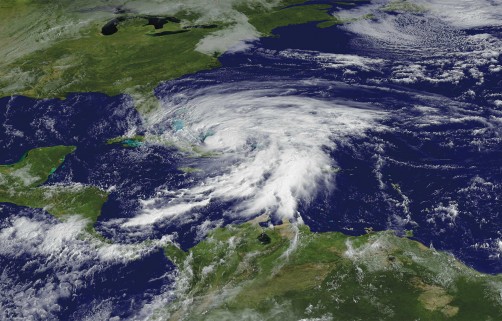
URI scientist plays a key role in hurricane forecasting models

Tyler O'Neal, Staff Editor MIDDLEWARE July 22, 2021, 8:00 am

With this year’s hurricane season predicted to be a busy one, URI professor of oceanography Isaac Ginis is paying close attention to the weather. Hurricane forecasting models used by the National Hurricane Center, the U.S. Navy, and other agencies are getting better at predicting hurricanes, thanks largely to Ginis’s work. Professor Isaac Ginis uses Hurricane Sandy as a model to simulate hurricane impacts on the Rhode Island coast.

Ginis says that the ocean plays a significant role in the path and intensity of hurricanes. “Hurricanes draw energy from the ocean, and if the ocean temperature is higher, then hurricanes become more intense,” he said, noting that as the changing climate warms the ocean, hurricanes will continue to grow in intensity.

“We’re also seeing that hurricanes are intensifying more rapidly, going from a category 1 to a category 3 or 4 within a day or two. And that’s a big concern for forecasters who want to issue hurricane warnings in advance of landfall.”

According to Ginis, hurricanes are now producing more rainfall than they used to. “Rain comes from evaporation from the ocean, and the evaporation rate is a function of ocean temperature. The warmer the water, the more evaporation,” he said. “So hurricanes are getting more moisture from the ocean, and because of the higher air temperatures, they can hold more moisture in the atmosphere and produce more rain.”

His research has found that ocean waves affect hurricane intensity, as do the changes to ocean temperatures beneath hurricanes. Hurricane winds generate strong ocean currents under the hurricane, and those currents bring cold water from below that mixes with warm water at the surface. That leads to a weakening of the storm.

All of these complex interactions between the ocean, atmosphere, and storms are incorporated into Ginis’s models, which then become part of many hurricane forecasting models used around the globe.

Ginis is one of more than a half dozen University of Rhode Island faculty members who study natural disasters of all kinds—including tsunamis, earthquakes, and volcanoes—wherever they may occur. Their research is aimed at better understanding these phenomena so citizens can be better prepared, lives can be saved, and disasters averted. With this year’s hurricane season predicted to be a busy one, URI professor of oceanography Isaac Ginis is paying close attention to the weather. Hurricane forecasting models used by the National Hurricane Center, the U.S. Navy, and other agencies are getting better at predicting hurricanes, thanks largely to Ginis’s work.

Ginis says that the ocean plays a significant role in the path and intensity of hurricanes. “Hurricanes draw energy from the ocean, and if the ocean temperature is higher, then hurricanes become more intense,” he said, noting that as the changing climate warms the ocean, hurricanes will continue to grow in intensity.

“We’re also seeing that hurricanes are intensifying more rapidly, going from a category 1 to a category 3 or 4 within a day or two. And that’s a big concern for forecasters who want to issue hurricane warnings in advance of landfall.” Professor Ginis

According to Ginis, hurricanes are now producing more rainfall than they used to. “Rain comes from evaporation from the ocean, and the evaporation rate is a function of ocean temperature. The warmer the water, the more evaporation,” he said. “So hurricanes are getting more moisture from the ocean, and because of the higher air temperatures, they can hold more moisture in the atmosphere and produce more rain.”

His research has found that ocean waves affect hurricane intensity, as do the changes to ocean temperatures beneath hurricanes. Hurricane winds generate strong ocean currents under the hurricane, and those currents bring cold water from below that mixes with warm water at the surface. That leads to a weakening of the storm.

All of these complex interactions between the ocean, atmosphere, and storms are incorporated into Ginis’s models, which then become part of many hurricane forecasting models used around the globe.

Ginis is one of more than a half dozen University of Rhode Island faculty members who study natural disasters of all kinds—including tsunamis, earthquakes, and volcanoes—wherever they may occur. Their research is aimed at better understanding these phenomena so citizens can be better prepared, lives can be saved, and disasters averted.

  1. IAA-CSIC modeling leads to discovery of a large tidal stream in the Sombrero galaxy
  2. FAU prof Hill first to model COVID-19 completion vs. cessation study using machine learning

Page 15 of 19

  • 10
  • 11
  • 12
  • 13
  • 14
  • 15
  • 16
  • 17
  • 18
  • 19
POPULAR RIGHT NOW
  • IBM's Historic stock collapse raises questions for the future of enterprise supercomputing
    IBM's Historic stock collapse raises questions for the future of enterprise supercomputing
  • Could a novel dark matter theory simultaneously resolve multiple cosmic enigmas? Supercomputer simulations provide a compelling, albeit currently unverified, potential solution
    Could a novel dark matter theory simultaneously resolve multiple cosmic enigmas? Supercomputer simulations provide a compelling, albeit currently unverified, potential solution
  • Melting icebergs may be reshaping Earth’s greatest ocean current
    Melting icebergs may be reshaping Earth’s greatest ocean current
  • Supercomputers replace ‘bathtub’ flood maps with physics-based digital twins of Britain’s coastline
    Supercomputers replace ‘bathtub’ flood maps with physics-based digital twins of Britain’s coastline
  • Supercomputers push neural quantum simulation beyond previous limits
    Supercomputers push neural quantum simulation beyond previous limits
  • Intel’s AI supercomputing revival: Q2 financial surge signals new era for CPU-powered HPC infrastructure
    Intel’s AI supercomputing revival: Q2 financial surge signals new era for CPU-powered HPC infrastructure
  • AI infrastructure financing fears shake semiconductor sector
    AI infrastructure financing fears shake semiconductor sector
  • AWS supercomputing investment reaches historic scale as Amazon’s AI strategy powers record financial results
    AWS supercomputing investment reaches historic scale as Amazon’s AI strategy powers record financial results
  • Catching the wave of the future: Supercomputers unlock the hidden dynamics of Venus
    Catching the wave of the future: Supercomputers unlock the hidden dynamics of Venus
  • NCAR supercomputers run planet scale climate experiments impossible in the real world
    NCAR supercomputers run planet scale climate experiments impossible in the real world
THIS YEAR'S MOST READ
  • Wall Street wants to trade supercomputing power like oil
    Wall Street wants to trade supercomputing power like oil
  • Beamforming the future: BeammWave's 6G push signals the rise of orbital-terrestrial wireless networks
    Joakim Axmon
    Joakim Axmon
  • Cosmic ambition at scale: UK’s supercomputer unlocks a 2.5 petabytes universe
    Cosmic ambition at scale: UK’s supercomputer unlocks a 2.5 petabytes universe
  • Hidden order, revealed at scale: Supercomputing, electron ptychography uncover the inner workings of relaxor ferroelectrics
    Hidden order, revealed at scale: Supercomputing, electron ptychography uncover the inner workings of relaxor ferroelectrics
  • Intel's Q1 results signal supercomputing surge driving Xeon momentum
    Intel's Q1 results signal supercomputing surge driving Xeon momentum
  • When stars fall apart: Supercomputing reveals the hidden physics of black holes
    When stars fall apart: Supercomputing reveals the hidden physics of black holes
  • MIT develops computational framework to probe dark matter via gravitational waves
    MIT develops computational framework to probe dark matter via gravitational waves
  • Explainable AI moves into the watershed: FAMU-FSU engineers build predictive framework for real-time E. coli forecasting
    FAMU-FSU College of Engineering Assistant Professor Nasrin Alamdari. (Scott Holstein/FAMU-FSU College of Engineering)
    FAMU-FSU College of Engineering Assistant Professor Nasrin Alamdari. (Scott Holstein/FAMU-FSU College of Engineering)
  • Multi-layer simulations reveal the hidden supply chain of solar prominences
    Multi-layer simulations reveal the hidden supply chain of solar prominences
  • Japanese scientists decode dolphin speed with supercomputing: Turbulence, vortices, and the hidden physics of propulsion
    Japanese scientists decode dolphin speed with supercomputing: Turbulence, vortices, and the hidden physics of propulsion
  • FRONTPAGE
  • LATEST
  • POPULAR
  • REGISTER
  • SOCIAL
  • VIDEO
  • SUBSCRIPTION
  • RSS
  • GUIDELINES
  • PRIVACY
  • TOS
  • ABOUT
  • +1 (816) 799-4488
  • editorial@supercomputingonline.com
© 2001 - 2026 SuperComputingOnline.com, LLC. All rights reserved. This material may not be published, broadcast, rewritten or redistributed without permission.
Sign In
  • FRONT PAGE
  • LATEST
    • MEDIA KIT
    • MOST READ
    • RSS FEED
    • ACADEMIA
    • AEROSPACE
    • APPLICATIONS
    • ASTRONOMY
    • AUTOMOTIVE
    • BIG DATA
    • BIOLOGY
    • CHEMISTRY
    • CLIENTS
    • CLOUD
    • DEFENSE
    • DEVELOPER TOOLS
    • EARTH SCIENCES
    • ECONOMICS
    • ENGINEERING
    • ENTERTAINMENT
    • HEALTH
    • INDUSTRY
    • INTERCONNECTS
    • GAMING
    • GOVERNMENT
    • MANUFACTURING
    • MIDDLEWARE
    • MOVIES
    • NETWORKS
    • OIL & GAS
    • PHYSICS
    • PROCESSORS
    • RETAIL
    • SCIENCE
    • STORAGE
    • SYSTEMS
    • VISUALIZATION
  • VIDEOS
    • ADD YOUR VIDEOS
    • MANAGE VIDEOS
  • COMMUNITY
    • TRADE SHOWS
    • SOCIAL NETWORK VIDEOS
    • SURVEYS
    • APPLICATIONS BROWSER
    • CONVERSATION INBOX
    • SOCIAL ADVERTISER
    • GROUPS
    • MARKETPLACE LISTINGS
    • PAGES
    • LEADERBOARD
    • POINTS LISTING
      • BADGES
    • PRIVACY CONFIRM REQUEST
    • PRIVACY CREATE REQUEST

Hey there! We noticed you’re using an ad blocker.