

Pitt's Vascular Bioengineering Lab wins $100K to track aneurysms, predict rupture using machine learning, supercomputers

David Vorp, Timothy Chung, and Nathan Liang will use a $100K award from PreMIC to advance the lab's aneurysm prognosis classifier

The Vascular Bioengineering Lab (VBL) at the University of Pittsburgh's Swanson School of Engineering seeks to understand and develop solutions to the causes and effects of the disease in tubular tissue and organs. Part of this research includes a closer look at abdominal aortic aneurysms (AAA) -- the 15th leading cause of death in the United States.

An AAA occurs when the aorta weakens and begins to irreversibly dilate, like a slowly inflating balloon. If left untreated, the risk of rupture increases and has a 90 percent rate of mortality.

The VBL team is developing a new model to better predict at-risk patients and use tools from the lab to perform shape analysis and biomechanical simulations. They will use these data to train a machine-learning algorithm to classify different types of aneurysm outcomes. This classifier will be used to develop a predictive model that can help guide clinicians and determine the need for surgical intervention.

"Most medical treatments are based on how they will affect the average patient, but in fact, each of us is very different from one another. Being able to understand and predict how a specific person's aneurysm will grow based on their own unique characteristics is a big leap forward," said Nathan Liang, assistant professor of surgery in Pitt's School of Medicine, a vascular surgeon at UPMC, and a co-investigator on the project.

"This wasn't possible in the past, but now with better machine learning algorithms and increasingly powerful computers, we are close to making this a reality. Our classifier will allow clinicians and patients to work together, create individualized management plans, and improve the care for those with abdominal aortic aneurysms."

The team received a $100,000 award from Precision Medicine Initiative for Commercialization (PreMIC), a collaboration between Pitt's Institute for Precision Medicine, sciVelo, and the Innovation Institute. Funding for PreMIC comes from an RK Mellon Foundation grant to the Institute for Precision Medicine that in part provides critical funding to early-stage translational science projects.

"Our initial pilot study to develop the aneurysm prognosis classifier revealed the importance of additional interrogation of medical images using biomechanical and morphological analyses," said Timothy Chung, a postdoctoral associate in the Vascular Bioengineering Lab who will help lead the project. "Utilizing a strong research team and collaborations offered at Pitt, we aim to improve and personalize AAA patient healthcare."
University of Tokyo's materials researchers easily predict bond properties next top model with machine learning

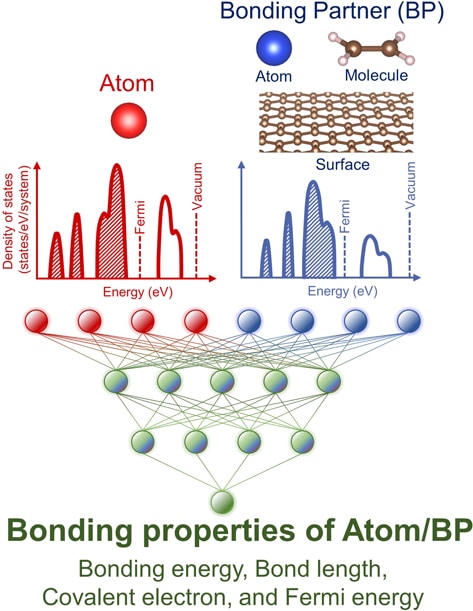
Designing materials that have the necessary properties to fulfill specific functions is a challenge faced by researchers working in areas from catalysis to solar cells. To speed up development processes, modeling approaches can be used to predict information to guide refinements. Researchers from The University of Tokyo Institute of Industrial Science have developed a machine learning model to determine characteristics of bonded and adsorbed materials based on parameters of the individual components. Their findings are published in Applied Physics ExpressSchematic illustration of the present study. The ML predictions for various bonding properties between atom and bonding partner (BP) based on density of states (DOSs) of isolated systems before bond creation.

Factors such as the length and strength of bonds in materials play crucial roles in determining the structures and properties we experience on the macroscopic scale. The ability to easily predict these characteristics is therefore valuable when designing new materials.

The density of states (DOS) is a parameter that can be calculated for individual atoms, molecules, and materials. Put simply, it describes the options available to the electrons that arrange themselves in a material. A modeling approach that can take this information for selected components and produce useful data for the desired product, with no need to make and analyze the material, is an attractive tool.

The researchers used a machine learning approach where the model refines its response without human intervention to predict four different properties of products from the DOS information of the individual components. Although the DOS has been used as a descriptor to establish single parameters before, this is the first time multiple different properties have been predicted.

"We were able to quantitatively predict the binding energy, bond length, number of covalent electrons, and the Fermi energy after bonding for three different general types of system," explains study first author Eiki Suzuki. "And our predictions were very accurate across all of the properties."

Because the calculation of DOS of an isolated state is less complex than for bonded systems, the analysis is relatively efficient. In addition, the neural network model used performed well even when only 20% of the dataset was used for training.

"A significant advantage of our model is that it is general and can be applied to a wide variety of systems," study corresponding author Teruyasu Mizoguchi explains. "We believe that our findings could make a significant contribution to numerous development processes, for example in catalysis, and could be particularly useful in newer research areas such as nanoclusters and nanowires."

Climate change to bring more intense storms across Europe

Climate change is driving a large increase in intense, slow-moving storms, a new study by Newcastle University and the Met Office has found.

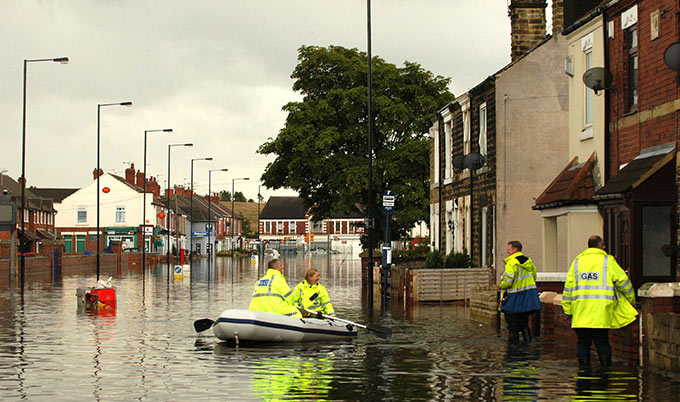
Investigating how climate affects intense rainstorms across Europe, climate experts have shown there will be a significant future increase in the occurrence of slow-moving intense rainstorms. The scientists estimate that these slow-moving storms may be 14 times more frequent across the land by the end of the century. It is these slow-moving storms that have the potential for very high precipitation accumulations, with devastating impacts, as we saw in Germany and Belgium. Urban flooding standard 794fd

Led by Dr. Abdullah Kahraman, of Newcastle University's School of Engineering, the researchers used very detailed climate model simulations at the UK Met Office Hadley Centre. They found that slower storm movement acts to increase the amount of rainfall that accumulates locally, increasing the risk of flash floods across Europe beyond what has been expected based on previous studies.

Published in the journal Geophysical Research Letters, the study results show that storms producing intense rain may move slower with climate change, increasing the duration of exposure to these extremes.

Dr. Abdullah Kahraman, who is also a visiting scientist at the Met Office, said: "With recent advances in supercomputer power, we now have pan-European climate simulations resolving the atmosphere in high detail as short-range weather forecasting models do. These models have grid spacing of approximately 2 km, which allows them to simulate storm systems much better, resulting in a better representation of extremes.

"Using these state-of-the-art climate simulations, we have developed metrics to extract potential cases for heavy rainfall and a smaller, almost-stationary subset of these cases with the potential for high rainfall accumulations. These metrics provide a holistic view of the problem and help us understand which factors of the atmosphere contribute to heavy rainfall changes.

"This is one of the first studies to explore changes in the speed of such heavy rainfall systems - an important aspect contributing to flooding risk. Currently, we are also investigating other extreme weather types by examining the climate simulations data with a severe weather forecaster's perspective."

Professor Hayley Fowler, of Newcastle University's School of Engineering, added: "Governments across the world have been too slow in reducing greenhouse gas emissions and global warming continues apace. This study suggests that changes to extreme storms will be significant and cause an increase in the frequency of devastating flooding across Europe. This, alongside the current floods in Europe, is the wake-up call we need to produce improved emergency warning and management systems, as well as implementing climate change safety factors into our infrastructure designs to make them more robust to these severe weather events."

Professor Lizzie Kendon, Science Fellow at the Met Office and Professor at Bristol University, said: "This study shows that in addition to the intensification of rainfall with global warming, we can also expect a big increase in slow-moving storms which have the potential for high rainfall accumulations. This is very relevant to the recent flooding seen in Germany and Belgium, which highlights the devastating impacts of slow-moving storms.

"Our finding that slow-moving intense rainstorms could be 14 times more frequent by the end of the century under the high emissions RCP8.5 scenario, shows the serious impacts that we may expect across Europe if we do not curb our emissions of greenhouse gases."

The study findings are relevant to climate mitigation and adaptation policy in Europe, with specific implications for future flooding impacts, the design of infrastructure systems, and the management of water resources.

Currently, almost stationary intense rainstorms are uncommon in Europe and happen rarely over parts of the Mediterranean Sea. Accurate predictions of future changes in intense rainfall events are key to putting effective adaptation and mitigation plans in place to limit the adverse impacts of climate change.