SIAM recognizes distinguished work in applied mathematics, computational science

Society for Industrial and Applied Mathematics (SIAM) has announced the 2022 Class of SIAM Fellows. These distinguished members were nominated for their exemplary research as well as outstanding service to the community. Through their various contributions, SIAM Fellows help advance the fields of applied mathematics and computational science.

SIAM congratulates these 26 esteemed members of the community, listed below in alphabetical order:

Remi Abgrall, Universität Zürich, is being recognized for fundamental contributions to the development of numerical methods for conservation laws, in particular for multi-fluid flows and residual distribution schemes.

Sharon F. Arroyo, The Boeing Company, is being recognized for leadership in, promotion of, and contributions to the industrial practice of operations research.

Weizhu Bao, National University of Singapore, is being recognized for modeling and simulation of Bose-Einstein condensation and multiscale methods and analysis for highly oscillatory dispersive PDEs.

Bonnie Berger, Massachusetts Institute of Technology, is being recognized for pioneering work in computational molecular biology, including comparative and compressive genomics, network inference, genomic privacy, and protein structure prediction.

Zhiming Chen, Chinese Academy of Sciences, is being recognized for significant contributions to adaptive finite element methods, multiscale analysis and computation, and seismic imaging.

James Michael Crowley, Society for Industrial and Applied Mathematics is being recognized for service to SIAM and the applied mathematics and computational science community.

James H. Curry, University of Colorado Boulder, is being recognized for pioneering work in computational dynamics and mentorship of young researchers, particularly in the African American community.

Zlatko Drmač, University of Zagreb, is being recognized for contributions to algorithms with high relative accuracy in numerical linear algebra, model reduction, and system identification.

Chen Greif, The University of British Columbia, is being recognized for contributions to scientific supercomputing, especially in numerical linear algebra and its applications.

Abba B. Gumel, Arizona State University, is being recognized for stellar contributions to mathematical biology, particularly the modeling of epidemics, and applications to other public health problems.

Eldad Haber, The University of British Columbia, is being recognized for contributions to computational inverse problems, differential equations, statistical and optimization techniques, deep learning, and multi-scale methods.

John Robert King, University of Nottingham, is being recognized for contributions to asymptotic methods and systems biology.

Daniel Kressner, EPFL, is being recognized for contributions to numerical linear and multilinear algebra and scientific computing.

Jose Nathan Kutz, University of Washington, is being recognized for contributions to applied dynamical systems, machine learning, and nonlinear optics.

Lek-Heng Lim, University of Chicago, is being recognized for pioneering contributions to numerical multilinear algebra, and for introducing high-level algebra, geometry, and topology to applied mathematics.

Fang-Hua Lin, New York University, is being recognized for significant contributions to our understanding of the properties of solutions throughout nonlinear partial differential equations.

Peter B. Monk, University of Delaware, is being recognized for contributions to inverse scattering and the development and analysis of finite element methods for problems in acoustics and electromagnetism.

Houman Owhadi, California Institute of Technology, is being recognized for outstanding contributions in statistical numerical approximation, kernel learning, and uncertainty quantification.

Keith Promislow, Michigan State University, is being recognized for contributions to rigorous asymptotic reductions, development of novel models and their applications, and service to the applied mathematics community.

Rosemary Anne Renaut, Arizona State University, is being recognized for contributions to ill-posed inverse problems and regularization, geophysical and medical imaging, and high order numerical methods.

Wil Schilders, Eindhoven University of Technology, is being recognized for impressive contributions to industrial mathematics through semiconductor device simulation, iterative methods for the solution of linear systems, and model order reduction methods.

Leonard J. Schulman, California Institute of Technology, is being recognized for seminal contributions to coding theory, quantum computing, and matrix analysis, and outstanding service.

Amit Singer, Princeton University, is being recognized for foundational contributions to mathematical data analysis and the mathematics of cryo-electron microscopy.

Gabriele Steidl, Technische Universität Berlin, is being recognized for contributions to computational harmonic analysis and imaging sciences.

Raymond Tuminaro, Sandia National Laboratories, is being recognized for contributions to iterative linear solver algorithms and software to address scientific computing applications on large-scale parallel systems.

Hongkai Zhao, Duke University, is being recognized for seminal contributions to scientific computation, numerical analysis, and applications in science and engineering.
Swiss researchers demo carbon nanomaterials for future quantum supercomputer technologies

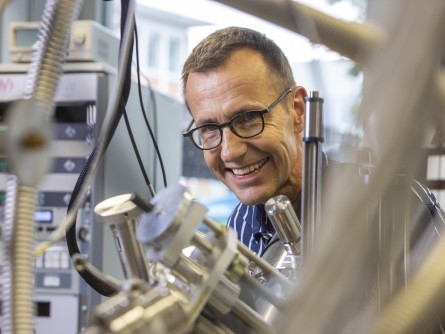
An exceptionally large grant will allow a team of Empa researchers to work on an ambitious project over the next ten years: The Werner Siemens Foundation (WSS) is supporting Empa's CarboQuant project with 15 million Swiss francs. The project aims to lay the foundations for novel quantum technologies that may even operate at room temperature – in contrast to current technologies, most of which require cooling to near absolute zero. "With this project, we are taking a big step into the unknown," says Oliver Gröning who coordinates the project. "Thanks to the partnership with the Werner Siemens Foundation, we can now move much further away from the safe shore of existing knowledge than would be possible in our 'normal' day-to-day research. We feel a little like Christopher Columbus and are now looking beyond the horizon for something completely new." Gian Vaitl / Empa Roman Fasel, head of Empa's nanotech@surfaces laboratory, standing behind a scanning tunneling microscope in his lab.

The expedition into the unknown now being undertaken by Empa researchers Pascal Ruffieux, Oliver Gröning, and Gabriela Borin-Barin under the lead of Roman Fasel was preceded by twelve years of intensive research activity. The researchers from Empa's nanotech@surfaces laboratory, headed by Fasel, regularly published their work in renowned journals such as Science.

In 2010, the team succeeded in synthesizing graphene strips, so-called nanoribbons, from smaller precursor molecules for the first time. With their novel synthesis approach, the Empa team can now produce carbon nanomaterials with atomic precision, thereby precisely defining their quantum properties. Graphene is considered a possible building material for computers of the future; it is made of carbon and resembles the familiar graphite. The material is, however, just one atomic layer thin and promises faster, more powerful computer architectures than the semiconductor materials known today. Back in 2017, the research team, in collaboration with colleagues from the University of California, Berkeley, built the first transistor from graphene nanoribbons.

A first milestone: magnetic carbon

But then the researchers realized an effect that had previously only been predicted theoretically and seemed even more interesting: Their tiny, tailor-made carbon nanomaterials exhibited properties of magnetism. In 2020, they first reported on the effect they had discovered – and followed up with a more refined paper in October 2021: Now, using their carbon nanomaterials, they had demonstrated for the first time a physical effect that the future Nobel Prize winner in physics F.D.M. Haldane had predicted nearly 40 years ago: spin fractionalization. This fractionalization only forms when many spins (i.e., fundamental quantum magnets) can be brought into a common, coherent quantum superposition. Empa researchers have achieved just that in their precisely synthesized molecular chains.

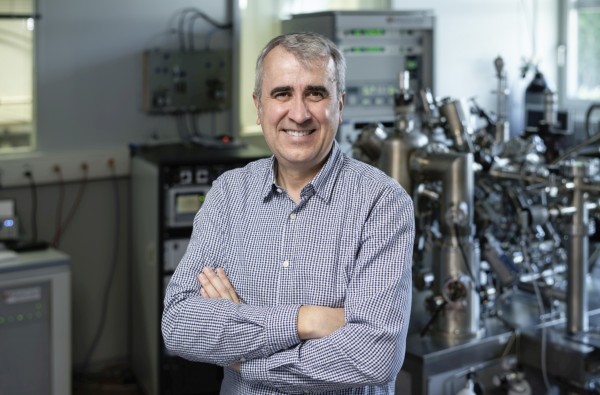
CarboQuant is intended to build on these special spin effects in graphene nanoribbons. Gröning says, "So far, we see spin states at very specific locations in the nanoribbons, which we can generate and detect. The next step will be to manipulate these spin states deliberately, for example, to reverse the spin at one end of the nanoribbon and thus elicit a corresponding reaction at the other end." This would give Empa researchers something very unique to work with: a quantum effect that is stable and can be manipulated even at room temperature or requiring just moderate cooling. That could be a silver bullet for building entirely new kinds of quantum supercomputers. Werner Siemens Foundation (WSS) Empa scientist Oliver Gröning is coordinating project CarboQuant.

0 and 1 at the same time

But why is it that quantum supercomputers can calculate faster than conventional computers? Classical computing machines calculate in bits. Each component can have one of two possible states: 0 or 1. In the quantum world, however, these states can be superimposed: 0 or 1 or both states at the same time are possible. That's why circuits in a quantum computer, known as qubits, can perform not just one computational operation after another, but multiple ones simultaneously. Gröning is already looking forward to the experiment: "If we manage to control the spin states in our nanoribbons, we can use them for quantum electronic devices."

While one part of the team continues to study spin effects in a high vacuum, other team members will focus on the everyday suitability of the graphene nanoribbons. "We have to get the components out of the protected environment of the high vacuum and prepare them in such a way that even in ambient air and at room temperature, they do not disintegrate. Only then can we equip the nanoribbons with contacts – which is the prerequisite for practical applications without the need of an elaborate infrastructure," Gröning says.

High-frequency radiation and intense laser pulses

The journey into this unknown, new world will in any case be very demanding. Already in the initial phase – the entry ticket, if you wish –, the control and time-resolved measurement of spin states require a completely new set of equipment that the researchers will have to develop and build. "We need to combine the scanning tunneling microscope (STM), in which we synthesize the nanoribbons and look at their structure, with ultra-fast measurements of their electronic and magnetic properties," Gröning explains. That can be done by high-frequency electrical signals at high magnetic fields and by irradiation with very short, extremely intense laser pulses.

To achieve this, two new measurement systems are being set up at Empa, which will also play key roles in the team's other research projects and which are co-funded by the Swiss National Science Foundation (SNSF) and the European Research Council (ERC). "This shows that synergies always emerge from different projects," says Gröning, "but also that ambitious goals can only be achieved with the support of different players at multiple levels." The researchers estimate that it will take two to three years just to set up these new analytical instruments and to carry out the first test runs. 

A very distinct projectimage_8_aa706_6c4ec.jpg

CarboQuant is a very special project thanks to its long-term and generous funding, says Oliver Gröning. The researchers at Empa's nanotech@surfaces lab now have extraordinarily great and long-term creative freedom on the way to their ambitious goal: a possible building material for next-generation quantum supercomputers. "We don't yet see the island that might be out there. But we can guess it, and if there is something out there, we are confident that we will find it, thanks to the support of the Werner Siemens Foundation and our national and international research partners," says Gröning.

NYU Tandon cybersecurity expert wins NSF CAREER Award for improving software vulnerability testing, education

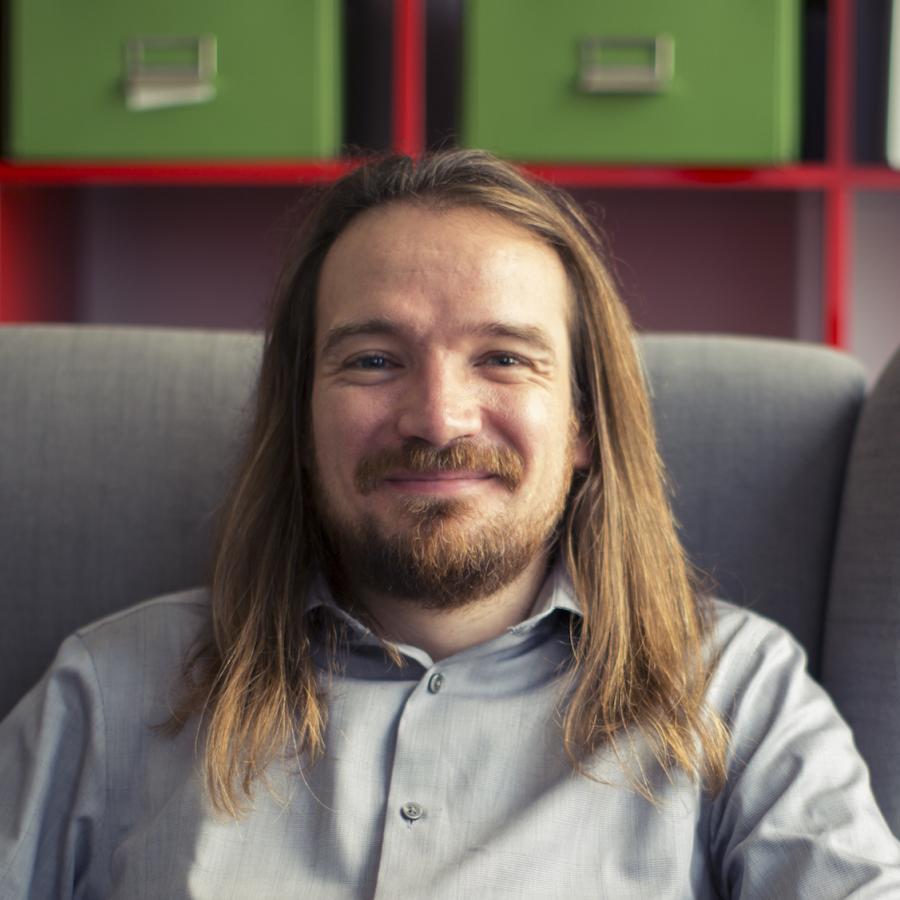
Brendan Dolan-Gavitt is laying the groundwork for more efficient, less costly vulnerability testing. Brendan Dolan-Gavitt, assistant professor in the Department of Computer Science and Engineering

The National Science Foundation (NSF) has selected an NYU Tandon School of Engineering researcher who is developing better ways to assess vulnerability discovery tools – thus allowing cybersecurity professionals to better understand what techniques are most effective and ultimately leading to safer software – to receive its most prestigious award for promising young academics. 

Brendan Dolan-Gavitt, an assistant professor in the Department of Computer Science and Engineering and a faculty member of NYU’s Center for Cybersecurity, received a 2022 NSF Faculty Early Career Development Award, more widely known as a CAREER Award, which supports early-career faculty who have the potential to serve as academic role models in research and education.

A five-year, $500,000 grant will support a project that aims to create techniques for automatically generating benchmark corpora of software vulnerabilities that can be used to rigorously assess newly developed and existing tools used to root out dangerous programming bugs.

Software vulnerabilities pose a major threat to the safety and security of computer systems, and while there is a large body of research on how to find vulnerabilities in programs, the large, empirically tested corpora of vulnerabilities required to rigorously test that research are difficult and expensive to assemble. 

Although researchers have discovered ways to automatically generate vulnerabilities and inject them into software, the vulnerabilities created in that way are unrealistic (containing artifacts that made them easier to discover than real vulnerabilities inadvertently created by human programmers) and not varied enough.

Dolan-Gavitt intends to address those shortcomings by employing large language models trained on code to synthesize vulnerabilities that are both realistic and diverse, placing vulnerabilities in hard-to-discover paths, allowing new vulnerability classes to be added quickly with a customized domain-specific language, and automatically generating exploits for each vulnerability. The end result will be a limitless supply of highly realistic vulnerability corpora that can be generated cheaply, at scale, and on-demand, giving researchers valuable benchmarks in measuring the efficacy of their cybersecurity tools.  

In addition to his work’s benefit to cybersecurity researchers and industry professionals, it is also expected to be a boon to educators. Since joining NYU Tandon in 2015, Dolan-Gavitt has been involved in CSAW, the most comprehensive student-run cybersecurity event in the world, and among the most popular offerings at the annual event is a “capture the flag” competition that challenges students to find vulnerabilities in a software program. “These types of competitions are an extremely popular and effective means of teaching a variety of cybersecurity skills, but they require large amounts of time, money, and expertise to create and manage,” he explains. “If the creation of the challenges can be partially or wholly automated, it could bring new educational opportunities within reach of a broader and more diverse population of students by dramatically lowering costs and reducing the time and effort needed.” 

“Brendan Dolan-Gavitt is helping place the field of vulnerability finding on solid scientific footing, allowing for repeatable and reproducible experiments and facilitating comparative evaluations of the cyber tools meant to protect us,” said NYU Tandon Dean Jelena Kovačević. “His work has the potential to make a major impact on cybersecurity education, broadening access and helping to build the next generation of security researchers. We’re proud that his techniques will be employed right here in our own cybersecurity courses and at CSAW and pleased that the NSF has chosen him to receive this much-deserved CAREER Award.”

Dolan-Gavitt joins the over 50% of NYU Tandon’s engineering junior faculty members who hold CAREER Awards or similar young-investigator honors, including 10 since 2019 alone.

His award reflects the NSF's statutory mission and has been deemed worthy of support through evaluation using the Foundation's intellectual merit and broader impacts review criteria.