

Luxembourg's research advances development of next-generation satellite-terrestrial networks

A six-year research partnership between the University and SES will be funded by the Luxembourg National Research Fund's Industrial Partnership Block Grant program.

The Luxembourg National Research Fund (FNR) is supporting an extensive new research project to advance data networks, led by the University of Luxembourg's Interdisciplinary Centre for Security, Reliability, and Trust (SnT) in collaboration with SES.

Titled INSTRUCT (INtegrated Satellite-TeRrestrial Systems for Ubiquitous Beyond 5G CommunicaTions), the research initiative is funded by the FNR's Industrial Partnership Block Grant (IPBG) program, the FNR's most extensive funding mechanism for collaborative industrial research in Luxembourg. The IPBG scheme is aimed at supporting innovation through collaborations between industry and academics, and building an ecosystem of skilled expertise. une recherche de pointe pour de nouveaux reseaux satellites terrestres medium 707bd{module INSIDE STORY}
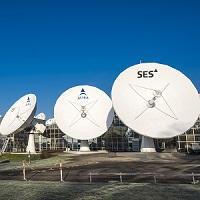
For the INSTRUCT project, SnT will support SES, the leader in global content connectivity solutions, to conduct research in next-generation integrated satellite-terrestrial networks, leveraging what has already been achieved in the 5G area and advancing it further. The project builds on a successful 10-year relationship between SnT and SES that has resulted in a number of advanced technology solutions in areas such as digital signal modulation, dynamic beamforming, high throughput modem technologies, complex software systems modeling, and natural language processing. The IPBG award will fund 17 SnT research projects, that will each have a team of a Ph.D. or PostDoc student, an academic supervisor from SnT, as well as an industrial supervisor from SES.

The integration of satellite and terrestrial systems is crucial as truly global next-generation networks require an ecosystem of multiple communication infrastructures to be inclusive, ubiquitous, and affordable. Satellite proved to be an ideal enabler of the next-generation networks thanks to its wide coverage, ability to deliver to moving platforms, and simultaneity. It will allow a broad range of next-generation connectivity scenarios, even in remote areas, for crucial applications in mobile backhauling, aero and maritime connectivity, emergency response, telemedicine, and much more. As an industry leader, SES has a solid track record in delivering to the existing data markets and spearheads major technology innovation and standardization initiatives, including for 5G.

"We launched the IPBG program as a pilot project in 2016, and it is quickly becoming an essential mechanism to funnel research funding towards complex industrial challenges," said Andreea Monnat, Deputy Secretary-General, FNR. "It is a priority of Luxembourg to establish an economy that is focused on innovation, and the longstanding partnership between SES and SnT is an excellent example of the positive results of such collaborations."

"Our business relies on the technology we use, and we are embracing innovations that support current markets and unlock new opportunities for the customers we serve. With its outstanding R&D capabilities, SnT is a reliable partner in advancing innovation with a truly global impact, and we are happy to continue working with them," said Ruy Pinto, CTO, SES. "With the backing of the FNR and SnT, we are sure we will be able to further advance on integrated satellite-terrestrial networks."

"The integration of satellite and terrestrial networks is a complex research challenge as we enter the beyond 5G era," said Prof Symeon Chatzinotas, Project Principal Investigator, SnT. "This FNR grant gives us the support to build a Center of Excellence in Luxembourg and spearhead research and technology transfer in this area."

"The partnership with SES over the years has been a driving force for some of the most exciting research outcomes of SnT," said Prof Björn Ottersten, Director, SnT. "We are proud to have our work validated by receiving this IPBG from the FNR and are confident the research will create substantial opportunities for the space sector in Luxembourg."
Magnetic memory states go exponential

A newly-discovered ability to stabilize and control exponential number of discrete magnetic states in a relatively simple structure may pave the way to multi-level magnetic memory with extremely large number of states per cell

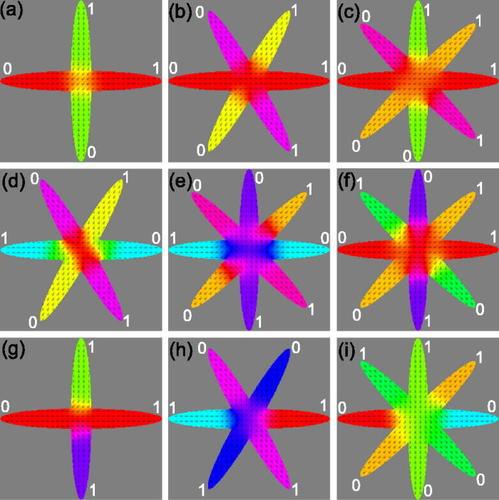
Spintronics is a thriving branch of nano-electronics which utilizes the spin of the electron and its associated magnetic moment in addition to the electron charge used in traditional electronics. The main current practical contributions of spintronics are in magnetic sensing and non-volatile magnetic data storage, and additional breakthroughs in developing magnetic based processing and novel types of magnetic memory are expected. (a)–(c) Micromagnetic simulated OSs of 2CEs, 3CEs, and 4CEs, respectively, which can be stabilized by an external magnetic field. (d)–(f) Simulated SSs generated by selectively manipulating the entire individual ellipses of 3CEs and 4CEs, respectively, which cannot be stabilized by the external magnetic field. (g)–(i) Simulated NSs generated by stabilizing the magnetization of both edges of individual ellipses in opposite directions for 2CEs, 3CEs, and 4CEs, respectively. The arrows indicate the direction of magnetization. Ones and zeroes at the edges of the ellipses indicate outward and inward magnetization, respectively.{module INSIDE STORY}

Spintronics devices commonly consist of magnetic elements manipulated by spin-polarized currents between stable magnetic states. When spintronic devices are used for storing data, the number of stable states sets an upper limit on memory capacity. While current commercial magnetic memory cells have two stable magnetic states corresponding to two memory states, there are clear advantages to increasing this number, as it will potentially allow increasing the memory density and enable the design of novel types of memory.

Now, a group of researchers led by Prof. Lior Klein, from the physics department and the Institute of Nanotechnology and Advanced Materials at Bar-Ilan University, has shown that relatively simple structures can support exponential number of magnetic states - much greater than previously thought. The studied structures are magnetic thin films patterned in the form of N crossing ellipses which have two to the power of 2N magnetization states. Furthermore, the researchers demonstrated switching between the states by generating spin currents. Their research appears as a featured article on the cover of a June issue of Applied Physics Letters.

The ability to stabilize and control exponential number of discrete magnetic states in a relatively simple structure constitutes a major contribution to spintronics. "This finding may pave the way to multi-level magnetic memory with extremely large number of states per cell (e.g., 256 states when N=4), be used for neuromorphic computing, and more," says Prof. Klein, whose research group includes Dr. Shubhankar Das, Ariel Zaig, and Dr. Moty Schultz.

Japan's Plasma Simulator produces an accurate simulation of high-pressure plasma for an economical helical fusion reactor

The research team of Assistant Professor Masahiko Sato and Professor Yasushi Todo of the National Institutes of Natural Sciences (NINS) National Institute for Fusion Science (NIFS) has succeeded using supercomputer simulation in reproducing the high-pressure plasma confinement observed in the Large Helical Device (LHD). This result has enabled highly accurate predictions of plasma behavior aimed at realizing an economical helical fusion reactor.

In order to realize fusion energy, we must confine high-pressure plasma using the magnetic field for a long duration. Although higher pressure plasma can be confined by a stronger magnetic field, it costs more to generate a stronger magnetic field using electromagnetic coils. Therefore, if the magnetic field strength is the same, a device that can confine higher pressure plasma is economically desirable. Because the LHD has succeeded in maintaining high-pressure plasma, there is great expectation in realizing a helical fusion reactor. The difference between the high pressure in the center region (the red region) and the low pressure in the peripheral region (the blue region) induces the fluctuation in the plasma. In the fluid simulation result (the above figure), the high pressure cannot be maintained because the fluctuation becomes extremely large and causes the mixing of the high-pressure plasma and the low-pressure plasma. On the other hand, in the hybrid simulation result (the bottom figure), the high pressure is maintained for a long period because the fluctuation remains low levels.{module INSIDE STORY}

Design research for a future fusion reactor is performed based on computer simulations predicting the behavior of magnetically confined plasma. We require highly accurate simulations. To confirm the accuracy, the simulations are required to reproduce the experimental results obtained by the existing devices. However, the simulations had not reproduced the experimental results obtained by the LHD showing that high-pressure plasma is maintained. This has been a serious problem for the design research for an economical helical fusion reactor.

Simulations of high-pressure plasma in the LHD had been performed using a model in which the plasma is treated as a fluid. In this fluid model, the motion averaged over many ions consisting of the plasma is calculated, and the difference among many ions with various velocities are neglected. At NIFS, a program that calculates individual motions of many ions was developed to improve the simulation accuracy. This program, which is called "the hybrid simulation program," has been used to study energetic ions that will play an important role in sustaining high-temperature plasma in a future fusion reactor.

Assistant Professor Masahiko Sato and Professor Yasushi Todo attempted to reproduce high-pressure plasma confinement in the LHD by using the hybrid simulation program. They focused on the ions moving back-and-forth, which are called "trapped ions" and whose motion is a characteristic of the LHD. To investigate the effect of the trapped ions, the researchers studied the long-time evolution of plasma pressure and tens of millions of ions including millions of trapped ions. Although such a simulation requires enormous amounts of calculations, the researchers, by making full use of "Plasma Simulator" (the supercomputer owned by NIFS), have succeeded in reproducing the LHD experimental result showing that high-pressure plasma is maintained. From the detailed analysis of the simulation data, it has been found that the trapped ions greatly contribute to the stable confinement of high-pressure plasma by suppressing the fluctuations that can cause the reduction of plasma pressure.  The passing ion (white sphere) moves in one direction. On the other hand, the trapped ion (yellow sphere) moves back-and-forth and the center of the back-and-forth motion also moves simultaneously in helical direction, which is a characteristic of the LHD. The plasma pressure is constant in each colored surface, and the plasma pressure is high in the central region.{module INSIDE STORY}

Thus, the research team has significantly improved the prediction accuracy of high-pressure plasma in a future helical fusion reactor. It is expected that the design research aimed at an economical helical reactor will be accelerated based on this study.

This research result was published as Sato and Todo "Ion kinetic effects on linear pressure-driven MHD instabilities in helical plasmas" in Journal of Plasma Physics in June 2020.