Brazilian niobium supplier CBMM uses Dassault Systèmes’ 3DEXPERIENCE platform to develop safer, more energy efficient automotive applications

Dassault Systèmes has announced that CBMM, the Brazil-based leading supplier of niobium products and technology, is using the 3DEXPERIENCE platform on the cloud to optimize the development of new applications of niobium for the automotive industry. Niobium, a readily available, reliable, soft metal that is ductile, malleable and highly resistant to corrosion, can improve material properties, leading to increased energy efficiency, safety and performance of end products.

CBMM aims to test and increase the use of niobium with other materials such as steel more quickly, to reduce costs and the sales cycle, as well as accelerate its time to market. The 3DEXPERIENCE platform enables it to unify its design, engineering, testing and manufacturing data in a single, fully collaborative digital environment. CBMM can simulate and experience the use of materials and their applications in different product parts, analyze their durability, toughness and efficiency, and optimize their design. It can also create a knowledge base of the many tests and simulations that can be accessed and shared by its international teams to work and innovate more collaboratively. Slide 82 4559b{module INSIDE STORY}

Projects already underway include the development of new truck structures, road implements, and modern brake systems with more efficient discs and supports.

“Through Dassault Systèmes’ solutions, we will optimize the development time of niobium applications and improve our performance,” said Rodrigo Barjas Amado, Head of Strategy & New Business Development, CBMM. “Developing an application, including its physical tests, takes up to five years. The 3DEXPERIENCE platform will allow us to carry out this same development in less than a year. Digitalized testing processes will also enable automotive manufacturers to access data on the advantages of using new materials and parts with niobium, expanding its use.”

“CBMM has a robust technology program to expand and diversify the global niobium market, in addition to exploring its synergies with graphene. A fully integrated digital approach on the cloud with the 3DEXPERIENCE platform helps them comply with sustainability requirements, reduce deadlines, and improve production performance,” said Thomas Grand, Vice President, Energy & Materials Industry, Dassault Systèmes. “CBMM can also extend its use of the 3DEXPERIENCE platform to automate and accelerate simulations of supply chain management, workforce planning and mine automation to mitigate social, governance and environmental risks or negative impacts.”

Novel crystal confines electrons to one dimension for spintronic applications

Spintronics refers to a suite of physical systems which may one day replace many electronic systems. To realize this generational leap, material components that confine electrons in one dimension are highly sought after. For the first time, researchers created such a material in the form of a special bismuth-based crystal known as a high-order topological insulator.

To create spintronic devices, new materials need to be designed that take advantage of quantum behaviors not seen in everyday life. You are probably familiar with conductors and insulators, which permit and restrict the flow of electrons, respectively. Semiconductors are common but less familiar to some; these usually insulate, but conduct under certain circumstances, making them ideal miniature switches. CAPTION Subtle changes in the arrangement of component materials can have a stronger knock-on effect to the bulk material than was previously thought.  CREDIT © 2020 Kondo et al{module INSIDE STORY}

For spintronic applications, a new kind of electronic material is required and it's called a topological insulator. It differs from these other three materials by insulating throughout its bulk, but conducting only along its surface. And what it conducts is not the flow of electrons themselves, but a property of them known as their spin or angular momentum. This spin current, as it's known, could open up a world of ultrahigh-speed and low-power devices.

However, not all topological insulators are equal: Two kinds, so-called strong and weak, have already been created, but have some drawbacks. As they conduct spin along their entire surface, the electrons present tend to scatter, which weakens their ability to convey a spin current. But since 2017, a third kind of topological insulator called a higher-order topological insulator has been theorized. Now, for the first time, one has been created by a team at the Institute for Solid State Physics at the University of Tokyo.

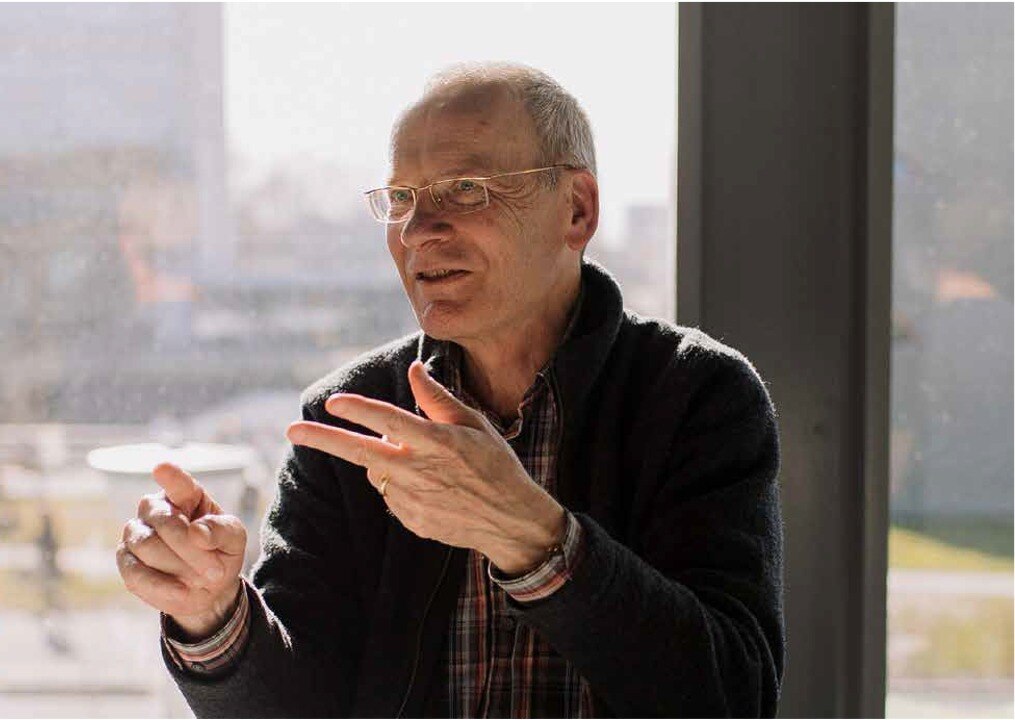
"We created a higher-order topological insulator using the element bismuth," said Associate Professor Takeshi Kondo. "It has the novel ability of being able to conduct a spin current along only its corner edges, essentially one-dimensional lines. As the spin current is bound to one dimension instead of two, the electrons do not scatter so the spin current remains stable."

To create this three-dimensional crystal, Kondo and his team stacked two-dimensional slices of crystal one atom thick in a certain way. For strong or weak topological insulators, crystal slices in the stack are all oriented the same way, like playing cards face down in a deck. But to create the higher-order topological insulator, the orientation of the slices was alternated, the metaphorical playing cards were faced up then down repeatedly throughout the stack. This subtle change in arrangement makes a huge change in the behavior of the resultant three-dimensional crystal.

The crystal layers in the stack are held together by a quantum mechanical force called the van der Waals force. This is one of the rare kinds of quantum phenomena that you actually do see in daily life, as it is partly responsible for the way that powdered materials clump together and flow the way they do. In the crystal, it adheres the layers together.

"It was exciting to see that the topological properties appear and disappear depending only on the way the two-dimensional atomic sheets were stacked," said Kondo. "Such a degree of freedom in material design will bring new ideas, leading toward applications including fast and efficient spintronic devices, and things we have yet to envisage."

European Commission launches EXPLORE project to develop AI, interactive visualization applications in astrophysics, planetary science

An international consortium has been awarded 2 million Euros by the European Commission to develop novel applications that use artificial intelligence (AI) and visual analytics to exploit the vast datasets generated by astrophysics and planetary missions. Over three years, the EXPLORE project will develop these tools on a new virtual platform to create services and enhanced scientific datasets focused on galactic and stellar research, linked to the European Space Agency’s Gaia mission, as well as lunar exploration. The tools will be made available to the community through different cloud science platforms using open source licenses to stimulate uptake and ensure sustainability.

The EXPLORE Consortium is led by the French company, ACRI-ST, and includes eight partners from six countries. The interdisciplinary project brings together astrophysicists, planetary scientists, computer scientists, IT engineers & software developers.

At today’s kick-off meeting, Dr Nick Cox, the EXPLORE Project Coordinator, said: “The sheer volume and increase in complexity of data from space science missions, as well as the need to combine multiple data sets, requires an increase in both data management and processing capabilities. AI-based solutions and interactive visualization techniques for big data are not just useful tools to explore the Universe but are becoming a necessity.” Gaia's all-sky view of our Milky Way Galaxy and neighbouring galaxies, based on measurements of nearly 1.7 billion stars. The map shows the total brightness and colour of stars observed by the ESA satellite in each portion of the sky between July 2014 and May 2016. Copyright: ESA/Gaia/DPAC, CC BY-SA 3.0 IGO{module INSIDE STORY}

EXPLORE will develop six scientific data applications to test methodologies and tools for space data exploitation on a collaborative cloud environment, the EXPLORE Thematic Exploitation Platform (EXPLORE-TEP).

Rather than focus on one main scientific topic, EXPLORE aims to foster synergies between different areas of space science. Four of the applications will leverage data primarily from Gaia, supplemented with data from other surveys, developing tools to help understand the evolution of our galaxy, the 3D distribution of interstellar matter, as well as to support the discovery, classification, and characterization of stars. The remaining two applications will integrate data from a range of international lunar missions to focus on the characterization of the Moon’s surface and potential human landing sites. A key objective will be to facilitate the integration and visualization of multiple datasets.

Prof Dovi Poznanski of Tel Aviv University, who leads EXPLORE’s AI methodology development, said: “By putting together different experiences and backgrounds we introduce diversity and interdisciplinarity in the analysis of space science data. Today’s big datasets in imagery, spectroscopy, and 3D mapping require sophisticated tools. However, there are common basic principles among the different fields, which means there is a vital need for cross-fertilization if we want to optimize the most advanced tools.”

EXPLORE-TEP builds on the heritage of a platform designed by ACRI-ST and funded by ESA to facilitate and expand the use and uptake of Copernicus-Sentinel Earth Observation mission data.

Dr Jeronimo Bernard-Salas, of ACRI-ST and Deputy Coordinator of EXPLORE, said: “For astronomers, it is becoming increasingly difficult to simply download all the data to their desktop and use their favorite analysis tools locally. Through EXPLORE, we aim to bring processing and analysis capabilities, accessible via existing and new collaborative working environments, to the data. This allows any user to exploit space mission and supporting ground-based data more efficiently and to effectively share their methods and results, thus ensuring science becomes more open.”

Ultimately, EXPLORE aims to apply the tools to other areas of space science, as well as to map business opportunities for potential market entry in other domains.