

The image depicts an experiment with two gold electrodes placed on a thin magnetic layer. A superconducting electrode is positioned in the middle. The researchers induce the spin waves in the magnetic material using the left gold electrode, which then propagate towards the right. A square diamond membrane is present on top of the electrodes, which allows the researchers to observe the superconducting electrode. Photo credit goes to Michael Borst from TU Delft.

For the first time, Dutch scientists manage to control waves in magnets using superconductors

Researchers at Delft University of Technology in the Netherlands have made a groundbreaking discovery by demonstrating that it is feasible to control and manipulate spin waves on a microchip using superconductors. This marks the first time that such a feat has been achieved. These spin waves can potentially be used as an energy-efficient substitute for electronics and may have applications in areas such as energy-efficient information technology and quantum supercomputing. The study involves using a superconducting electrode as a mirror for the spin wave, reflecting its magnetic field to the wave and allowing it to be manipulated with precision.

Spin waves are magnetic waves that can be used to transfer information, says Michael Borst, who led the experiment. Spin waves can be a promising alternative to electronics and scientists have been trying to control and manipulate them for years. Metal electrodes were predicted to be a way of controlling spin waves, but physicists have not been able to see such effects in experiments until now. The research team has shown that spin waves can be controlled properly with a superconducting electrode. A spin wave generates a magnetic field that generates a supercurrent in the superconductor, which acts as a mirror for the spin wave. The superconducting mirror slows down the spin waves' movement up and down, making them easily controllable. The wavelength of spin waves changes completely when they pass under the superconducting electrode, and by varying the temperature of the electrode slightly, the magnitude of the change can be precisely adjusted. The experiment used a thin magnetic layer of yttrium iron garnet (YIG), which is known as the best magnet on Earth. The team laid a superconducting electrode and another electrode on top of it to induce the spin waves. By cooling the electrode to -268 degrees, it entered a superconducting state, which helped to manipulate the spin waves.

The researchers used a unique sensor to image the spin waves. This was essential to the experiment. They used electrons in diamonds as sensors for the magnetic fields of the spin waves. Their lab is pioneering that technique. The cool thing about it is that they can look through the opaque superconductor at the spin waves underneath, just like an MRI scanner can look through the skin into someone's body.

According to Borst, spin wave technology is still in its infancy. To make energy-efficient computers with this technology, small circuits should be built to perform calculations. Their discovery opens a door to countless new and energy-efficient spin-wave circuits as superconducting electrodes can be used.

Van der Sar added that they can now design devices based on spin waves and superconductors that produce little heat and sound waves. Spintronics versions of frequency filters or resonators, components that can be found in electronic circuits of cell phones, for example, can be created. Or circuits that can serve as transistors or connectors between qubits in a quantum supercomputer can also be designed.
Brown University simulations suggest Venus had plate tectonics, which could reveal insights into its history, the possibility of early life

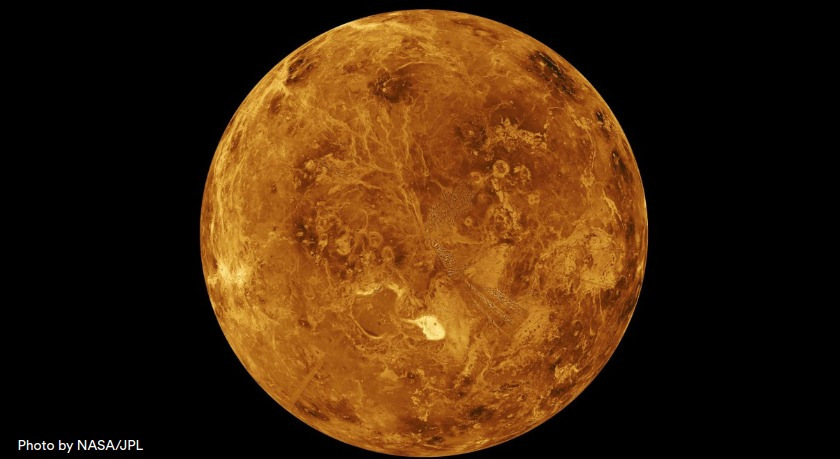
Based on atmospheric data and supercomputer modeling, scientists have proposed that Venus had Earth-like plate tectonics in the past. This discovery raises the possibility of early life on the planet and suggests that the timing of plate tectonics may be a crucial factor in the emergence of life on the planet. The study also demonstrates that the atmosphere of exoplanets can be utilized to understand their early histories, serving as a proof of concept for future research.

Scientists have found that Venus, a planet known for its extremely high temperatures, may have had tectonic plate movements like those on early Earth. According to a research study led by Brown University scientists, the composition of Venus' current atmosphere and surface pressure could only have been possible due to an early form of plate tectonics. Plate tectonics is a critical process for life on Earth as it involves multiple continental plates pushing, pulling, and sliding beneath one another. Over billions of years, this process on Earth led to the formation of new continents and mountains, which stabilized the planet's surface temperature and made it more suitable for life.

In contrast, Venus is Earth's closest neighbor and sister planet but has surface temperatures hot enough to melt lead. Scientists have previously believed that Venus had a "stagnant lid," meaning that its surface only had a single plate with minimal movement and gasses being released into the atmosphere. However, new research shows that Venus must have had plate tectonics after it formed, around 4.5 billion to 3.5 billion years ago, to account for the abundance of nitrogen and carbon dioxide in its atmosphere.

The scientists suggest that early tectonic movement on Venus, like on Earth, would have been limited in terms of the number of plates moving and how much they shifted. Furthermore, this process would have been happening on Earth and Venus simultaneously. This finding opens up exciting possibilities for understanding Venus' evolutionary past, the history of the solar system, and the potential for early life on Venus.

According to lead author Matt Weller, two planets may have coexisted in the same solar system at the same time, operating in a plate tectonic regime. This mode of tectonics allowed for life on Earth, and it also added to the possibility of microbial life on ancient Venus. The study also shows that the two planets were more similar than previously thought before diverging. It highlights the possibility that plate tectonics on planets might depend on timing, which may also be true for the emergence of life. Alexander Evans, a study co-author, said that planets may transition in and out of different tectonic states, and this may be common. Hence, we may have planets that transition in and out of habitability rather than being continuously habitable.

Scientists are investigating how the atmosphere can help in understanding the history of planets. This is important when studying nearby moons, such as Jupiter's Europa, and distant exoplanets. According to a research paper, scientists initially started this work to show that the atmospheres of far-off exoplanets can be powerful markers of their early histories. However, they later decided to investigate this point closer to home.

The researchers used current data on Venus' atmosphere as the endpoint for their models. At first, they assumed that Venus has had a stagnant lid throughout its entire existence. However, simulations recreating the planet's current atmosphere didn't match up with its resulting surface pressure and the amount of nitrogen and carbon dioxide present.

The researchers then simulated what would have had to happen on Venus to get to where it is today. They eventually matched the numbers almost exactly when they accounted for limited tectonic movement early in Venus' history, followed by the stagnant lid model that exists today. The team believes that this work serves as a proof of concept regarding atmospheres and their ability to provide insights into the past.

The study raises a key question: what happened to plate tectonics on Venus? The theory in the paper suggests that the planet ultimately became too hot, and its atmosphere too thick, drying up the necessary ingredients for tectonic movement. The researchers say the details of how this happened may hold important implications for Earth.

Upcoming NASA DAVINCI missions, which will measure gases in the Venusian atmosphere, may help solidify the study's findings. In the meantime, the researchers plan to delve deep into the question raised by the paper. They will explore what conditions could allow Earth to remain habitable and what conditions could force us to move in a Venus-like trajectory.

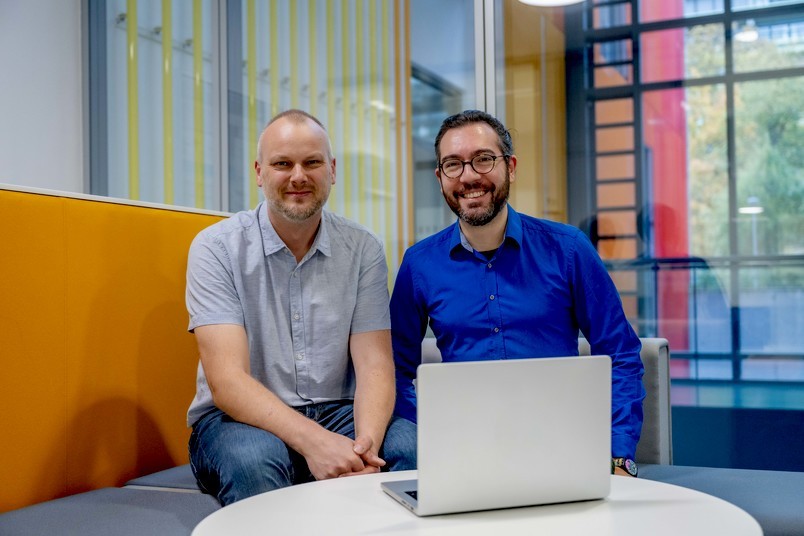
Lars Schäfer and Dario De Vecchis (right) have been working on the tuberculosis pathogen. © RUB, Marquard

German researchers simulate breaking bad barriers through a molecular vacuum cleaner

Researchers from Ruhr University Bochum in Germany have recently made a breakthrough discovery regarding the molecular journey of triglycerides in Mycobacteria tuberculosis, the pathogen responsible for tuberculosis. The team found that the molecular journey of triglycerides, which is essential for sealing the barrier of the bacterium, involves two key proteins: RV1410, a transmembrane protein, and LprG, a periplasmic protein. The identification of this molecular pathway has the potential to lead to new treatments and therapies for tuberculosis by weakening the mycobacterial barrier and making the bacterium more vulnerable to attack.

The tuberculosis bacterium has a double barrier which protects it from the host defense system, making it a formidable pathogen that causes a severe infectious disease claiming about 1.3 million lives annually worldwide. To better understand how to weaken this barrier, scientists are investigating how its molecular components work. Professor Lars Schäfer and Dr. Dario De Vecchis from the Centre for Theoretical Chemistry at Ruhr University Bochum, Germany, in collaboration with the Institute for Medical Microbiology at the University of Zurich, used supercomputer simulations to describe the molecular journey of triglycerides, one critical component of this barrier.

Triglycerides are high-energy molecules that are stored in our tissue as a form of fat energy. Mycobacteria also accumulate triglycerides, which contribute to sealing their cellular barrier. To be deposited in the mycobacterial barrier, triglycerides must be transported from inside the bacterial cell, the cytoplasmic space, through the membrane. Until now, the precise details of this molecular journey were unknown.

Professor Markus Seeger and Dr. Sille Remm at Zurich teamed up with Schäfer and De Vecchis to reveal how triglycerides are hunted from the transmembrane protein that extracts them from the bacterial membrane via lateral portals in the protein structure. Once extracted, the triglycerides are ultimately transported from the membrane and deposited into the barrier by the second intermediate actor LprG, a periplasmic protein that is anchored to the membrane and browses its surface chasing for triglycerides.

LprG has a water-repellent pocket that, when paired with the transmembrane protein, creates a greasy tunnel where the 'baton' triglyceride is handed off in a relay race to ultimately reach the barrier. The RV1410-LprG system could be thought of as the Trojan horse that scientists are using to conquer the pathogen's ramparts on the Troy battlefield of the mycobacterial membrane. Schäfer and De Vecchis's research aims to reveal the molecular pathway of triglycerides, which could lead to new strategies to target the RV1410-LprG system, weaken the mycobacterial barrier, enhance antimicrobial permeability, and ultimately develop more effective therapies against tuberculosis.