

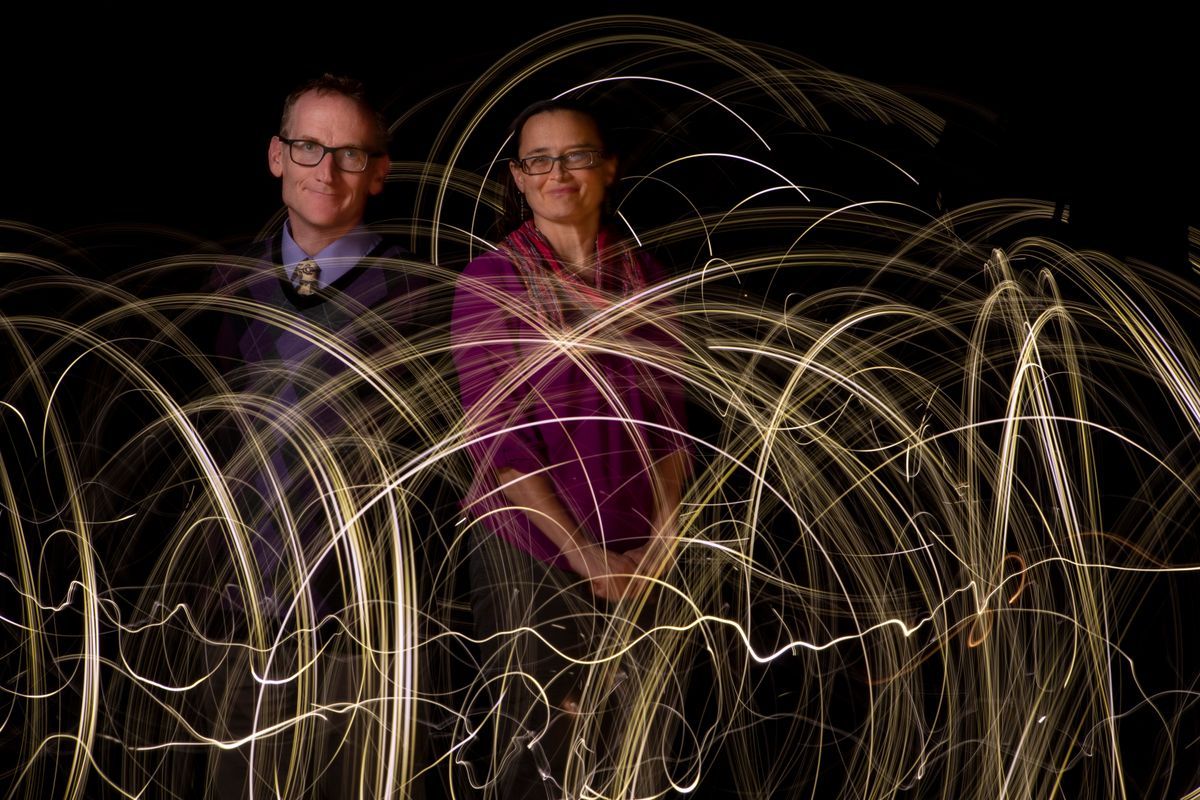
WVU astrophysicists Duncan Lorimer and Maura McLaughlin have received the prestigious Shaw Prize, considered the “Nobel of the East,” for their discovery of fast radio bursts. (WVU Photo/Raymond Thompson Jr.)

WVU astrophysicists win the Shaw Prize, the 'Nobel of the East'

West Virginia University (WVU) astrophysicists Duncan Lorimer and Maura McLaughlin have been chosen to receive the prestigious Shaw Prize in Hong Kong. This award is often referred to as the "Nobel Prize of the East" and is given to individuals who have made significant contributions to their respective fields, contributing to the progress of society, the enhancement of the quality of life, and the enrichment of humanity's spiritual civilization.

Lorimer and McLaughlin, both professors of physics and astronomy at WVU's Eberly College of Arts and Sciences, are recognized for their groundbreaking discovery of fast radio bursts (FRBs). These intense pulses of energy, originating billions of light years away, last only milliseconds and until Lorimer and McLaughlin's discovery, remained unexplained. Thousands of these enigmatic cosmic flashes have been observed since their initial discovery in 2007.

The Shaw Prize acknowledges not only the significance of Lorimer and McLaughlin's discovery but also their extensive contributions to the field of astronomy and their dedication to raising the profile of WVU.

Their partnership began when Lorimer, working as a research scientist at the Arecibo Observatory in Puerto Rico, playfully complained to McLaughlin, a visiting graduate student, about her use of the supercomputer without permission. This lighthearted exchange set the stage for their fruitful partnership.

Lorimer and McLaughlin made significant contributions at the Jodrell Bank Observatory in the UK before moving to the US. They chose to join WVU in 2006, mainly because the university was close to the Green Bank Telescope, the largest radio telescope in the continental United States.

At WVU, they laid a strong foundation for astronomy education and research, creating a graduate program in astronomy and expanding the number of faculty members in the department. They co-founded the Pulsar Science Collaboratory, which involved thousands of high school students in pulsar searches. Their involvement in the North American Nanohertz Observatory for Gravitational Waves and the establishment of the Center for Gravitational Waves and Cosmology further solidified their impact on the field.

Their proudest accomplishment at WVU is their contribution to training the next generation of astrophysicists. Lorimer has proudly graduated as his 11th WVU Ph.D. student, and McLaughlin is inspired every day by the exceptional students and postdoctoral researchers she works with.

Lorimer and McLaughlin's remarkable achievements were recognized with the Shaw Prize, awarded in the categories of astronomy, life sciences and medicine, and mathematical sciences. They are two of only seven recipients of the 2023 Shaw Prize, alongside Australian astrophysicist Matthew Bailes, who worked alongside the couple.

The nomination process for the Shaw Prize was a surprise to Lorimer and McLaughlin. They were asked to submit their CV without any mention of the award. It was on a Sunday night at home when they received the news of their incredible accomplishment. Duncan recalled the excitement, with him running up the stairs to share the news with Maura, leading to an unforgettable moment for both of them.

The Shaw Prize was established in 2002 in Hong Kong by philanthropist Run Run Shaw to recognize individuals who advance science. Lorimer and McLaughlin's fascination with scientific knowledge started in their teenage years. Lorimer recalls observing a lunar eclipse through a telescope entrusted to him by his teacher, while McLaughlin discovered Steven Hawking's "A Brief History of Time," sparking her fascination with the concepts of black holes, compact objects, and spacetime.

Despite their remarkable achievements, Lorimer and McLaughlin see the Shaw Prize as just another milestone in their career. Their work is far from over, with countless pulsars, fast radio bursts, gravitational waves, and yet-to-be-discovered phenomena waiting to be explored. Lorimer is currently involved in projects to discover more sources in the transient sky and to improve data processing efficiency using artificial intelligence. McLaughlin is determined to unravel the mysteries behind fast radio bursts, including their unusual brightness and the galaxies they originate from.

Lorimer and McLaughlin's exceptional work has not only elevated the field of astronomy but also highlighted WVU's commitment to cutting-edge research. As they continue their scientific journey, their impact on astronomy and astrophysics is set to grow even further.

Study shows smoking inhibits cancer-fighting proteins, increasing cancer risk, complicating treatment

Scientists at the Ontario Institute for Cancer Research (OICR) have conducted a recent study that reveals a concerning link between smoking and the inhibition of cancer-fighting proteins. The findings, which are published in the journal Science Advances, suggest that smoking not only increases the risk of developing cancer but also makes it more difficult to treat.

The research team, led by OICR investigator Dr. Jüri Reimand and University of Toronto PhD student Nina Adler, analyzed DNA samples from over 12,000 tumor samples across 18 different types of cancer. Their study found a significant correlation between tobacco smoking and harmful changes in DNA that prevent the formation of certain proteins that are vital for preventing abnormal cell growth.

The study revealed that these harmful changes in DNA, known as "stop-gain mutations," were particularly prevalent in genes called "tumor-suppressors," which play an essential role in inhibiting the growth of abnormal cells. According to Adler, without these tumor suppressors, abnormal cells can continue to grow unchecked, increasing the risk of developing cancer.

Using computational tools, the researchers also found a clear connection between lung cancer and the distinct genetic footprint that smoking leaves in DNA. Intriguingly, the amount of tobacco smoked was directly proportional to the frequency of these harmful mutations. This suggests that the more a person smokes, the more complex and difficult the cancer becomes to treat.

Dr. Reimand emphasized the damaging effects of tobacco smoking on DNA, stating that it compromises our long-term health by deactivating critical proteins that are the building blocks of our cells.

The study also identified other factors and processes that contribute to the development of stop-gain mutations, such as natural enzymes called APOBEC, which have been strongly associated with breast cancer and other cancer types. Unhealthy diet and alcohol consumption were suggested to have similar damaging effects on DNA, although further research is required to understand these mechanisms fully.

Adler stressed the importance of the study's findings in understanding the molecular-level impacts of smoking on cancer development. "While it is widely known that smoking can cause cancer, elucidating one of the molecular mechanisms through which this occurs is a significant step towards comprehending how our lifestyle choices influence cancer risk," she commented.

Dr. Laszlo Radvanyi, President of OICR, urged individuals to consider the implications of smoking on their well-being. "This study provides further evidence of the immense harm smoking inflicts upon our bodies and reinforces the fact that quitting smoking is always the right choice," he stated.

Spanish researchers build a comprehensive database for studying protein aggregation

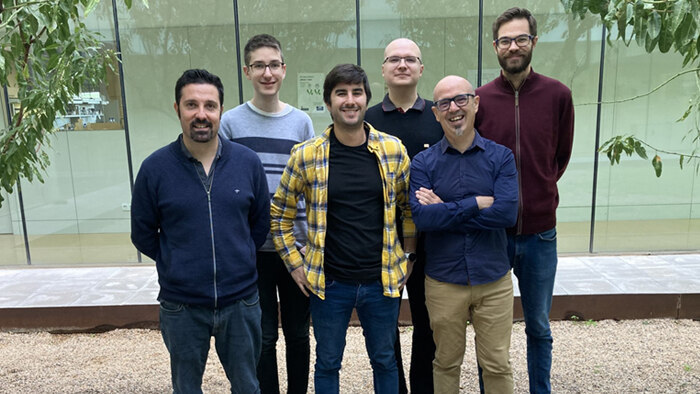
Protein aggregation is a phenomenon associated with aging and several pathologies like Parkinson's disease, Alzheimer's disease, and amyotrophic lateral sclerosis. This has been a subject of intensive research for several years. To gain a better understanding of it, a team of researchers at the Institut de Biotecnologia i de Biomedicina of the Universitat Autònoma de Barcelona (IBB-UAB) has developed a comprehensive database called A3D-MOBD. The new resource brings together the proteomes of twelve model organisms, including over half a million predictions of protein regions that have a propensity to form aggregates.

The protein folding and computational diseases group at IBB-UAB, led by Professor Salvador Ventura in collaboration with scientists from the University of Warsaw, developed the new database, which was recently published in the journal Nucleic Acids Research. A3D-MOBD provides pre-calculated aggregation propensity analyses and tools for studying this phenomenon on a proteomic scale, as well as evolutionary comparisons between different species.

The A3D-MOBD expands on a method that the same group designed in 2015, Aggrescan 3D, but with significantly expanded data. It contains more than 500,000 structural predictions for over 160,000 proteins from twelve model organisms, including humans, rats, mice, zebrafish, fruit flies, nematode worms, bacterium, and the COVID-19 causative virus SARS-CoV-2. The new resource's adaptive architecture allows for future additions of other organisms relevant to various sectors, including medical, biological, agricultural, and industrial.

The A3D-MOBD tool provides results on protein solubility and stability and includes additional information to contextualize the aggregation process. Several computational sources, such as artificial intelligence-based protein structure modeling algorithm AlphaFold and TOPCONS for the prediction of protein interaction with lipid membranes, were used to develop the database. The researchers linked A3D-MOBD to organism-specific gold-reference databases such as the Human Protein Atlas or Wormbase.

Professor Salvador Ventura expressed his anticipation that A3D-MOBD will offer solutions to a much wider audience of researchers, not only because of the large collection of structures but also because of its integration with databases from different biological fields. He is confident that the new database will set a new standard in protein aggregation research and that it will become a basic resource in this field.

In conclusion, the A3D-MOBD database developed by researchers at IBB-UAB is the most comprehensive database available for studying protein aggregation. It brings together proteomes of twelve of the most widely studied model organisms and provides pre-calculated aggregation propensity analyses and tools for studying the phenomenon on a proteomic scale. This database expands scientists' understanding of the basis of protein aggregation and offers researchers insights into why certain diseases develop in some species and not others.

To access the A3D-MOBD database, please visit http://biocomp.chem.uw.edu.pl/A3D2/MODB .