OSU modeling takes a step toward low-temperature preservation of 3D tissues, organs

Medical science is a key step closer to the cryopreservation of brain slices used in neurological research, pancreatic cells for the treatment of diabetes, and even whole organs thanks to a new supercomputer model that predicts how tissue’s size will change during the preservation process.

Findings of the study led by Adam Higgins of the Oregon State University College of Engineering were published in Biophysical Journal.

“Cryopreservation of tissues would be useful for biomedical research and for transplantation medicine, but it’s difficult to cryopreserve tissues for various reasons,” said Higgins, associate professor of bioengineering. “A major reason is that formation of ice can break apart a tissue from the inside. Folks who cook are probably already familiar with this – a tomato that has been frozen and thawed becomes mushy.”

Cryopreservation has long been widely used in comparatively simpler applications such as preserving semen, blood, embryos, and plant seeds. A barrier to other uses has been damage from ice crystallization and the harmful nature of the compounds added to prevent ice formation.

Vitrification, Higgins explains, is a cryopreservation strategy that thwarts ice crystal damage through chemicals known as cryoprotectants, or CPAs, that can keep ice from forming. An example of a CPA is ethylene glycol, used in automobile antifreeze.

In tissues, a high enough concentration of CPAs causes a solid “glass” to form rather than ice crystals when tissue temperature is reduced to liquid nitrogen levels; liquid nitrogen boils at minus-320 degrees Fahrenheit.

“The problem is that these chemicals can cause osmotic damage due to water crossing cell membranes and causing the cells to burst,” Higgins said. “They can also kill cells due to toxicity. So in designing the best vitrification method, the trick is choosing the best path between normal physiological conditions and a final vitrified state – i.e., high CPA concentration and liquid nitrogen temperature.”

Hence the need for mathematical modeling. In earlier research involving a single layer of endothelial cells, which make up the lining of the circulatory system, Higgins and colleagues in the College of Engineering showed the value of a model that involved CPA toxicity, osmotic damage, and mass transfer. The modeling uncovered an approach for loading CPA that was counterintuitive: inducing cells to swell.

The researchers found that if cells were initially exposed to a low CPA concentration and given time to swell, the sample could be vitrified after rapidly adding a high concentration. The upshot was much less overall toxicity, Higgins said. Healthy cell survival following vitrification rose from about 10% with a conventional approach to greater than 80%.

“The biggest single problem and limiting factor in vitrification is CPA toxicity and the swelling method was quite useful for addressing that,” he said. “Our new paper extends this line of research by presenting a new model of mass transfer in tissue; a key feature is that it allows for the prediction of tissue size changes.”

Higgins notes that there have been observations of multiple types of tissues changing size after exposure to CPA solutions; among them are cartilage, ovarian tissue, and groups of cells in the pancreas known as islets. More likely than not, those size changes are important considerations for the design of methods for tissue vitrification, he said.

“The conventional mass transfer modeling approach is known as Fick’s law and that assumes tissue size remains constant,” Higgins said. “Our new model, which we used for two very different types of tissues, articular cartilage, and pancreatic islets, opens the door to extending our previous mathematical optimization approach to the design of better methods for the cryopreservation of various tissue types.”

As vitrification of increasingly complex tissues becomes possible, new applications for it are likely to become feasible, Higgins said – especially as progress continues in the quickly advancing field of tissue regeneration, in which stem cells can be used to grow new tissues or even whole organs.

Conceivably, he said, tissues could be made in small amounts and stored until needed for transplantation. Organs donated for transplants could be routinely preserved until a precise immunological match was found. It’s also not outside the realm of possibility, Higgins said, that people could grow a backup heart or liver from their stem cells and have it vitrified for future use as needed.

Drug development is another area that would benefit from improved and expanded vitrification potential, he added.

Drug testing typically occurs within traditional cell culture systems or in animal models, which often don’t accurately predict the effect of the drug in people. New “organs on a chip” – microfluidic chambers containing human cells cultured under conditions that mimic native tissues or organs – might be able to more accurately forecast drug responses in people, but their use necessitates cells being stored long term as vitrification allows.

Collaborating with Higgins was Ross Warner, a research associate in the OSU College of Engineering, Ali Eroglu of Augusta University in Georgia, and Robyn Shuttleworth and James Benson of the University of Saskatchewan.

Tsinghua University Dean wins the 2021 Kyoto Prize in Advanced Technology

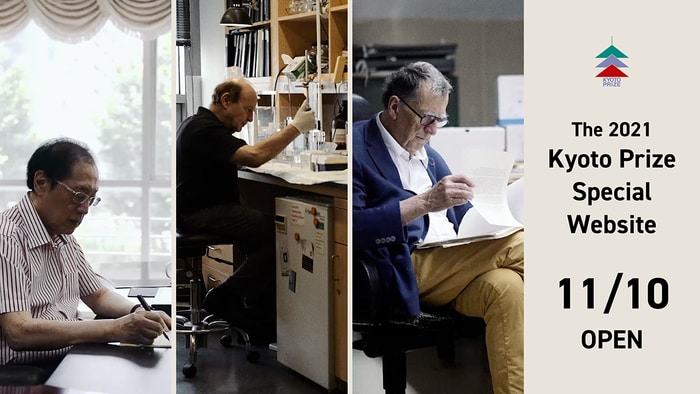
Andrew Chi-Chih Yao, Dean of the Institute for Interdisciplinary Information Sciences at Tsinghua University, Beijing, China, received the 2021 Kyoto Prize in Advanced Technology for his pioneering contributions to a new theory of computation and communication and a fundamental theory for its security. Yao’s Commemorative Lecture “A Journey Through Computer Science” is published at the 2021 Kyoto Prize Special Website. In his lecture, Yao shares episodes from his youth and research career as well as insights he gained from his achievements in physics and computer science. “In science, the paradigm is the search for truth. In this process, we sometimes discover patterns and beauty which can lift the human spirit. It also leads to innovations that can improve human conditions and prepare us for future human challenges,” says Yao, looking back at the journey of his research life. The 2021 Kyoto Prize laureates: (from left) Andrew Chi-Chih Yao, Robert G. Roeder, and Bruno Latour

Andrew Chi-Chih Yao created new trends in computer science and made a great contribution to cutting-edge research in various areas, especially in security, secure computing, and quantum computation through establishing innovative fundamental theories for computation and communication. His achievements are continuing to influence current real-world problems such as security, secure computing, and big data processing. 

Yao and the other two 2021 Kyoto Prize laureates are introduced on the 2021 Kyoto Prize Special Website with information about their work, profiles, and three-minute introduction videos. This year, the Kyoto Prize in Basic Sciences went to Robert G. Roeder, Arnold and Mabel Beckman Professor of Biochemistry and Molecular Biology at The Rockefeller University; Arts and Philosophy to Bruno Latour, Professor Emeritus of the Paris Institute of Political Studies (Sciences Po). 

Newcastle modelers show the climatic drivers of honey bee disease

Honey bee colonies worldwide have suffered from a range of damaging diseases. A new study has provided clues on how changing weather patterns might be driving disease in UK colonies.

The team led by Newcastle University found that the most severe disease of honey bees, caused by the Varroa mite, increased as climate temperatures increased but were reduced during heavy rainfall and wind.

Data collected from visits to over 300,000 honey bee colonies highlighted how the prevalence of six important honey bee diseases interacted in different ways with rainfall, temperature, and wind.

Study lead, Ph.D. student Ben Rowland, from Newcastle University’s School of Natural and Environmental Sciences, said: “Our analysis clearly shows that the risk of a colony contracting one of the diseases we examined is influenced by the weather conditions experienced by that colony. Our work highlights some interesting contrasts; for example, rainfall can drive one disease to become more common whilst another will become rarer.”

Professor Giles Budge, who leads the Modelling Evidence and Policy Group at Newcastle University and was a senior author on the paper, said: “We have long known that weather can influence the ability of honey bees to leave the hive and forage for food, but to better understand how our climate can influence honey bee disease is fascinating! This new knowledge will help us predict how honey bee disease might be influenced by future climate change.”

The study also investigated the effect of weather on disease hotspots. The South West of England was at increased risk of disease caused by Varroa mites. In addition, the team highlighted a hot spot for risk for the notifiable and damaging disease European foulbrood in an area comprising Powys, Shropshire, Herefordshire, and Worcestershire.