Climate Change Could Affect Global Agriculture Within 10 Years

Average global crop yields for maize, or corn, may see a decrease of 24% by late century, with the declines becoming apparent by 2030, with high greenhouse g...
...

Read more

NASA, PIK study finds climate change to stir up global agriculture within next decade

New supercomputer simulations predict deep changes in growing conditions affecting the productivity of major crops already within the next 10 years if current global warming trends continue. Maize crop yields are projected to decline by almost a quarter by the end of the century, while wheat could potentially see global yield increases of about 17%. Current key breadbasket regions will see severe changes much quicker than previously expected, requiring farmers around the world to adapt to new climate realities now. 

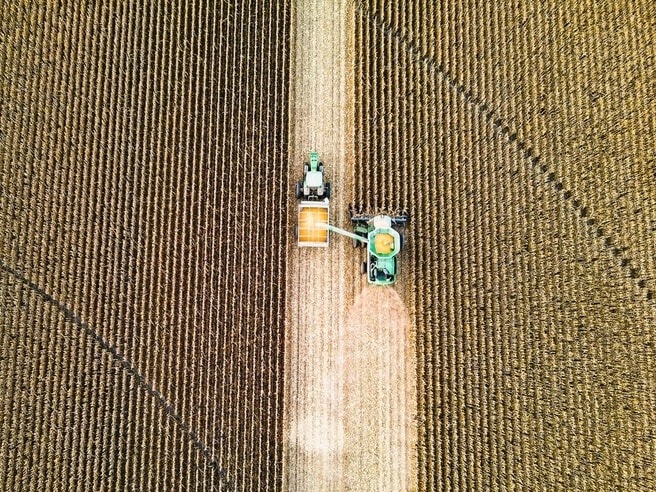
“We see that new climate conditions push crop yields outside of their normal range in more and more regions. Human-made greenhouse gas emissions bring higher temperatures, shifts in rainfall patterns, and more carbon dioxide in the air. This affects crop growth, and we find that the emergence of the climate change signal – the time when extraordinary years become the norm ­­– will occur within the next decade or soon after in many key breadbasket regions globally,” explains lead author Jonas Jägermeyr, a crop modeler and climate scientist at NASA’s Goddard Institute for Space Studies (GISS), The Earth Institute at Columbia University in New York City, and the Potsdam Institute for Climate Impact Research (PIK) in Germany. “This means that farmers need to adapt much faster, for example by changing planting dates or use different crop varieties, to avoid severe losses, but also to realize gains in higher-latitude regions.” Maize will struggle with higher temperatures (Photo by Taylor Siebert on Unsplash)

Maize yields down, wheat yields up

By combining a set of new climate projections and various state-of-the-art crop models, the team of researchers created the largest ensemble of future yield projections as of today. They found significant changes already very soon, and across most important growing regions. Maize is grown in a wide range of latitudes, including sub-tropical and tropical countries where the higher temperature will be more harmful than in cooler high-latitude regions. North and Central America, West Africa, Central, and East Asia will potentially see maize yields decline by more than 20 percent in the coming years. Wheat, which grows best in temperate climates, may, in turn, see productivity increase in current growing areas under climate change, including areas in the Northern United States and Canada, and China. 

{media id=262,layout=solo}

Exacerbating existing inequalities

“One effect the data show clearly is that poorer countries are likely to experience the sharpest declines in yields of their main staple crops. This exacerbates already existing differences in food security and wealth,” says Christoph Müller, co-author and also a researcher at the Potsdam Institute. Importantly, wheat gains in the Global North do not make up for maize losses in the Global South. Poor countries and of course the affected smallholder farmers themselves often lack the means to procure food on the world market. The projected fundamental change in agricultural production patterns could hence in some regions become a risk for food security, while others profit.

Temperature is not the only factor relevant for future crop yields. Higher levels of carbon dioxide in the atmosphere have a positive effect on crop growth, especially for wheat. However, it could also reduce their nutritional value. Rising global temperatures also are linked with changes in rainfall patterns, and the frequency and duration of heatwaves and droughts, which are risks to crop health and productivity. “Even under optimistic climate change scenarios, where societies put in ambitious efforts to limit global temperature rise, global agriculture is facing a new climate reality,” Jägermeyr said.

Tulane University study uses AI to detect colorectal cancer

A Tulane University researcher found that artificial intelligence can accurately detect and diagnose colorectal cancer from tissue scans as well or better than pathologists, according to a new study.

The study, which was conducted by researchers from Tulane, Central South University in China, the University of Oklahoma Health Sciences Center,  Temple University, and Florida State University, was designed to test whether AI could be a tool to help pathologists keep pace with the rising demand for their services.  shutterstock 639747862 800x600 0 3b008

Pathologists evaluate and label thousands of histopathology images regularly to tell whether someone has cancer. But their average workload has increased significantly and can sometimes cause unintended misdiagnoses due to fatigue. 

“Even though a lot of their work is repetitive, most pathologists are extremely busy because there’s a huge demand for what they do but there’s a global shortage of qualified pathologists, especially in many developing countries,” said Dr. Hong-Wen Deng, professor, and director of the Tulane Center of Biomedical Informatics and Genomics at Tulane University School of Medicine. “This study is revolutionary because we successfully leveraged artificial intelligence to identify and diagnose colorectal cancer in a cost-effective way, which could ultimately reduce the workload of pathologists.”

To conduct the study, Deng and his team collected over 13,000 images of colorectal cancer from 8,803 subjects and 13 independent cancer centers in China, Germany, and the United States. Using the images, which were randomly selected by technicians, they built a machine-assisted pathological recognition program that allows a computer to recognize images that show colorectal cancer, one of the most common causes of cancer-related deaths in Europe and America.

“The challenges of this study stemmed from complex large image sizes, complex shapes, textures, and histological changes in nuclear staining,” Deng said. “But ultimately the study revealed that when we used AI to diagnose colorectal cancer, the performance is shown comparable to and even better in many cases than real pathologists.”

The area under the receiver operating characteristic (ROC) curve or AUC is the performance measurement tool that Deng and his team used to determine the success of the study. After comparing the computer’s results with the work of highly experienced pathologists who interpreted data manually, the study found that the average pathologist scored at .969 for accurately identifying colorectal cancer manually. The average score for the machine-assisted AI computer program was .98, which is comparable if not more accurate.

Using artificial intelligence to identify cancer is an emerging technology and hasn’t yet been widely accepted. Deng hopes that the study will lead to more pathologists using prescreening technology in the future to make quicker diagnoses. 

“It’s still in the research phase and we haven’t commercialized it yet because we need to make it more user friendly and test and implement in more clinical settings. But as we develop it further, hopefully, it can also be used for different types of cancer in the future. Using AI to diagnose cancer can expedite the whole process and will save a lot of time for both patients and clinicians.”