

Tulane University study uses AI to detect colorectal cancer

A Tulane University researcher found that artificial intelligence can accurately detect and diagnose colorectal cancer from tissue scans as well or better than pathologists, according to a new study.

The study, which was conducted by researchers from Tulane, Central South University in China, the University of Oklahoma Health Sciences Center,  Temple University, and Florida State University, was designed to test whether AI could be a tool to help pathologists keep pace with the rising demand for their services.  shutterstock 639747862 800x600 0 3b008
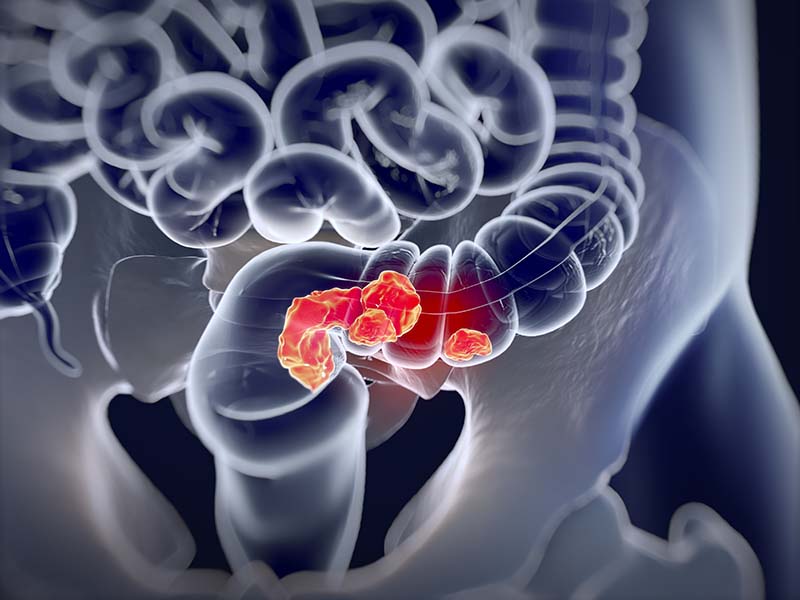
Pathologists evaluate and label thousands of histopathology images regularly to tell whether someone has cancer. But their average workload has increased significantly and can sometimes cause unintended misdiagnoses due to fatigue. 

“Even though a lot of their work is repetitive, most pathologists are extremely busy because there’s a huge demand for what they do but there’s a global shortage of qualified pathologists, especially in many developing countries,” said Dr. Hong-Wen Deng, professor, and director of the Tulane Center of Biomedical Informatics and Genomics at Tulane University School of Medicine. “This study is revolutionary because we successfully leveraged artificial intelligence to identify and diagnose colorectal cancer in a cost-effective way, which could ultimately reduce the workload of pathologists.”

To conduct the study, Deng and his team collected over 13,000 images of colorectal cancer from 8,803 subjects and 13 independent cancer centers in China, Germany, and the United States. Using the images, which were randomly selected by technicians, they built a machine-assisted pathological recognition program that allows a computer to recognize images that show colorectal cancer, one of the most common causes of cancer-related deaths in Europe and America.

“The challenges of this study stemmed from complex large image sizes, complex shapes, textures, and histological changes in nuclear staining,” Deng said. “But ultimately the study revealed that when we used AI to diagnose colorectal cancer, the performance is shown comparable to and even better in many cases than real pathologists.”

The area under the receiver operating characteristic (ROC) curve or AUC is the performance measurement tool that Deng and his team used to determine the success of the study. After comparing the computer’s results with the work of highly experienced pathologists who interpreted data manually, the study found that the average pathologist scored at .969 for accurately identifying colorectal cancer manually. The average score for the machine-assisted AI computer program was .98, which is comparable if not more accurate.

Using artificial intelligence to identify cancer is an emerging technology and hasn’t yet been widely accepted. Deng hopes that the study will lead to more pathologists using prescreening technology in the future to make quicker diagnoses. 

“It’s still in the research phase and we haven’t commercialized it yet because we need to make it more user friendly and test and implement in more clinical settings. But as we develop it further, hopefully, it can also be used for different types of cancer in the future. Using AI to diagnose cancer can expedite the whole process and will save a lot of time for both patients and clinicians.”
York scientists build AI model to understand protein-sugar structures better

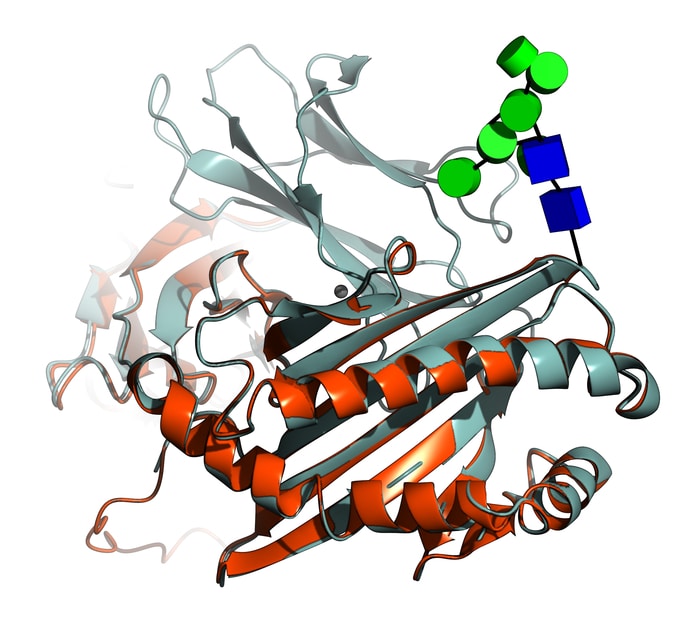
New research building on AI algorithms has enabled scientists to create more complete models of the protein structures in our bodies paving the way for faster design of therapeutics and vaccines. Sugars attached with the reported software are a very good match to both AlphaFold and experimental protein models.  CREDIT Credit: Dr Jon Agirre

The study led by the University of York, UK used artificial intelligence (AI) to help researchers understand more about the sugar that surrounds most proteins in our bodies. 

Up to 70 percent of human proteins are surrounded or scaffolded with sugar, which plays an important part in how they look and act. Moreover, some viruses like those behind AIDS, Flu, Ebola, and COVID-19 are also shielded behind sugars (glycans). The addition of these sugars is known as a modification.

To study the proteins, researchers created software that adds missing sugar components to models created with AlphaFold, which is an artificial intelligence program developed by Google's DeepMind which performs predictions of protein structures.

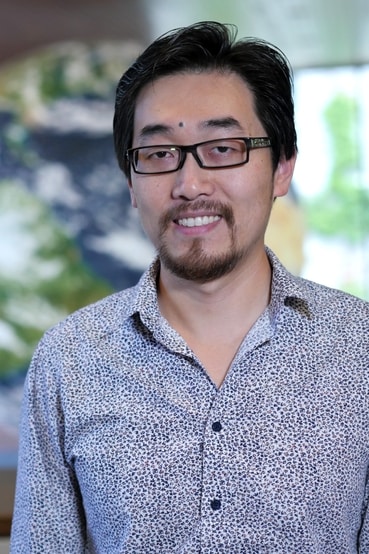
Senior scholar, Dr. Jon Agirre from the Department of Chemistry said: “The proteins of the human body are tiny machines that in their billions, make up our flesh and bones, transport our oxygen, allow us to function, and defend us from pathogens. And just like a hammer relies on a metalhead to strike pointy objects including nails, proteins have specialized shapes and compositions to get their jobs done."

“The AlphaFold method for protein structure prediction has the potential to revolutionize workflows in biology, allowing scientists to understand a protein and the impact of mutations faster than ever."

“However, the algorithm does not account for essential modifications that affect protein structure and function, which gives us only part of the picture. Our research has shown that this can be addressed in a relatively straightforward manner, leading to a more complete structural prediction.”

The recent introduction of AlphaFold and the accompanying database of protein structures has enabled scientists to have accurate structure predictions for all known human proteins.

Dr. Agirre added: "It is always great to watch an international collaboration grow to bear fruit, but this is just the beginning for us. Our software was used in the glycan structural work that underpinned the mRNA vaccines against SARS-CoV-2, but now there is so much more we can do thanks to the AlphaFold technological leap. It is still early stages, but the objective is to move on from reacting to changes in a glycan shield to anticipating them."

The research was conducted with Dr. Elisa Fadda and Carl A. Fogarty from Maynooth University. Haroldas Bagdonas, a Ph.D. student at the York Structural Biology Laboratory, which is part of the Department of Chemistry, also worked on the study with Dr. Agirre.

Syracuse prof uncovers the secrets behind Earth’s first major mass extinction

A team of geoscience researchers has announced a new study exploring the cause of the Late Ordovician mass extinction. Zunli Lu

We all know that the dinosaurs died in mass extinction. But did you know that there were other mass extinctions? There are five most significant mass extinctions, known as the “big five,” where at least three-quarters of all species in existence across the entire Earth faced extinction during a particular geological time. With current trends of global warming and climate change, many researchers now believe we may be in a sixth.

Discovering the root cause of Earth’s mass extinctions has long been a hot topic for scientists, as understanding the environmental conditions that led to the elimination of the majority of species in the past could potentially help prevent a similar event from occurring in the future.

A team of scientists from Syracuse University’s Department of Earth and Environmental Sciences, the University of California, Berkeley and the University of California, Riverside, Université Bourgogne Franche-Comté, the University of New Mexico, the University of Ottawa, the University of Science and Technology of China and Stanford University recently co-authored a paper exploring the Late Ordovician mass extinction (LOME), which is the first, or oldest of the “big five (~445 million years ago).” Around 85% of marine species, most of which lived in shallow oceans near continents, disappeared during that time.

Lead scholar Alexandre Pohl, from UC Riverside (now a postdoctoral research fellow at Université Bourgogne Franche-Comté in Dijon, France) and his co-authors investigated the ocean environment before, during, and after the extinction to determine how the event was brewed and triggered. 

To paint a picture of the oceanic ecosystem during the Ordovician Period, mass extinction expert Seth Finnegan, associate professor at UC Berkeley, says that seas were full of biodiversity. Oceans contained some of the first reefs made by animals but lacked an abundance of vertebrates.

“If you had gone snorkeling in an Ordovician sea you would have seen some familiar groups like clams and snails and sponges, but also many other groups that are now very reduced in diversity or entirely extinct like trilobites, brachiopods, and crinoids,” says Finnegan.

Unlike with rapid mass extinctions, like the Cretaceous-Tertiary extinction event where dinosaurs and other species died off suddenly some 65.5 million years ago, Finnegan says LOME played out over a substantial time, with estimates between less than half a million to almost two million years.

One of the major debates surrounding LOME is whether the lack of oxygen in seawater caused that period’s mass extinction. To investigate this question, the team integrated geochemical testing with numerical simulations and supercomputer modeling.

Zunli Lu, professor of Earth and environmental sciences at Syracuse University, and his students took measurements of iodine concentration in carbonate rocks from that period, contributing important findings of oxygen levels at various ocean depths. The concentration of the element iodine in carbonate rocks serves as an indicator for changes in oceanic oxygen levels in Earth's history.

Their data, combined with supercomputer modeling simulations, suggested that there was no evidence of anoxia ­­– or lack of oxygen ­– strengthening during the extinction event in the shallow ocean animal habitat where most organisms lived, meaning that climate cooling that occurred during the Late Ordovician period combined with additional factors likely was responsible for LOME.

On the other hand, there is evidence that anoxia in deep oceans expanded during that same time, a mystery that cannot be explained by the classic model of ocean oxygen, climate modeling expert Alexandre Pohl says.

“Upper-ocean oxygenation in response to cooling was anticipated because atmospheric oxygen preferentially dissolves in cold waters,” Pohl says. “However, we were surprised to see expanded anoxia in the lower ocean since anoxia in Earth’s history is generally associated with volcanism-induced global warming.”

They attribute the deep-sea anoxia to the circulation of seawater through global oceans. Pohl says that a key point to keep in mind is that ocean circulation is a very important component of the climatic system.

He was part of a team led by senior modeler Andy Ridgwell, professor at UC Riverside, whose supercomputer modeling results show that climate cooling likely altered ocean circulation patterns, halting the flow of oxygen-rich water in shallow seas to the deeper ocean.