Tel Aviv University researchers launch the world's thinnest technology, only two atoms thick

A scientific breakthrough: Researchers from Tel Aviv University have engineered the world's tiniest technology, with a thickness of only two atoms. According to the researchers, the new technology proposes a way for storing electric information in the thinnest unit known to science, in one of the most stable and inert materials in nature. The allowed quantum-mechanical electron tunneling through the atomically thin film may boost the information reading process much beyond current technologies.

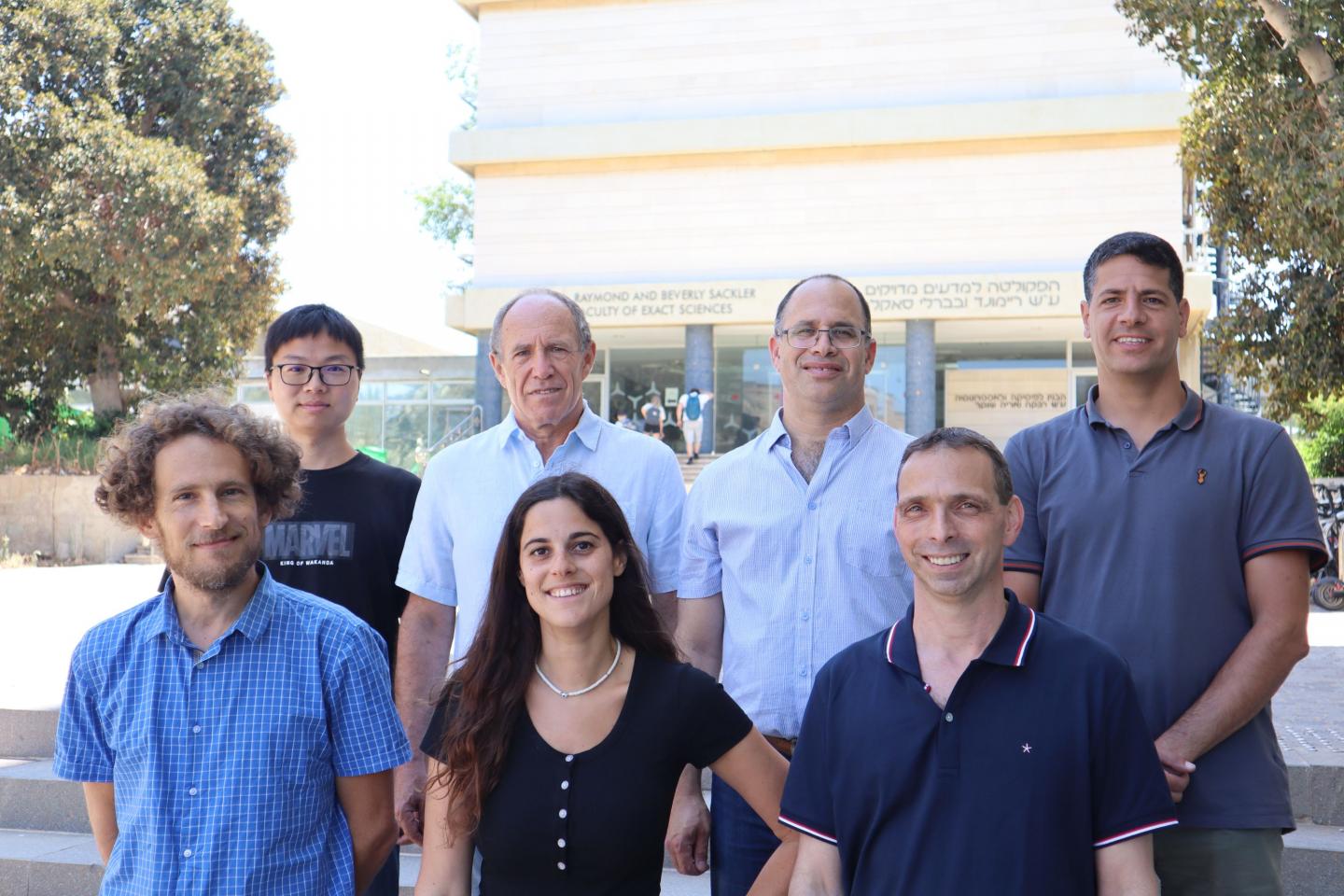
The research was performed by scientists from the Raymond and Beverly Sackler School of Physics and Astronomy and Raymond and Beverly Sackler School of Chemistry. The group includes Maayan Vizner Stern, Yuval Waschitz, Dr. Wei Cao, Dr. Iftach Nevo, Prof. Eran Sela, Prof. Michael Urbakh, Prof. Oded Hod, and Dr. Moshe Ben Shalom. The work is now published in Science magazine. web

"Our research stems from a curiosity about the behavior of atoms and electrons in solid materials, which has generated many of the technologies supporting our modern way of life," says Dr. Ben Shalom. "We (and many other scientists) try to understand, predict, and even control the fascinating properties of these particles as they condense into an ordered structure that we call a crystal. At the heart of the computer, for example, lies a tiny crystalline device designed to switch between two states indicating different responses - "yes" or "no", "up" or "down" etc. Without this dichotomy - it is not possible to encode and process information. The practical challenge is to find a mechanism that would enable switching in a small, fast, and inexpensive device.

Current state-of-the-art devices consist of tiny crystals that contain only about a million atoms (about a hundred atoms in height, width, and thickness) so that a million of these devices can be squeezed about a million times into the area of one coin, with each device switching at a speed of about a million times per second.

Following the technological breakthrough, the researchers were able, for the first time, to reduce the thickness of the crystalline devices to two atoms only. Dr. Ben Shalom emphasizes that such a thin structure enables memories based on the quantum ability of electrons to hop quickly and efficiently through barriers that are just several atoms thick. Thus, it may significantly improve electronic devices in terms of speed, density, and energy consumption. 

{media load=media,id=256,width=350,align=left,display=inline}

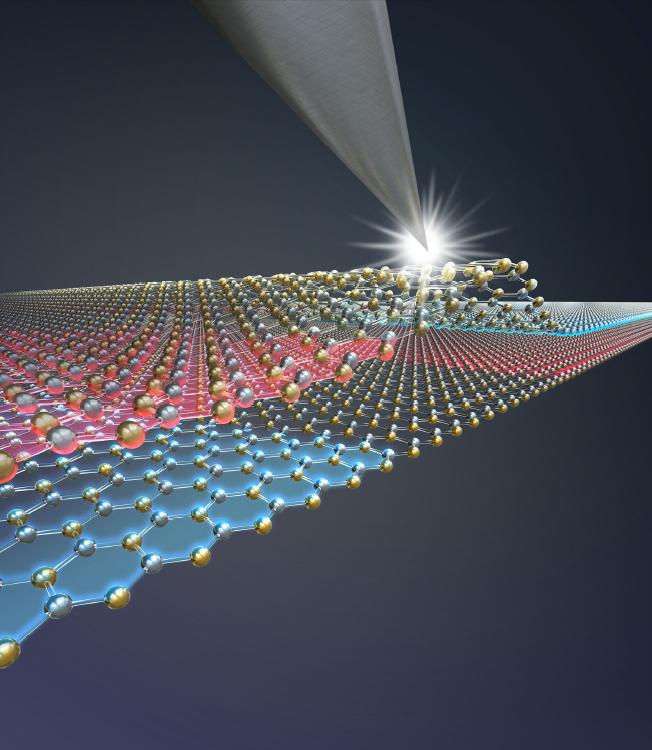
In the study, the researchers used a two-dimensional material: one-atom-thick layers of boron and nitrogen, arranged in a repetitive hexagonal structure. In their experiment, they were able to break the symmetry of this crystal by artificially assembling two such layers. "In its natural three-dimensional state, this material is made up of a large number of layers placed on top of each other, with each layer rotated 180 degrees relative to its neighbors (antiparallel configuration)" says Dr. Ben Shalom. "In the lab, we were able to artificially stack the layers in a parallel configuration with no rotation, which hypothetically places atoms of the same kind in perfect overlap despite the strong repulsive force between them (resulting from their identical charges). In actual fact, however, the crystal prefers to slide one layer slightly in relation to the other, so that only half of each layer's atoms are in perfect overlap, and those that do overlap are of opposite charges - while all others are located above or below an empty space - the center of the hexagon. In this artificial stacking configuration, the layers are quite distinct from one another. For example, if in the top layer only the boron atoms overlap, in the bottom layer it's the other way around."

Dr. Ben Shalom also highlights the work of the theory team, who conducted numerous supercomputer simulations "Together we established a deep understanding of why the system's electrons arrange themselves just as we had measured in the lab. Thanks to this fundamental understanding, we expect fascinating responses in other symmetry-broken layered systems as well," he says.

Maayan Wizner Stern, the Ph.D. student who led the study, explains: "The symmetry breaking we created in the laboratory, which does not exist in the natural crystal, forces the electric charge to reorganize itself between the layers and generate a tiny internal electrical polarization perpendicular to the layer plane. When we apply an external electric field in the opposite direction the system slides laterally to switch the polarization orientation. The switched polarization remains stable even when the external field is shut down. In this, the system is similar to thick three-dimensional ferroelectric systems, which are widely used in technology today." The research team.

"The ability to force a crystalline and electronic arrangement in such a thin system, with unique polarization and inversion properties resulting from the weak Van der Waals forces between the layers, is not limited to the boron and nitrogen crystal," adds Dr. Ben Shalom. "We expect the same behaviors in many-layered crystals with the right symmetry properties. The concept of interlayer sliding as an original and efficient way to control advanced electronic devices is very promising, and we have named it Slide-Tronics".

Maayan Vizner Stern concludes: "We are excited about discovering what can happen in other states we force upon nature and predict that other structures that couple additional degrees of freedom are possible. We hope that miniaturization and flipping through sliding will improve today's electronic devices, and moreover, allow other original ways of controlling information in future devices. In addition to computer devices, we expect that this technology will contribute to detectors, energy storage, and conversion, interaction with light, etc. Our challenge, as we see it, is to discover more crystals with new and slippery degrees of freedom."

AmazonFACE supercomputing shows that rising levels of CO2 reduce rainfall in the Amazon more than deforestation

Supercomputer simulations show that the direct impact of rising levels of carbon dioxide over the Amazon rainforest would be a reduction in rainfall equivalent to or greater than the impact of the complete substitution of the forest with pasture

A 50% rise in the level of carbon dioxide (CO2) in the atmosphere could reduce rainfall in the Amazon more than a substitution of the entire forest with pasture. The rise in CO2 would reduce the amount of water vapor emitted by the forest, leading to a 12% annual drop in the volume of rainfall, while total deforestation would reduce rainfall by 9%. Direct impact of rising levels of carbon dioxide over the Amazon rainforest would be a reduction in rainfall equivalent to or even greater than the impact of complete substitution of the forest by pasture  CREDIT João Marcos Rosa/AmazonFACE

These estimates are detailed in a study in Biogeosciences by scientists affiliated with the National Space Research Institute (INPE), the University of São Paulo (USP), and the University of Campinas (UNICAMP) in Brazil, and with Munich Technical University (TUM) in Germany.

“CO2 is a basic input for photosynthesis, so when it increases in the atmosphere, plant physiology is affected that can have a cascade effect on the transfer of moisture from trees to the atmosphere [transpiration], the formation of rain in the region, forest biomass, and several other processes,” said David Montenegro Lapola, last author of the article.

Lapola is a professor at UNICAMP’s Center for Meteorological and Climate Research Applied to Agriculture (CEPAGRI) and principal investigator for a project funded via the FAPESP Research Program on Global Climate Change (RPGCC). The study was also part of a Thematic Project funded by FAPESP and supported by a postdoctoral fellowship awarded to the penultimate author.

The researchers investigated how the physiological effects of rising atmospheric CO2 on plants influence the rainfall regime. Plants transpire less as the supply of CO2 increases, emitting less moisture into the atmosphere and generating less rain.

Normally, however, predictions regarding the increase in atmospheric CO2 do not dissociate its physiological effects from its effects on the balance of radiation in the atmosphere. In the latter case, the gas prevents some of the Sun’s reflected energy from escaping from the atmosphere, causing the warming phenomenon known as the greenhouse effect.

Projections presented in the latest report of the Intergovernmental Panel on Climate Change (IPCC), taking into account changes in the atmospheric radiation balance plus the physiological effects on plants, had already forecast a possible reduction of up to 20% in annual rainfall in the Amazon and shown that much of the change in the region’s precipitation regime will be controlled by the way the forest responds physiologically to the increase in CO2.

For the recently published study, the researchers ran simulations on the supercomputer at INPE’s Center for Weather Forecasting and Climate Studies (CPTEC) in Cachoeira Paulista, State of São Paulo. They projected scenarios in which the atmospheric level of CO2 rose 50% and the forest was entirely replaced by pasture to find out how these changes affected the physiology of the forest over 100 years.

“To our surprise, just the physiological effect on the leaves of the forest would generate an annual fall of 12% in the amount of rain [252 millimeters less per year], whereas total deforestation would lead to a fall of 9% [183 mm]. These numbers are far higher than the natural variation in precipitation between one year and the next, which is 5%,” Lapola said.

The findings draw attention to the need for local action to reduce deforestation in the nine countries that share the Amazon basin and take global action to reduce CO2 emissions into the atmosphere by factories, vehicles, and power plants.

Lapola is one of the coordinators of the AmazonFACE experiment. The acronym stands for Free-Air Carbon dioxide Enrichment. Installed not far north of Manaus, the experiment will raise the level of CO2 over small tracts of rainforest and analyze the resulting changes to plant physiology and the atmosphere. The experiment could anticipate the climate change scenario predicted for this century (more at Agencia.fapesp.br/32470).

Transpiration in forest and pasture

The scenarios projected by the supercomputer simulations showed the decrease in rainfall being caused by a reduction of about 20% in leaf transpiration. The reasons for the reduction are different in each situation, however.

Stomata are microscopic portals in plant leaves that control gas exchange for photosynthesis. They open to capture CO2 and at the same time emit water vapor. In the scenario with more CO2 in the air, stomata remain open for less time and emit less water vapor, reducing cloud formation and rainfall.

Total leaf area shrinkage is another reason. If the entire forest were replaced by pasture, the leaf area would shrink 66%. This is because the forest contains several layers of superimposed leaves in trees, so that leaf area per square meter is up to six times what it is on the ground. Lastly, both rising levels of CO2 and deforestation also influence the wind and the movement of air masses, which play a key role in the precipitation regime.

“The forest canopy has a complex surface made up of the tops of tall trees, low trees, leaves, and branches. This is called canopy surface roughness. The wind produces turbulence, with eddies and vortices that in turn produce the instability that gives rise to the convection responsible for heavy equatorial rainfall,” Lapola said. “Pasture has a smooth surface over which the wind always flows forward, and without forest doesn’t produce vortices. The wind intensifies, as a result, bearing away most of the precipitation westward, while much of eastern and central Amazonia, the Brazilian part, has less rain.”

The decrease in transpiration caused by rising levels of CO2 leads to a temperature increase of up to two degrees because there are fewer water droplets to mitigate the heat. This factor triggers a cascade of phenomena resulting in less rain owing to an inhibition of so-called deep convection (very tall rain clouds heavy with water vapor).

“A next step would be to test other computational models and compare the results with our findings,” Lapola said. “Another important initiative would consist of more experiments like FACE, as only these can supply data to verify and refine modeling simulations like the ones we performed.”

Washington University in St. Louis prof finds a new piece of the quantum supercomputing puzzle

An efficient two-bit quantum logic gate has been out of reach, until now

Research from the McKelvey School of Engineering at Washington University in St. Louis has found a missing piece in the puzzle of optical quantum supercomputing.

Jung-Tsung Shen, associate professor in the Preston M. Green Department of Electrical & Systems Engineering, has developed a deterministic, high-fidelity two-bit quantum logic gate that takes advantage of a new form of light. This new logic gate is orders of magnitude more efficient than the current technology.

"In the ideal case, the fidelity can be as high as 97%," Shen said. Jung-Tsung Shen, associate professor in the Department of Electrical & Systems Engineering, has developed a deterministic, high-fidelity, two-bit quantum logic gate that takes advantage of a new form of light. This new logic gate is orders of magnitude more efficient than the current technology  CREDIT Jung-Tsung Shen

His research was published in May 2021 in the journal Physical Review A.

The potential of quantum computers is bound to the unusual properties of superposition -- the ability of a quantum system to contain many distinct properties, or states, at the same time -- and entanglement -- two particles acting as if they are correlated in a non-classical manner, despite being physically removed from each other.

Where voltage determines the value of a bit (a 1 or a 0) in a classical computer, researchers often use individual electrons as "qubits," the quantum equivalent. Electrons have several traits that suit them well to the task: they are easily manipulated by an electric or magnetic field and they interact with each other. Interaction is a benefit when you need two bits to be entangled -- letting the wilderness of quantum mechanics manifest.

But their propensity to interact is also a problem. Everything from stray magnetic fields to power lines can influence electrons, making them hard to truly control.

For the past two decades, however, some scientists have been trying to use photons as qubits instead of electrons. "If computers are going to have a true impact, we need to look into creating the platform using light," Shen said.

Photons have no charge, which can lead to the opposite problems: they do not interact with the environment like electrons, but they also do not interact with each other. It has also been challenging to engineer and to create ad hoc (effective) inter-photon interactions. Or so traditional thinking went.

Less than a decade ago, scientists working on this problem discovered that, even if they weren't entangled as they entered a logic gate, the act of measuring the two photons when they exited led them to behave as if they had been. The unique features of measurement are another wild manifestation of quantum mechanics.

"Quantum mechanics is not difficult, but it's full of surprises," Shen said.

The measurement discovery was groundbreaking, but not quite game-changing. That's because, for every 1,000,000 photons, only one pair became entangled. Researchers have since been more successful, but, Shen said, "It's still not good enough for a computer," which has to carry out millions to billions of operations per second.

Shen was able to build a two-bit quantum logic gate with such efficiency because of the discovery of a new class of quantum photonic states -- photonic dimers, photons entangled in both space and frequency. His prediction of their existence was experimentally validated in 2013, and he has since been finding applications for this new form of light.

When a single photon enters a logic gate, nothing notable happens -- it goes in and comes out. But when there are two photons, "That's when we predicted the two can make a new state, photonic dimers. It turns out this new state is crucial."

High-fidelity, two-bit logic gate, designed by Jung-Tsung Shen.

Mathematically, there are many ways to design a logic gate for two-bit operations. These different designs are called equivalent. The specific logic gate that Shen and his research group designed is the controlled-phase gate (or controlled-Z gate). The principal function of the controlled-phase gate is that the two photons that come out are in the negative state of the two photons that went in.

"In classical circuits, there is no minus sign," Shen said. "But in quantum computing, it turns out the minus sign exists and is crucial."

When two independent photons (representing two optical qubits) enter the logic gate, "The design of the logic gate is such that the two photons can form a photonic dimer," Shen said. "It turns out the new quantum photonic state is crucial as it enables the output state to have the correct sign that is essential to the optical logic operations."

Shen has been working with the University of Michigan to test his design, which is a solid-state logic gate -- one that can operate under moderate conditions. So far, he says, results seem positive.

Shen says this result while baffling to most, is clear as day to those in the know.

"It's like a puzzle," he said. "It may be complicated to do, but once it's done, just by glancing at it, you will know it's correct."