

University of Houston's artificial intelligence breakthrough gives longer advance warning of ozone issues

University of Houston research team finds 'holy grail' of air quality forecasting

Ozone levels in the earth's troposphere (the lowest level of our atmosphere) can now be forecasted with accuracy up to two weeks in advance, a remarkable improvement over current systems that can accurately predict ozone levels only three days ahead. The new artificial intelligence system developed in the University of Houston's Air Quality Forecasting and Modeling Lab could lead to improved ways to control high ozone problems and even contribute to solutions for climate change issues. University of Houston Professor Yunsoo Choi and doctoral student Alqamah Sayeed study atmospheric data.

"This was very challenging. Nobody had done this previously. I believe we are the first to try to forecast surface ozone levels two weeks in advance," said Yunsoo Choi, professor of atmospheric chemistry and AI deep learning at UH's College of Natural Sciences and Mathematics.

Ozone, a colorless gas, is helpful in the right place and amount. As a part of the earth's stratosphere ("the ozone layer"), it protects by filtering out UV radiation from the sun. But when there are high concentrations of ozone near the earth's surface, it is toxic to the lungs and hearts.

"Ozone is a secondary pollutant, and it can affect humans in a bad way," explained doctoral student Alqamah Sayeed, a researcher in Choi's lab and the first author of the research paper. Exposure can lead to throat irritation, trouble breathing, asthma, even respiratory damage. Some people are especially susceptible, including the very young, the elderly, and the chronically ill.

Ozone levels have become a frequent part of daily weather reports. But unlike weather forecasts, which can be reasonably accurate up to 14 days ahead, ozone levels have been predicted only two or three days in advance - until this breakthrough.

The vast improvement in forecasting is only one part of the story of this new research. The other is how the team made it happen. Conventional forecasting uses a numerical model, which means the research is based on equations for the movement of gasses and fluids in the atmosphere.

The limitations were obvious to Choi and his team. The numerical process is slow, making results expensive to obtain, and accuracy is limited. "Accuracy with the numerical model starts to drop after the first three days," Choi said.

The research team used a unique loss function in developing the machine learning algorithm. A loss function helps in the optimization of the AI model by mapping decisions to their associated costs. In this project, researchers used the index of agreement, known as IOA, as the loss function for the AI model over conventional loss functions. IOA is a mathematical comparison of gaps between what is expected and how things actually turn out.

In other words, team members added historical ozone data to the trials as they gradually refined the program's reactions. The combination of the numerical model and the IOA as the loss function eventually enabled the AI algorithm to accurately predict outcomes of real-life ozone conditions by recognizing what happened before in similar situations. It is much like how human memory is built.

"Think about a young boy who sees a cup of hot tea on a table and tries to touch it out of curiosity. The moment the child touches the cup, he realizes it is hot and shouldn't be touched directly. Through that experience, the child has trained his mind," Sayeed said. "In a very basic sense, it is the same with AI. You provide input, the computer gives you output. Over many repetitions and corrections, the process is refined over time, and the AI program comes to 'know' how to react to conditions that have been presented before. On a basic level, artificial intelligence develops in the same way that the child learned not to be in such a hurry to grab the next cup of hot tea."

In the lab, the team used four to five years of ozone data in what Sayeed described as "an evolving process" of teaching the AI system to recognize ozone conditions and estimate the forecasts, getting better over time.

"Applying deep learning to air quality and weather forecasting is like searching for the holy grail, just like in the movies," said Choi, who is a big fan of action plots. "In the lab, we went through some difficult times for a few years. There is a process. Finally, we've grasped the holy grail. This system works. The AI model 'understands' how to forecast. Despite the years of work, it somehow still feels like a surprise to me, even today."

Before success in the laboratory can lead to real-world service, many commercial steps are ahead before the world can benefit from the discovery.

"If you know the future - air quality in this case - you can do a lot of things for the community. This can be very critical for this planet. Who knows? Perhaps we can figure out how to resolve the climate change issue. The future may go beyond weather forecasting and ozone forecasting. This could help make the planet secure," said Choi.

Sounds like a happy ending for any good action story.
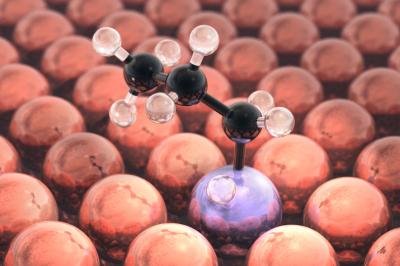
Tufts scientists use first-principles calculations run on supercomputers to predict, design single atom catalysts for important chemical reactions

Using fundamental calculations of molecular interactions, they created a catalyst with 100% selectivity in producing propylene, a key precursor to plastics and fabric manufacturing

Researchers at Tufts University, University College London (UCL), Cambridge University, and University of California at Santa Barbara have demonstrated that a catalyst can indeed be an agent of change. In a study published today in Science, they used quantum chemical simulations run on supercomputers to predict a new catalyst architecture as well as its interactions with certain chemicals and demonstrated in practice its ability to produce propylene - currently in short supply - which is critically needed in the manufacture of plastics, fabrics and other chemicals. The improvements have the potential for highly efficient, "greener" chemistry with a lower carbon footprint. Artistic rendering of the propane dehydrogenation process taking place on the novel single atom alloy catalyst, as predicted by theory. The picture shows the transition state obtained from a quantum chemistry calculation on a supercomputer, i.e. the molecular configuration of maximum energy along the reaction path.  CREDIT Charles Sykes & Michail Stamatakis

The demand for propylene is about 100 million metric tons per year (worth about $200 billion), and there is simply not enough available at this time to meet surging demand. Next to sulfuric acid and ethylene, its production involves the third-largest conversion process in the chemical industry by scale. The most common method for producing propylene and ethylene is steam cracking, which has a yield limited to 85% and is one of the most energy-intensive processes in the chemical industry. The traditional feedstocks for producing propylene are by-products from oil and gas operations, but the shift to shale gas has limited its production.

Typical catalysts used in the production of propylene from propane found in shale gas are made up of combinations of metals that can have a random, complex structure at the atomic level. The reactive atoms are usually clustered together in many different ways making it difficult to design new catalysts for reactions, based on fundamental calculations on how the chemicals might interact with the catalytic surface.

By contrast, single-atom alloy catalysts, discovered at Tufts University and first reported in Science in 2012, disperse single reactive metal atoms in a more inert catalyst surface, at a density of about 1 reactive atom to 100 inert atoms. This enables a well-defined interaction between a single catalytic atom and the chemical being processed without being compounded by extraneous interactions with other reactive metals nearby. Reactions catalyzed by single-atom alloys tend to be clean and efficient, and, as demonstrated in the current study, they are now predictable by theoretical methods.

"We took a new approach to the problem by using first-principles calculations run on supercomputers with our collaborators at University College London and Cambridge University, which enabled us to predict what the best catalyst would be for converting propane into propylene," said Charles Sykes, the John Wade Professor in the Department of Chemistry at Tufts University and corresponding author of the study.

These calculations which led to predictions of reactivity on the catalyst surface were confirmed by atomic-scale imaging and reactions run on model catalysts. The researchers then synthesized single-atom alloy nanoparticle catalysts and tested them under industrially relevant conditions. In this particular application, rhodium (Rh) atoms dispersed on a copper (Cu) surface worked best to dehydrogenate propane to make propylene.

"Improvement of commonly used heterogeneous catalysts has mostly been a trial-and-error process," said Michail Stamatakis, associate professor of chemical engineering at UCL and co-corresponding author of the study. "The single-atom catalysts allow us to calculate from first principles how molecules and atoms interact with each other at the catalytic surface, thereby predicting reaction outcomes. In this case, we predicted rhodium would be very effective at pulling hydrogens off molecules like methane and propane - a prediction that ran counter to common wisdom but nevertheless turned out to be incredibly successful when put into practice. We now have a new method for the rational design of catalysts."

The single-atom Rh catalyst was highly efficient, with 100% selective production of the product propylene, compared to 90% for current industrial propylene production catalysts, where selectivity refers to the proportion of reactions at the surface that leads to the desired product. "That level of efficiency could lead to large cost savings and millions of tons of carbon dioxide not being emitted into the atmosphere if it's adopted by industry," said Sykes.

Not only are the single atom alloy catalysts more efficient, but they also tend to run reactions under milder conditions and lower temperatures and thus require less energy to run than conventional catalysts. They can be cheaper to produce, requiring only a small fraction of precious metals like platinum or rhodium, which can be very expensive. For example, the price of rhodium is currently around $22,000 per ounce, while copper, which comprises 99% of the catalyst, costs just 30 cents an ounce. The new rhodium/copper single-atom alloy catalysts are also resistant to coking - a ubiquitous problem in industrial catalytic reactions in which high carbon content intermediates -- basically, soot -- build up on the surface of the catalyst and begin inhibiting the desired reactions. These improvements are a recipe for "greener" chemistry with a lower carbon footprint.

"This work further demonstrates the great potential of single-atom alloy catalysts for addressing inefficiencies in the catalyst industry, which in turn has very large economic and environmental payoffs," said Sykes.

Washington University in St. Louis prof finds pandemic air quality due to weather, not just lockdowns

Research shows meteorology plays an outsized role over the short-term

Headlines proclaiming Covid lockdowns drastically reduced pollution were mostly referring to nitrogen dioxide, NO2, a reactive gas emitted from burning fuel. There had been less understanding of how lockdowns affected PM2.5, tiny particulate matter that can penetrate a person's lungs, leading to a host of health problems, including increased risk for heart attack and cancer.

"PM 2.5 is the leading global environmental determinant of longevity. It is a key pollutant of concern for health," said Randall Martin, the Raymond R. Tucker Distinguished Professor in the Department of Energy, Environmental & Chemical Engineering in the McKelvey School of Engineering at Washington University in St. Louis.

New research from Martin's lab, in collaboration with the Goddard Space Flight Center, California Institute of Technology, and Dalhousie University in Nova Scotia, mapped PM 2.5 levels across China, Europe, and North America. Using satellite data, ground-based monitoring, and an innovative supercomputer modeling system, researchers found mostly slight changes in PM 2.5 -- with one exception.

The majority of changes they found were not driven by lockdown, but by the natural variability of meteorology. Their results were published on June 23 in the journal Science Advances.

The meteorological effects that we experience every day also affect PM2.5 variability, Martin said.

"The shorter time period, the more susceptible PM 2.5 is to meteorology," he said.

During the pandemic, among the images of overflowing ICUs and empty grocery store shelves, there were some photographic bright spots: before and after pictures accompanied articles proclaiming air quality improved because people were staying home.

The visuals were striking -- both on the ground, where blue skies shone over LA highways, and from space -- data from NASA satellites made a clear atmospheric reduction in nitrogen dioxide.

"People automatically started wondering, 'What's the picture for PM 2.5?'" said Melanie Hammer, a visiting research associate in Martin's lab. That was the obvious question not just because particulate matter often comes from the same sources as NO2, but because NO2 can form PM 2.5.

"NO2 is considered a secondary source of PM 2.5," Hammer said. When it's emitted, NO2 interacts with other chemicals in the atmosphere and can form PM 2.5. A few early studies looked at data gathered from ground monitoring sites, which test the surrounding air, but those ground sites are few and far between and incapable of piecing together a bigger picture.

Only about a fraction of the world's population live in countries that have more than three PM 2.5 monitors per million people. Most of the population lives in areas with no monitoring.

"We decided to look again, using a more complete picture from satellite images," Hammer said. The images, provided by NASA, contain data for columns of atmosphere spanning the ground to the edge of space. These data are referred to as aerosol optical depth, related to surface PM 2.5 concentrations using the chemical transport model GEOS-Chem, which simulates the composition of the atmosphere; the reactions and relationships of its different constituents; and the way they move through the air.

Researchers focused on three regions that do have extensive ground monitoring systems in place: North America, Europe, and China, and compared monthly estimates of PM 2.5 from January to April in 2018, 2019, and 2020.

When they compared PM 2.5 levels over the three years during the months that coincided with each region's lockdown phases, there weren't many clear signals over North America or Europe.

"We found the most clearly detectable signal was a significant reduction over the North China Plain, where the most strict lockdowns were concentrated," she said.

To figure out whether lockdown was responsible for that signal, and several smaller ones dotted around the areas surveyed, the team ran "sensitivity simulations" using GEOS-Chem, changing parameters to see which scenario most closely matched reality.

They simulated a scenario where emissions were held constant and meteorology was solely responsible for year-over-year changes in PM 2.5.

"We found that that explained a large part of the differences we were seeing," Hammer said. They also ran a simulation in which they reduced transportation-related emissions and other man-made sources of NO2, mirroring lockdown when fewer people were driving and fewer industrial sites were operational.

"On its own, that actually didn't really explain much at all," Hammer said. But combining the two, "That's when the signal over the North China Plain stood out."

Hammer suspects that the change in PM 2.5 levels over the North China Plain was so striking because of how polluted it tends to be in "normal" times. "You're probably more likely to see a larger reduction in a region that has higher concentrations, to begin with."

In a way, that highlights a relevant point that may not at first be intuitive: Average PM 2.5 levels have been dropping steadily in North America and Europe. "It's just harder to perturb really low concentrations," Hammer said.

But it also underscores the complex relationship between NO2 and PM 2.5. Although NO2 does interact with other atmospheric chemicals to form PM 2.5, the two do not have a linear relationship; twice as much NO2 in the atmosphere does not necessarily lead to twice as much PM 2.5.

Hammer said, intuitively, she did expect to see more of a reduction in PM 2.5 levels. "It was kind of a surprise that meteorology played such a dominant role.

"Turns out, it's a pretty complex relationship and it doesn't always behave how you would expect."