Where were Jupiter and Saturn born?

An additional planet between Saturn and Uranus was kicked out of the Solar System in its infancy

New work led by Carnegie's Matt Clement reveals the likely original locations of Saturn and Jupiter. These findings refine our understanding of the forces that determined our Solar System's unusual architecture, including the ejection of an additional planet between Saturn and Uranus, ensuring that only small, rocky planets, like Earth, formed inward of Jupiter.

In its youth, our Sun was surrounded by a rotating disk of gas and dust from which the planets were born. The orbits of early formed planets were thought to be initially close-packed and circular, but gravitational interactions between the larger objects perturbed the arrangement and caused the baby giant planets to rapidly reshuffle, creating the configuration we see today. New work led by Carnegie's Matt Clement reveals the likely original locations of Saturn and Jupiter. These findings refine our understanding of the forces that determined our Solar System's unusual architecture, including the ejection of an additional planet between Saturn and Uranus, ensuring that only small, rocky planets, like Earth, formed inward of Jupiter.  In its youth, our Sun was surrounded by a rotating disk of gas and dust from which the planets were born. The orbits of early formed planets were thought to be initially close-packed and circular, but gravitational interactions between the larger objects perturbed the arrangement and caused the baby giant planets to rapidly reshuffle, creating the configuration we see today.  {module INSIDE STORY} The majority of supercomputing for this project was performed at the OU Supercomputing Center. Some of the supercomputing for this project was performed on Carnegie's Memex.

"We now know that there are thousands of planetary systems in our Milky Way galaxy alone," Clement said. "But it turns out that the arrangement of planets in our own Solar System is highly unusual, so we are using models to reverse engineer and replicate its formative processes. This is a bit like trying to figure out what happened in a car crash after the fact--how fast were the cars going, in what directions, and so on."

Clement and his co-authors--Carnegie's John Chambers, Sean Raymond of the University of Bordeaux, Nathan Kaib of the University of Oklahoma, Rogerio Deienno of the Southwest Research Institute, and André Izidoro of Rice University performed 6,000 simulations of our Solar System's evolution, revealing an unexpected detail about Jupiter and Saturn's original relationship.

Jupiter in its infancy was thought to orbit the Sun three times for every two orbits that Saturn completed. But this arrangement is not able to satisfactorily explain the configuration of the giant planets that we see today. The team's models showed that a ratio of two Jupiter orbits to one Saturnian orbit more consistently produced results that look like our familiar planetary architecture.

"This indicates that while our Solar System is a bit of an oddball, it wasn't always the case," explained Clement, who is presenting the team's work at the American Astronomical Society's Division for Planetary Sciences virtual meeting. "What's more, now that we've established the effectiveness of this model, we can use it to help us look at the formation of the terrestrial planets, including our own, and to perhaps inform our ability to look for similar systems elsewhere that could have the potential to host life."

The model also showed that the positions of Uranus and Neptune were shaped by the mass of the Kuiper belt--an icy region on the Solar System's edges composed of dwarf planets and planetoids of which Pluto is the largest member--and by an ice giant planet that was kicked out in the Solar System's infancy.
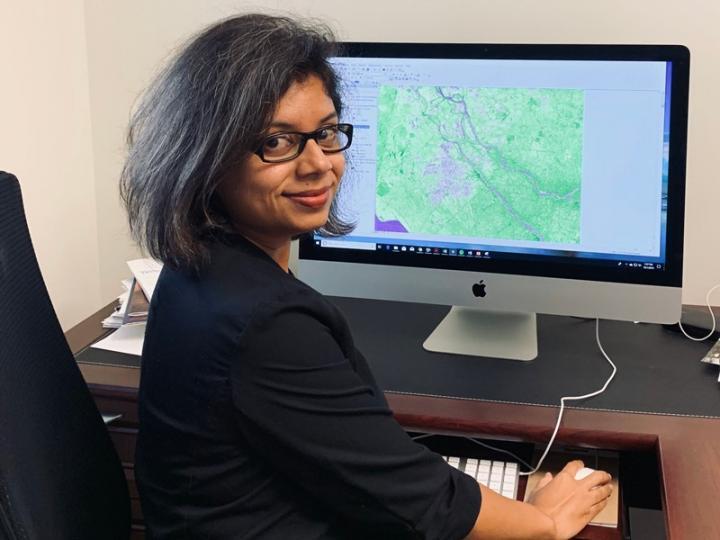
UD's Pinki Mondal offers recommendations on using remote sensing to quantify forest health

While using large swaths of coarse satellite data can be an effective tool for evaluating forests on a national scale, the resolution of that data is not always well suited to indicate whether or not those forests are growing or degrading.

A new study led by the University of Delaware's Pinki Mondal recommends that in addition to using this broad-scale approach, it is important for countries to prioritize areas such as national parks and wildlife refuges and use finer-scale data in those protected areas to make sure that they are maintaining their health and are being reported on accurately.

To help create an easy-to-implement reporting framework for six Southeast Asian forest ecosystems -- in Bangladesh, Bhutan, India, Nepal, Pakistan, and Sri Lanka -- Mondal led a study that first looked at those countries using a broad brush approach and then used higher resolution data to focus on two specific protected areas to show how the coarse satellite data can sometimes overlook or misinterpret temporal changes in forest cover.

Sustainable Development Goals

The work was conducted to develop a reporting framework that can help the countries with their Sustainable Development Goal (SDG) report to the United Nations.

In 2015, the United Nations General Assembly set forth 17 SDGs to serve as a blueprint to achieve a better and more sustainable future for all, with the hope to achieve these goals by the year 2030. Among these, goal No. 15 -- Life on Land -- is to protect the world's forests to strengthen natural resource management and increase land productivity. To help with reporting SDG 15, Mondal and her research group have been using remote sensing to look at forests around the world.

Mondal, an assistant professor in the Department of Geography and Spatial Sciences in UD's College of Earth, Ocean, and Environment, recently had a paper published in the Remote Sensing of Environment Journal looking at SDG 15.

Coarse Satellite Data

University of Delaware assistant professor Pinki Mondal recently had a paper published in the Remote Sensing of Environment Journal that shows the importance of using finer scale satellite data in protected areas to ensure they are maintaining their health and are being reported on accurately.{module INSIDE STORY}

Most countries, especially the ones with limited access to supercomputing resources and finer-scale remote sensing data, use freely available remote sensing assets such as those from coarse-scale satellite sensors.

"Depending on the scale of a study, people tend to use coarser resolution data because generally, those satellite images have a larger footprint," said Mondal. "Only a few satellite images can cover an entire country and it's easier to use or analyze that kind of data."

The researchers used a broad-brush approach with coarser resolution satellite data to calculate vegetation trends in response to rainfall changes in the six countries.

At the country-level since 2001, the vegetation trends fluctuated and the researchers found instances of localized greening in Pakistan, India, and Nepal, and browning in Bangladesh and Sri Lanka, with Bhutan showing almost no trend. The greening found in India and Nepal was more localized and the forests showed localized browning in the northeastern states of India, and parts of Nepal and Sri Lanka.

While the coarse-resolution data could indicate an overall greening trend for an area, when they looked at two specific protected areas using finer-scale data, they found that there was a lot more going on.

Protected Areas

Using finer-resolution satellite data, the researchers looked at intact versus non-intact forests that were located in two protected areas, the Sanjay National Park in India and the Ruhuna National Park in Sri Lanka. Since both test cases are national parks, they are expected to host mostly intact, or undisturbed forests that would not be impacted by human populations.

"Protected areas are supposed to host and maintain quality forests. But by using this finer-scale data, we were able to see non-intact forests that could be a result of factors such as fire, disease, or human activities. If we cannot maintain a healthy forest even within protected areas, then that's a problem," said Mondal.

When using a broad-brush approach, the Sanjay National Park showed an overall greening trend but when using the more in-depth data, they found almost one-third of the Sanjay National Park to have a non-intact forest. In addition, they were also able to identify spots in the national parks that had no forests at all. Maintaining the balance between healthy forests and other ecosystems such as grasslands within these protected areas and minimizing degradation should be a high priority for land managers moving forward.

This finer-scale data allowed the researchers to generate maps of 87 percent and 91 percent overall accuracy for the Indian and Sri Lankan protected areas.

Challenges in reporting

Mondal said one of the challenges facing researchers has been developing a broad definition for a forest, as depending on a country's ecosystem, their forests can be very different.

"If you work in a country like India, it's so diverse that by definition, you can't have one uniform forest," said Mondal. "In the land change science community, we have been debating the definition for a forest, but an acceptable measure is the one with 10 percent canopy cover."

This indicator of a forest can be tracked with satellites, and researchers use satellite images over time to measure how much of a particular mapping unit is covered by the forest canopy.

"If you're working in a country with a diverse landscape, the status of forest cover might change pretty rapidly over time. But you cannot capture that change with this coarse-level, broad-brush input approach, which is what most of the national level studies use," said Mondal.

Overall, Mondal said that the goal of the paper was to encourage people to realize that there is not a one-size-fits-all approach to monitoring and reporting progress toward SDG.

"Our goal is to encourage landscape managers to think more deeply about the methods they are using in terms of reporting these SDGs because depending on what data you're using, your result might look completely different than what you're reporting at the U.N. level," said Mondal.

Scientists combine viral genomics, public health data that reveals new details about mumps outbreaks

Studying mumps virus genomes in 2016 and 2017 filled in gaps about how the disease was spreading in Massachusetts and elsewhere in the US

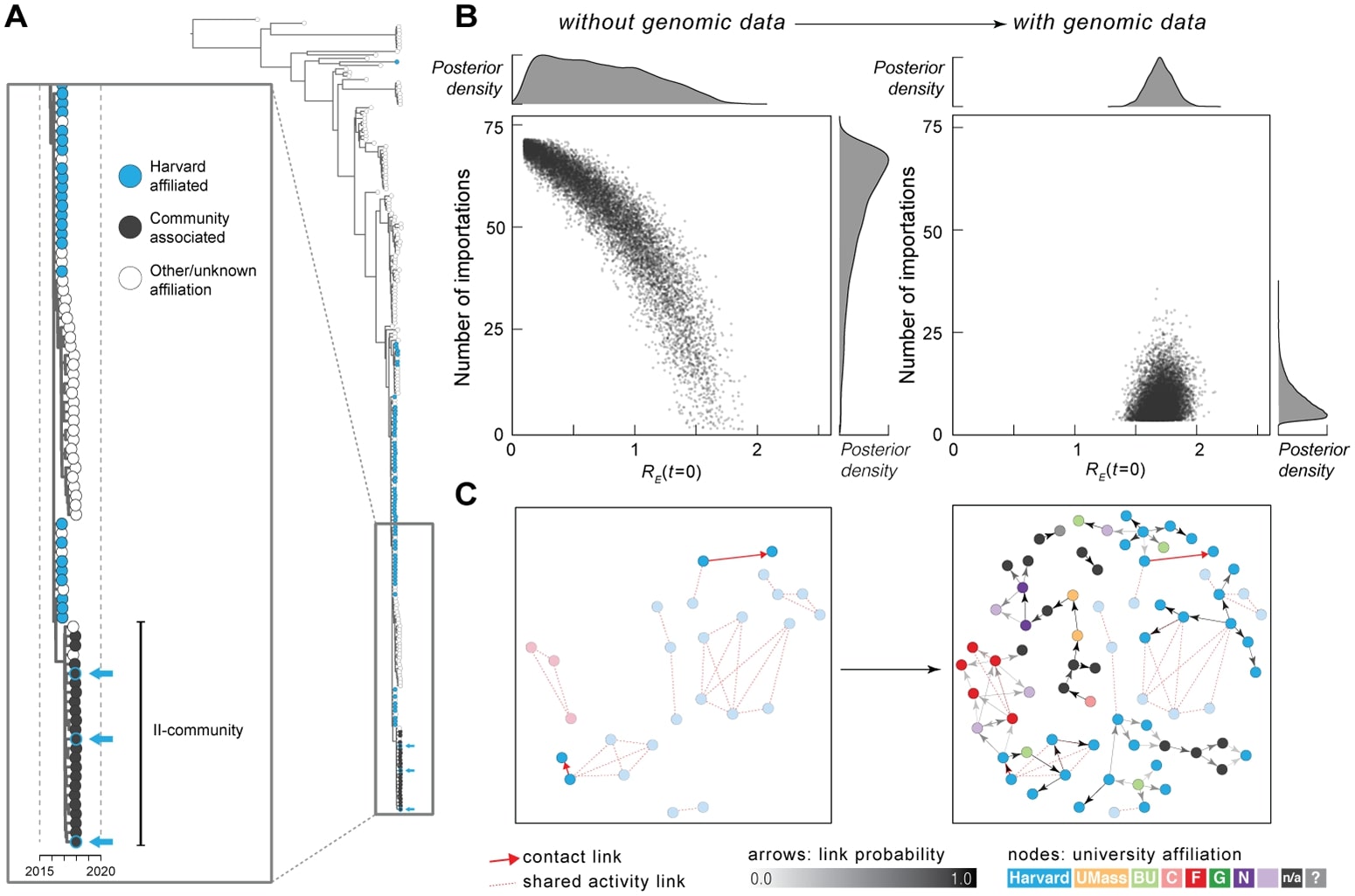
In 2016 and 2017, a surge of mumps cases at Boston-area universities prompted researchers to study mumps virus transmission using genomic data, in collaboration with the Massachusetts Department of Public Health and local university health services. As the outbreaks unfolded, the teams analyzed mumps virus genomes collected from patients, revealing new links between cases that first appeared unrelated and other details about how the disease was spreading that weren't apparent from the epidemiological investigation.

The teams shared their sequencing data and findings in real-time during the outbreaks, with both each other and the broader scientific community, and now report their conclusions in PLOS Biology.

Analyzing viral genomes from an outbreak can show how a virus is evolving and being transmitted -- data that can help public health officials slow and stop the spread of disease. Epidemiological modeling and transmission reconstruction. (A) Zoom view of Clade II-community and its ancestors. Arrows: individuals affiliated with both II-community and Harvard. (B) Number of importations into Harvard calculated without (left) and with (right) viral genetic information as input. Each point represents a sample from the posterior distribution of RE(t = 0) and the number of introductions, based on simulated transmission dynamics. (C) Transmission reconstruction of individuals within Clade II-outbreak; samples are colored by institution affiliation (light purple: other institution; n/a: no affiliation; question mark: unknown affiliation). Left: reconstruction using epidemiological data only; all individuals in Clade II-outbreak with known epidemiological links (red arrows) are shown. Right: reconstruction using mumps genomes and collection dates. Arrow shading indicates probability of direct transmission between individuals (minimum probability shown: 0.3); cases with 1 or more inferred links are shown and are colored by institution. Arrows outlined in red represent transmission events identified by both genomic and epidemiological data. Faded nodes are those only connected by shared activity links (i.e., no inferred or known direct transmission). BU, Boston University; Harvard, Harvard University; RE, effective reproduction number; UMass, University of Massachusetts Amherst.{module INSIDE STORY}

"High-resolution genomic data about a virus, gathered from patient samples, allows us to reconstruct parts of an outbreak that aren't evident at first," said co-senior author Pardis Sabeti, an institute member at the Broad Institute, professor at Harvard University, and Howard Hughes Medical Institute investigator. "The better we understand transmission chains in situations like this, the better we can inform efforts to control outbreaks and devise strategies to predict and stop them in the future."

In Massachusetts, the typical rate of mumps is less than 10 cases per year -- but more than 250 cases were reported in 2016 and more than 170 in 2017, despite high rates of vaccination. Many of the cases were from 18 colleges and universities in the state, including Harvard University, University of Massachusetts Amherst, and Boston University (these three universities met certain criteria to ensure patient privacy protection in this study and agreed to be named in the paper). Other outbreaks flared elsewhere in Boston and across the country around the same time.

These patterns of cases raised questions about how much the virus was circulating in the Massachusetts and US populations. To learn more, the research teams paired traditional epidemiological data with analysis of mumps virus whole genome sequences from 201 infected individuals, focusing primarily on the Massachusetts university communities.

Mumps insight

The viral genomic data revealed details about the Boston-area outbreaks that could not be reconstructed by relying solely on more traditional approaches. For example, the researchers found a clear link between cases at Harvard and an outbreak in East Boston, which were classified as distinct outbreaks during the initial public health investigation.

Public health officials first thought the cases in these two communities were unrelated based on several pieces of evidence: epidemiological data, the different demographic makeup of the two populations (older adults with no obvious university connection versus mostly college-aged students), and a long gap between the apparent end of the outbreak at Harvard and the cases in the local community.

However, the genomic data indicated that the mumps viruses in the East Boston cases were genetically similar to those in the Harvard virus samples. This finding enabled the teams to identify contacts and transmission links between the university and the wider community.

"Even though the two outbreaks were occurring at different places and different times, we were able to show connections between these outbreaks that were operationally informative," explained senior co-author Bronwyn MacInnis, associate director of malaria and viral genomics in the Infectious Disease and Microbiome Program and co-lead of the Global Health Initiative at Broad. "The public health teams could determine that they were essentially dealing with one problem, not two."

Understanding such transmission routes can help guide the outbreak response -- for example, by determining whether efforts should be focused more on controlling transmission within a single community or between different ones.

"Whole-genome sequencing of patient samples helps us reconstruct the progression of an outbreak," said co-first author Shirlee Wohl, formerly a Harvard graduate student in the Sabeti lab and now a postdoctoral fellow at Johns Hopkins University. "Traditional outbreak surveillance efforts can help identify possible sources of infection, but whole-genome sequencing can confirm these links and even suggest new, unexplored connections."

The team emphasized that this study was made possible by the close partnerships it had with the Massachusetts Department of Health and the health services teams at several universities. "I am proud to be part of the Massachusetts higher education community," Sabeti added. "They worked together and demonstrated the necessity of transparency in outbreak response. This is not a story of mumps at these universities, but of outstanding mumps reporting."

Mutating mumps?

Another question of particular interest to the local teams was whether a new mutation in the mumps virus -- for example, one that allows it to evade the immune system in a vaccinated individual -- might have sparked the outbreak. Of the infected individuals, 65 percent had received the recommended two doses of the MMR vaccine. However, given the available data, the researchers found no evidence that genetic variants arising specifically during this outbreak contributed to the disease spread. This finding suggests that, in the Boston area, the virus wasn't evolving into one that could dodge vaccine-induced immunity.

In addition to the findings related to the Boston-area outbreaks, the study's broader geographic analysis suggested that the mumps virus has been circulating continuously at a low rate around the US, only rarely flaring up into notable outbreaks as in 2016 and 2017.

"This whole endeavor demonstrated the value of genetic data to the epidemiological health response, and of data-sharing among collaborating teams," Sabeti said. "One of our goals is to build this capacity in many areas around the world so that public health officials can rapidly mobilize and do this type of analysis whenever they need to."