UVA health proposal chosen for AI competition on how to help prevent hospital readmission

A UVA Health proposal to reduce hospital readmissions was among 25 submissions chosen - from more than 300 applications - for a national competition seeking ideas on how artificial intelligence can improve healthcare.

The UVA Health data science team will compete alongside proposals from organizations that include IBM and Mayo Clinic in the first Centers for Medicare & Medicaid Services Artificial Intelligence Health Outcomes Challenge. UVA's project seeks to not only predict which patients are at risk of being readmitted to the hospital multiple times but suggesting a personalized plan to prevent those readmissions.

"Artificial Intelligence is a vehicle that can help drive our system to value - proven to reduce out-of-pocket costs and improve quality. It holds the potential to revolutionize healthcare: imagine a doctor being able to predict health outcomes - such as a hospital admission - and to intervene before an illness strikes," said CMS Administrator Seema Verma. "The participants in our AI Challenge demonstrate that such possibilities will soon be within reach. We congratulate the 25 innovators who have been selected to continue, and we look forward to seeing what else they have in store."

Predicting and Preventing Readmissions

An analysis by the UVA Health data science team developing the proposal found that 3% of patients at UVA account for 30% of readmissions within 30 days of being discharged from the hospital. Most of those return hospital visits occur within 12 months of the first admission, so being able to predict which patients are at risk for multiple readmissions is vital.

One challenge is that not all readmissions can be stopped; published research estimates that less than one-third of readmissions within 30 days of discharge from the hospital are actually preventable. For example, elderly patients are at higher risk for readmissions, but there's nothing that can be done about a patient gets older.

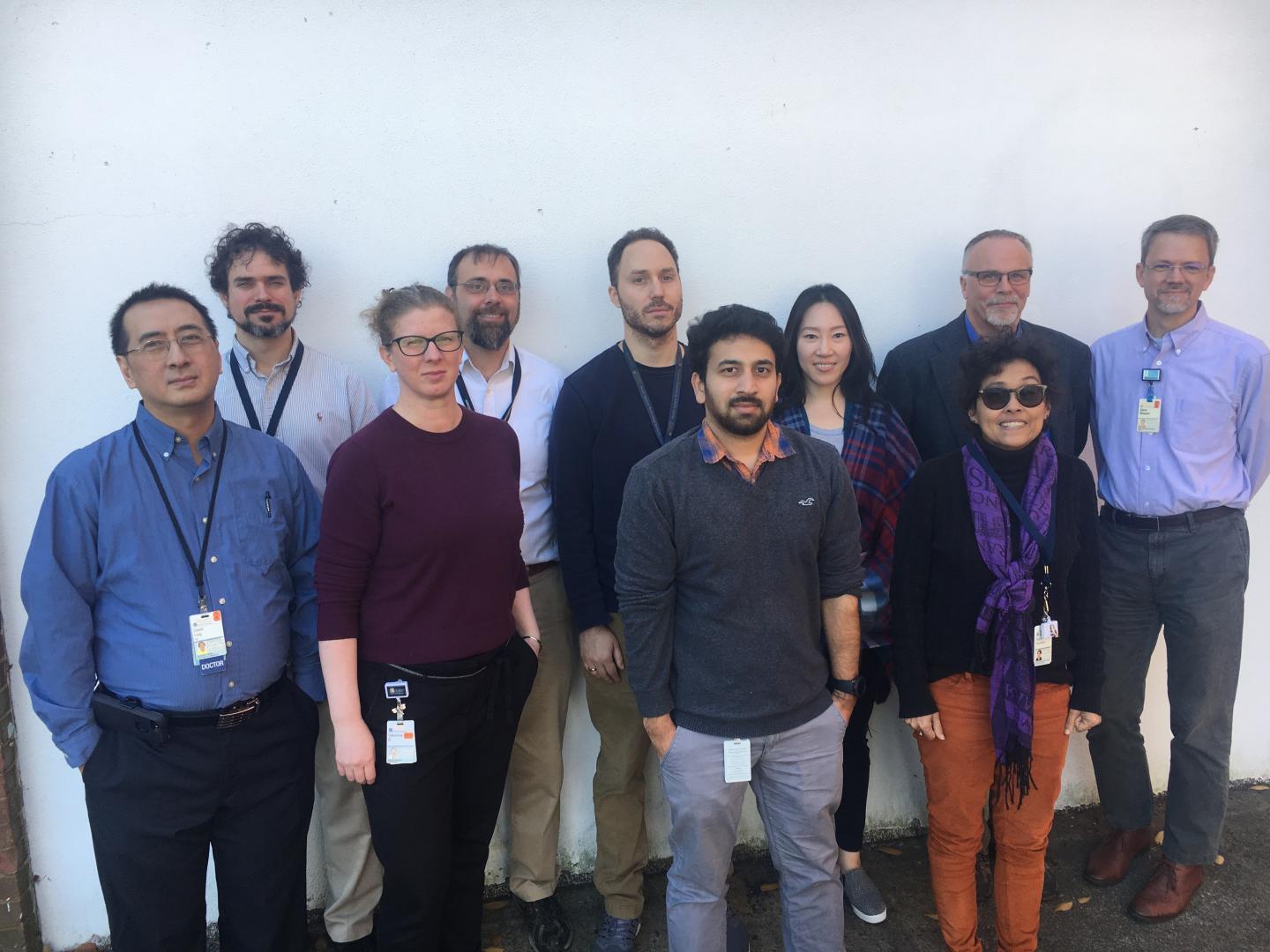
Based on an analysis of data from insurance claims and electronic medical records - and building on work they have already done to reduce readmissions - the UVA Health team has identified several risk factors that can be addressed. Members of the UVA Health team whose proposal was selected for a national competition on how artificial intelligence can improve healthcare.{module INSIDE STORY}
For example, a patient may not be taking full advantage of preventive care options, may have chronic conditions such as diabetes or may not be able to effectively manage theirs due to medical illiteracy or other factors. A patient's risk for readmission may also vary based on why they are coming to the hospital. For instance, a patient with cancer coming to the hospital for a regular chemotherapy session would be at lower risk than if the same patient was admitted to the hospital with a hip fracture.

But the model doesn't stop with identifying patients at increased risk for multiple readmissions. "The core idea of our proposal is to suggest possible interventions," said Bommae Kim, Ph.D., a UVA Health senior data scientist. "For example, a patient may have dementia and can't take care of themselves. So we may talk with a caregiver about different care options or help find other resources to help the patient."

Refining Their Work

The UVA Health team has until February 2020 to submit their updated proposal to CMS. Later next year, they will learn whether they were selected as 1 of 7 finalists to compete for a $1 million grand prize. But the opportunity to build on the team's efforts over the past five years to incorporate AI into patient care has already proved valuable.

"Just putting together the proposal is helping us accelerate our work to improve care for our patients," said Jonathan Michel, Ph.D., UVA Health's director of data science.
Regenstrief VP co-authors National Academy report on AI's potential to improve health

Seminal report focuses on hope, hype, promise, and peril of AI use in medical arena

A Regenstrief Institute research scientist and vice president is a key contributor to a groundbreaking new publication exploring opportunities, issues and concerns related to artificial intelligence and its role to improve human health.

Eneida Mendonca, M.D., PhD, an expert in natural language processing, machine learning, predictive analytics and AI adoption, is a co-author of "Artificial Intelligence in Health Care: The Hope, The Hype, The Promise, and The Peril," a National Academy of Medicine (NAM) Special Publication. Other authors are from Harvard University, the Mayo Clinic, Johns Hopkins, Stanford University, Columbia University, Vanderbilt University and the Gates Foundation.

Dr. Mendonca is a co-lead in the seminal report that considers the potential tradeoffs and unintended consequences of AI (chapter 4) and co-author on the chapter that explores deploying AI in clinical settings (chapter 6). Each chapter includes recommendations.

Regenstrief Institute President and Chief Executive Officer Peter Embí, M.D., who participated in November in a high profile NAM conference on artificial intelligence and health care, said, "The potential for AI is enormous and we are optimistic about AI's promise to bring improvements in health, but we must also be cautious, thoughtful and act wisely. As Dr. Mendonca and co-authors write in the NAM report, 'though there is much upside in the potential for the use of AI in medicine, like all technologies, implementation does not come without certain risks.' "

To mitigate these risks, Dr. Mendonca and her NAM report co-authors call for transparency in the collection and use of data that drive AI solutions as well as in the design of the complex computational processes that make AI possible. For example, the report suggests consideration for establishing review bodies, to oversee AI in medicine.

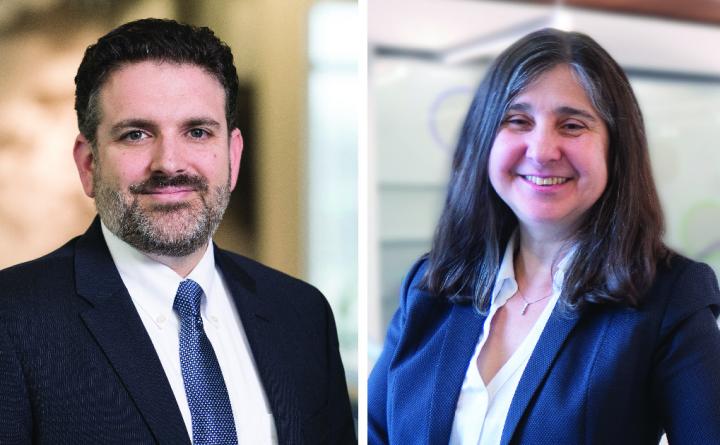
The authors also underscore workforce issues, noting that advanced technologies will almost certainly change roles. "Instead of trying to replace medical workers, the coming era of AI automation can instead be directed toward enabling a broader reach of the workforce to do more good for more people, given a constrained set of scarce resources," they write. Turning to security issues, the report encourages development of AI systems resistant to misuse by bad actors. Regenstrief Institute President and CEO Peter Embí, M.D., M.S. is an internationally recognized researcher, educator, and leader in the field of clinical and translational research informatics. Regenstrief Institute VP Eneida Mendonca, M.D., Ph.D. is an expert in natural language processing, machine learning, predictive analytics and AI adoption, is a co-author of {module INSIDE STORY}

In a section titled "Net Gains, Unequal Pains" the authors caution that "if high tech healthcare is only available and used by those already plugged in socioeconomically, such advances may inadvertently reinforce health care disparity."

Turning to AI deployment, Dr. Mendonca and co-authors believe that AI will play a major role in the image interpretation processes of radiology, ophthalmology, dermatology and pathology as well as in the signal processing used in ECG, audiology and EEG tests. They also note AI's potential to "assist with prioritization of clinical resources and management of volume and intensity of patient contacts, as well as targeting services to patients most likely to benefit." They see great opportunity for AI in areas outside the point of care including population health as well as managing administrative tasks.

"We need to focus on clinical safety and carefully monitor uses and outcomes after implementation as we integrate AI within our electronic medical record systems," said Dr. Mendonca. "As we wrote in the National Academy report, 'Virtually none of the more than 320,000 health apps currently available and which have been downloaded nearly 4 billion times, has actually been shown to improve health.' "

"While being beneficial, AI has the potential to create unintended consequences so must be subject to regulation and be ethically implemented. A regulatory framework would be better established proactively, rather than in response to specific issues," said Dr. Mendonca. "Health systems must take steps to ensure the technology is enhancing care for all patients. System leaders must make efforts to avoid introducing social bias into the use of AI applications, which includes demanding transparency in the data collection and algorithm evaluation process. General IT governance structures must be adapted to manage AI and, if possible, the technology should be used in the context of a learning health system so its impact can be constantly evaluated and adjusted to maximize benefit."

"We are in the early developmental stages with many hurdles to overcome, but AI clearly holds immense potential in the healthcare arena," said Dr. Embí. "Leveraging AI to focus on clinical safety and effectiveness as well as stakeholder and user engagement are of paramount importance as are continual monitoring and evaluation. The bottom line is humans need to be intelligent about artificial intelligence."

NAM noted in a press statement, "AI has the potential to revolutionize health care. However, as we move into a future supported by technology together, we must ensure high data quality standards, that equity and inclusivity are always prioritized, that transparency is use-case-specific, that new technologies are supported by appropriate and adequate education and training, and that all technologies are appropriately regulated and supported by specific and tailored legislation."

The NAM special publication on AI is viewed as a reference document for all stakeholders involved in AI, health care or the intersection of the two. It prioritizes caution in implementation of this technology, prioritization of human connections between clinicians and patients, and an unwavering focus on equity and inclusion. NAM, established in 1970 as the Institute of Medicine, is an independent organization of eminent professionals from diverse fields including health and medicine; the natural, social, and behavioral sciences; and beyond. The new publication and associated resources can be downloaded at http://www.nam.edu/AIPub.

Jefferson Health otolaryngologist deploys Google-platform AI to predict risk of thyroid cancer on ultrasound

A new study uses machine learning on ultrasound images of thyroid nodules to predict the risk of malignancy

Thyroid nodules are small lumps that form within the thyroid gland and are quite common in the general population, with a prevalence as high as 67%. The great majority of thyroid nodules are not cancerous and cause no symptoms. However, there are currently limited guidelines on what to do with a nodule when the risk of cancer is uncertain. A new study from The Sidney Kimmel Cancer Center - Jefferson Health investigates whether a non-invasive method of ultrasound imaging, combined with a Google-platform machine-learning algorithm, could be used as a rapid and inexpensive first screen for thyroid cancer.

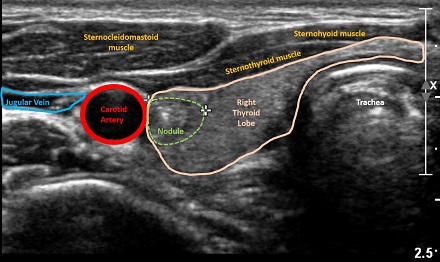
"Currently, ultrasounds can tell us if a nodule looks suspicious, and then the decision is made whether to do a needle biopsy or not," says Elizabeth Cottril, MD, an otolaryngologist at Thomas Jefferson University, and clinical leader of the study. "But fine-needle biopsies only act as a peephole, they don't tell us the whole picture. As a result, some biopsies return inconclusive results for whether or not the nodule may be malignant, or cancerous, in other words." CAPTION Ultrasound image of thyroid nodule.  CREDIT Dr. Elizabeth Cottril, Thomas Jefferson University{module In-article} 

If examining the cells of a needle biopsy proves inconclusive, the sample can be further tested via molecular diagnostics to determine the risk of malignancy. These tests look for the presence of certain mutations or molecular markers that are associated with malignant thyroid cancers. When nodules test positive for high-risk markers or mutations, the thyroid may be surgically removed. However, the standards for when to use molecular testing are still in development, and the test is not yet offered in all practice settings, especially at smaller community hospitals.

In order to improve the predictive power of the first-line diagnostic, the ultrasound, Jefferson researchers looked into machine learning or artificial intelligence models developed by Google. These applications are being used in other spaces: retail giants like Urban Outfitters use machine learning to help classify their many products, making it easier for the consumer to find an item they're interested in. Disney uses it to annotate their products based on specific characters or movies. In this case, the researchers applied a machine-learning algorithm to ultrasound images of patients' thyroid nodules to see if it could pick out distinguishing patterns. The study was published in JAMA-Oto on October 24th.

"The goal of our study was to see whether automated machine learning could use image-processing technology to predict the genetic risk of thyroid nodules, compared to molecular testing," says Kelly Daniels, a fourth-year medical student at Jefferson and first author of the study.

The researchers trained the algorithm on images from 121 patients who underwent ultrasound-guided fine needle-biopsy with subsequent molecular testing. From 134 total lesions, 43 nodules were classified as high risk and 91 were classified as low risk, based on a panel of genes used in the molecular testing. A preliminary set of images with known risk classifications was used to train the model or algorithm. From this bank of labeled images, the algorithm utilized machine-learning technology to pick out patterns associated with high and low-risk nodules, respectively. It used these patterns to form its own set of internal parameters that could be used to sort future sets of images; it essentially "trained" itself on this new task. Then the investigators tested the trained model on a different set of unlabeled images to see how closely it could classify high and low genetic risk nodules, compared to molecular test results.

"Machine learning is a low-cost and efficient tool that could help physicians arrive at a quicker decision as to how to approach an indeterminate nodule," says John Eisenbrey, PhD, associate professor of radiology and lead author of the study. "No one has used machine learning in the field of genetic risk stratification of thyroid nodule on ultrasound."

The researchers found that their algorithm performed with 97% specificity and 90% predictive positive value, meaning that 97% of patients who truly have benign nodules will have their ultrasound read as "benign" by the algorithm, and 90% of malignant or "positive" nodules are truly positive as classified by the algorithm . The high specificity is indicative of a low rate of false positives; this means that if the algorithm reads a nodule as "malignant" it is very likely to truly be malignant. The overall accuracy of the algorithm was 77.4%.

"This was such an important collaboration of surgeons and radiologists, and there's already interest from other institutions to pool our resources. The more data we feed the algorithm, the stronger and more predictive we'd expect it to become," says Dr. Cottril.

"There are so many potential applications of machine learning," says Dr. Eisenbrey. "In the future, we'd like to make use of feature extraction, which will help us identify anatomically relevant features of high-risk nodules."

Though preliminary, the study suggests that automated machine learning shows promise as an additional diagnostic tool that could improve the efficiency of thyroid cancer diagnoses. Once it becomes more robust, the approach could give doctors and patients more information in order to decide if thyroid lobe removal is necessary.