

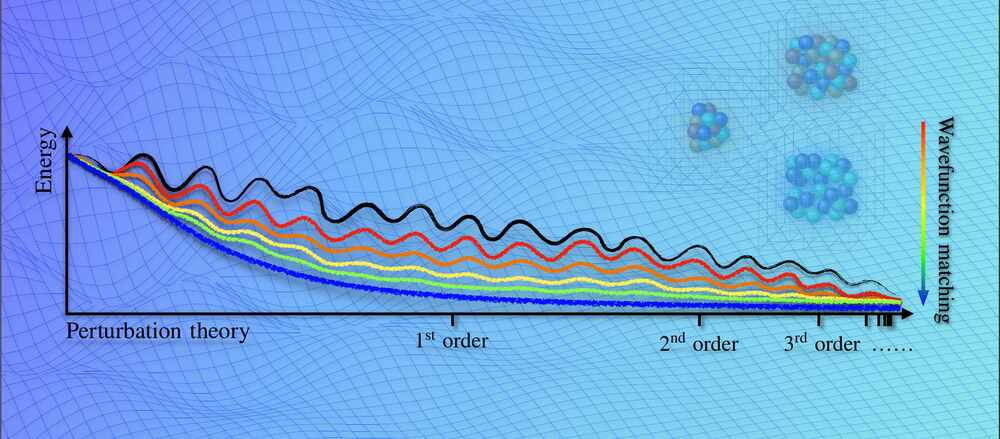
The wavefunction matching technique involves replacing the short-distance part of the two-body wavefunction, which represents a realistic interaction with strong oscillations, with that of a simple, easily calculable interaction that shows no oscillations. This results in a new interaction that can be analyzed in quantum many-body calculations using perturbation theory. (Figure: Prof. Serdar Elhatisari)

Advancements in supercomputing: Unraveling complex physics problems

In a groundbreaking development, an international research team has made significant strides in addressing a challenging physics problem by leveraging cutting-edge supercomputing techniques. The article, published by the University of Bonn, sheds light on the innovative use of advanced computational methods in unraveling complex quantum many-body systems, offering insights that are poised to reshape the realm of nuclear physics and quantum mechanics.

The research, led by Prof. Ulf-G. Meißner from the Helmholtz Institute for Radiation and Nuclear Physics at the University of Bonn outlines the successful application of a new method known as wavefunction matching. This novel approach aims to overcome the computational challenges inherent in ab initio calculations for systems with complex interactions, particularly in nuclear physics and quantum mechanics.

In the realm of nuclear physics, ab initio methods, which describe systems by understanding their elementary components and interactions, face limitations in conducting reliable calculations for systems with intricate interactions. The method of quantum Monte Carlo simulations, employed in these calculations, holds promise but grapples with a significant obstacle termed the "sign problem," leading to inaccuracies in final predictions. Figure: Prof. Serdar Elhatisari
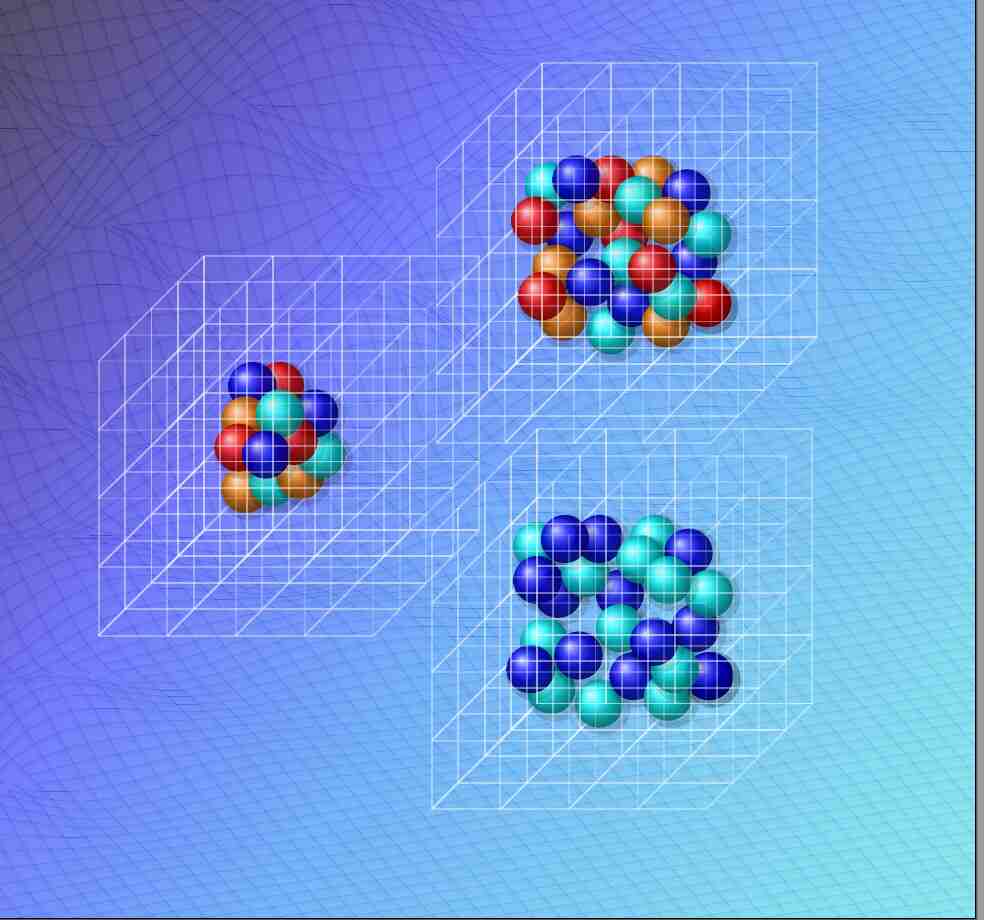
The newfound wavefunction matching technique has emerged as a game-changer in addressing this computational predicament. By adeptly mapping complex problems to simpler model systems through wavefunction matching, the research team has paved the way for precise calculations of crucial properties such as atomic nuclei masses and radii. Prof. Meißner highlighted the successful calculation of nuclear properties, demonstrating a remarkable agreement with real-world measurements. This groundbreaking approach has empowered researchers to tackle calculations that were once deemed impossible due to computational obstacles.

Furthermore, the application of wavefunction matching in lattice quantum Monte Carlo simulations for light and medium-mass nuclei, neutron matter, and nuclear matter has yielded results that closely align with empirical data, heralding a new era of computational accuracy and reliability in nuclear physics.

A striking aspect of this research is the collaborative effort encompassing the University of Bonn, Gaziantep Islam Science and Technology University, Michigan State University, Ruhr University Bochum, South China Normal University, and several other esteemed institutions worldwide. The study received funding from prominent entities such as the U.S. Department of Energy, the German Research Foundation, the National Science Foundation of China, and the European Research Council, underscoring the significance of this research on a global scale.

As supercomputing capabilities continue to expand and evolve, the implications of this research extend beyond the realm of nuclear physics. Prof. Meißner emphasized the potential applications of the wavefunction matching technique in classical and quantum computing, foreseeing its utility in predicting properties of topological materials, particularly crucial in the realm of quantum computing.

The utilization of supercomputing resources has been instrumental in driving this transformative research forward. Notably, the computing time on supercomputers was a crucial component of this work, emphasizing the pivotal role of advanced computational infrastructure in addressing intricate physics problems.

The publication of this research signifies a significant milestone in the field of computational physics. The impact of this pioneering approach in addressing longstanding computational challenges sets the stage for further exploration and innovation in the ever-evolving landscape of supercomputing and quantum mechanics.

The strides made by the research team offer a glimpse into the vast potential of supercomputing in unlocking the mysteries of quantum many-body systems, inviting curious minds to ponder the far-reaching implications of this groundbreaking research.

It is always fascinating to witness how advanced computational techniques continue to unravel the complexities of physics, opening doors to new frontiers of knowledge and understanding. As the boundaries of supercomputing continue to expand, the promise of transformative discoveries beckons, inspiring a sense of wonder and curiosity among the scientific community and beyond.
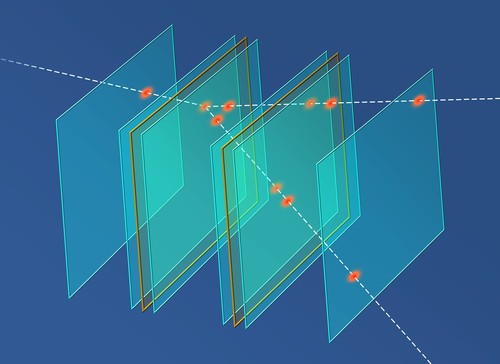
The MUonE detector records hits during collisions to reconstruct secondary particle tracks. Gold marks subsequent targets and blue marks silicon detector layers.

AI in particle physics: Can it unveil discoveries?

Particle physics is an exciting field of study that aims to uncover the fundamental building blocks of the universe. For years, scientists have been working to improve the techniques used to detect and analyze particles created in particle collisions. Now, an international team of researchers from the Institute of Nuclear Physics of the Polish Academy of Sciences (IFJ PAN) is using artificial intelligence (AI) to enhance particle track reconstruction. This development shows promising implications for high-energy physics experiments, but the question remains: can it revolutionize the field?

AI is a buzzword used to describe the use of automated algorithms to gain insights from data, across different industries. In particle physics, AI can help identify particles, reconstruct their tracks, and determine the diagnostics of a collision more rapidly, thus providing new insights. The technique has shown significant promise in recent years, and now the team at IFJ PAN has taken it a step further.

Their paper, published in Computer Science, demonstrated the effectiveness of AI for rapid particle track reconstruction compared to classical algorithms currently employed in high-energy physics experiments. Using deep neural networks, the team trained the AI to reconstruct particle tracks using simulated data. They used this training to help the AI detect particle paths and determine if it was worth saving for further study. This process could significantly reduce the time required for analyzing data, which is a significant challenge in high-energy physics experiments.

The team at IFJ PAN has developed a deep neural network with around two million configuration parameters, which was trained using over 40,000 particle collision simulations. During testing, only hit information was given to the neural network, and the output was compared to the original particle paths. The results were promising, showing that the AI can accurately reconstruct secondary particle tracks, similar to classical algorithms.

Professor Marcin Kucharczyk, who is part of the team at IFJ PAN, explained that the AI they designed is a deep-type neural network. It consists of an input layer comprising 20 neurons, four hidden layers of 1,000 neurons each, and an output layer with eight neurons. All the neurons of each layer are connected to all the neurons of the neighboring layer.

The next experiment in which the AI from IFJ PAN will be tested is the Muon on Electron Elastic Scattering (MUonE) experiment. The MUonE experiment examines the measured values of the anomalous magnetic moment of muons, which differ from the predictions of the Standard Model. If successful, this experiment could lead to discoveries that indicate new physics and a better understanding of the fundamental structure of our universe.

While the development of AI for particle physics shows a lot of promise, some experts in the field remain cautious. The methods used to reconstruct particle tracks are complex and require rigorous testing. The results from the IFJ PAN team demonstrate the AI's potential in detecting and analyzing particles, but some scientists believe that further testing is needed to confirm its effectiveness.

In conclusion, the use of AI in particle physics holds great promise for the future of high-energy physics experiments. This development could significantly reduce the time required to analyze data and enhance our understanding of the universe's building blocks. The pioneering work of the IFJ PAN team has opened up new avenues for research and could lead to discoveries. However, this development is not without its skeptics, and the method will require further testing and evaluation before its effectiveness is fully established.

Unlocking the secrets of the Universe: Mathematicians pioneer artificial intelligence in astrophysics

In Bayreuth, Germany, mathematicians at the University of Bayreuth are using artificial intelligence (AI) to explore astrophysics. Their innovative approach, utilizing a deep neural network and a state-of-the-art supercomputer, has revolutionized the understanding of galaxies and the behavior of our vast universe.

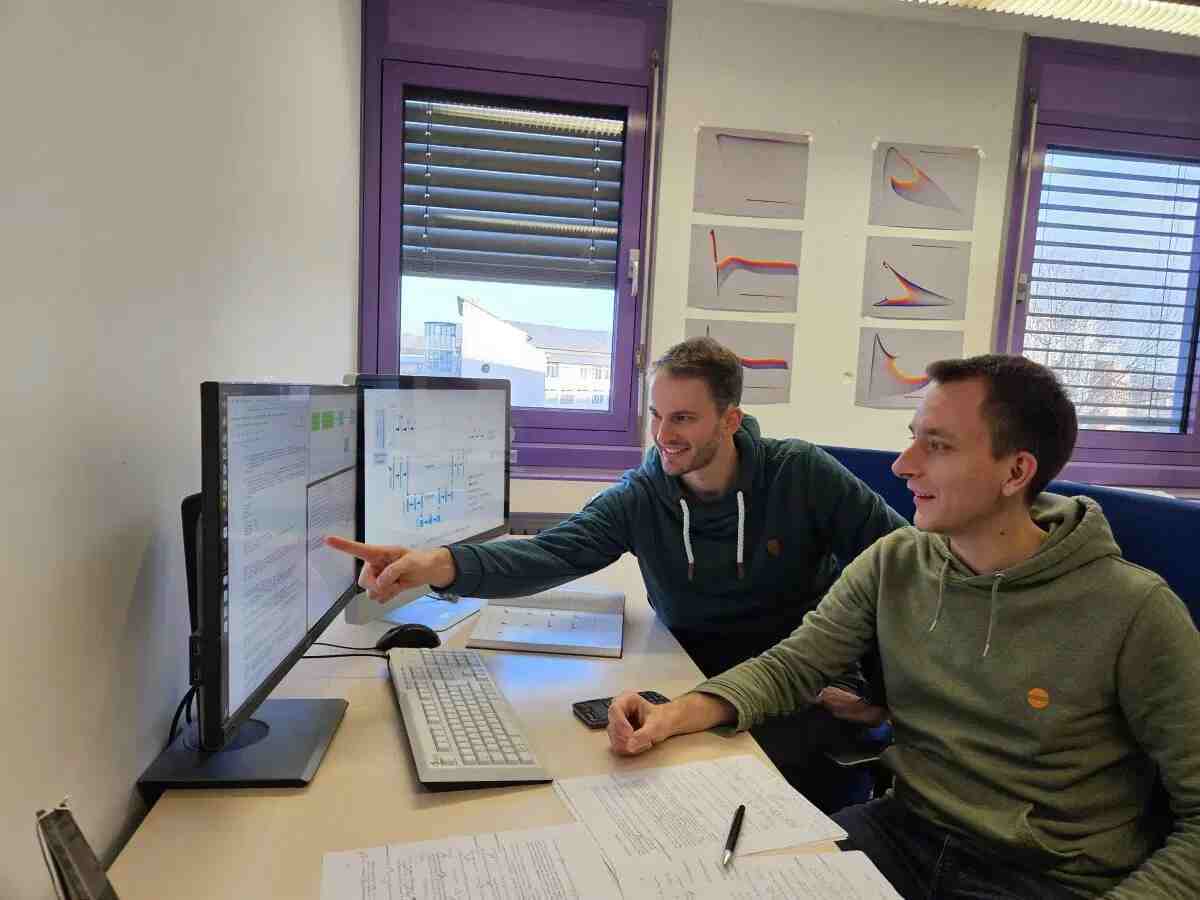
Dr. Sebastian Wolfschmidt and Christopher Straub, researchers at the Chair of Mathematics VI, are on a quest to uncover the structure and long-term behavior of galaxies. Recognizing the limitations of astronomical observations, they turned to mathematical models based on Albert Einstein's theory of relativity. These models take into account the presence of black holes at the center of galaxies, providing a more comprehensive understanding of gravity as the curvature of four-dimensional spacetime.

For decades, mathematicians and astrophysicists have scrutinized these intricate galaxy models, however, many questions have remained unanswered. To address this challenge, Straub and Wolfschmidt employed a deep neural network, an AI technology inspired by the human brain, to decipher complex structures within vast amounts of astronomical data.

"The neural network can predict which models of galaxies can exist in reality and which cannot," explains Dr. Sebastian Wolfschmidt. The use of AI significantly speeds up the prediction process compared to conventional numerical simulations, allowing astrophysical hypotheses to be verified or disproven within seconds.

Their groundbreaking research, recently published in the prestigious journal Classical and Quantum Gravity, has opened new doors to unravel the universe's mysteries. Prof. Dr. Gerhard Rein, the head of research group at Chair of Mathematics VI, expressed enthusiasm for the potential impact of this breakthrough, stating, "The possibilities that AI presents us with are endless. We're only scratching the surface of what it can do."

These awe-inspiring calculations were made possible through the computational prowess of the supercomputer housed in the Keylab HPC at the University of Bayreuth. The collaboration with the Chair of Applied Computer Science II - Parallel and Distributed Systems has been vital in pushing the boundaries of how calculations are conducted in the world of astrophysics.

The implications of this research extend far beyond academia. The insights gained from the application of AI in astrophysics have profound implications for our understanding of the universe. Through this pioneering work, we are on the precipice of groundbreaking discoveries, potentially unlocking the secrets of our existence and the enigmatic cosmos that surrounds us.

However, as with any scientific breakthrough, it is important to consider diverse perspectives on the matter. While AI brings great potential, some experts caution against overly relying on machine learning algorithms and computational models. They stress the importance of complementing AI with traditional scientific approaches, such as observational data and empirical evidence. Striking a balance between technological innovation and traditional scientific methods will undoubtedly lead to more robust and comprehensive advancements.

In the face of skepticism, the research team is resolute in their mission to expand our understanding of the universe. Christopher Straub expresses his excitement and vision for the future, saying, "Since integrating machine learning into our research, we've made significant strides. Our deep neural network is just the beginning. We anticipate applying similar methods to explore other astrophysical phenomena."

As the boundaries of human knowledge continue to be pushed, the integration of AI into astrophysics has paved the way for new possibilities and perspectives. Through collaboration and the marriage of cutting-edge technology and human intuition, we inch ever closer to unlocking the mysteries of the universe, painting a richer tapestry of our existence in the cosmos.