

De Paiva compares the gold standard of simulation techniques  with alternative analytics for the use of beta radiation in cancer treatment

A new paper authored by Eduardo De Paiva, from the Division of Medical Physics at the Institute of Radiation Protection and Dosimetry, Rio de Janeiro, Brazil, pits the gold standard simulation method used to calculate the interaction of the ionizing radiation with matter and estimate the radiation dose delivered to a target organ—Monte Carlo (MC) simulation — against an alternative analytic method, the Loevinger formula. A illustration of beta decay proceeding against the backdrop of a Monte Carlo simulation.Credit: Robert Lea
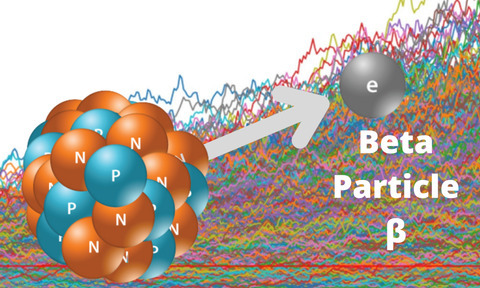
New research pits the simulation of beta radiation doses in tumor treatment against an analytical method.

Treating superficial skin tumors especially when they are located above cartilage or bone with beta radiation can help protect sensitive structures during the delivery of treatment.

The use of short-range beta radiation in cancer treatment is not without its disadvantages, however, especially when it comes to the measurement of radiation exposure — dosimetry. When experimental dosimetry is not feasible, researchers use simulations and calculations to study the interaction of ionizing radiation with matter and estimate the radiation dose delivered to a target organ.

A new paper published in EPJ Plus and authored by Eduardo De Paiva, from the Division of Medical Physics at the Institute of Radiation Protection and Dosimetry, Rio de Janeiro, Brazil, and his colleagues, pits the gold standard of simulation techniques — Monte Carlo (MC) simulation — against an alternative analytic method, the Loevinger formula.

“We measured the dose of a treatment applicator using mathematical techniques — a simple technique, no experiment needed and no practical challenges,” De Paiva says. “The comparison of MC simulation and Loevinger formula on the setup of our research was the novelty of our study.”

Nonexperimental dosimetry techniques like MC simulation are advantageous for their ability to handle different geometries and materials, but MC simulations require heavy computation and this can impede their implementation.

Analytic methods are another set of techniques for dosimetry of beta radiation that can produce results faster than MC methods. Thus far, these methods have been less favored because they are associated with lower accuracy.

The team used MC simulation and analytical calculation — the Loevinger formula — for dosimetry of radiation dose from a multiwell skin brachytherapy applicator with two beta sources. The results of the two approaches were compared to see how accurate the analytical method is.

“The Loevinger formula, which is a quick method for dosimetry showed a good agreement with gold standard Monte Carlo methods,” Paiva concluded. “Thus, the Loevinger formula can be used, as the basis of a dosimetry software, for straightforward dosimetry of beta sources in simple geometries.”
University of Eastern Finland sheds light on the effect of rain, clouds on atmospheric aerosols

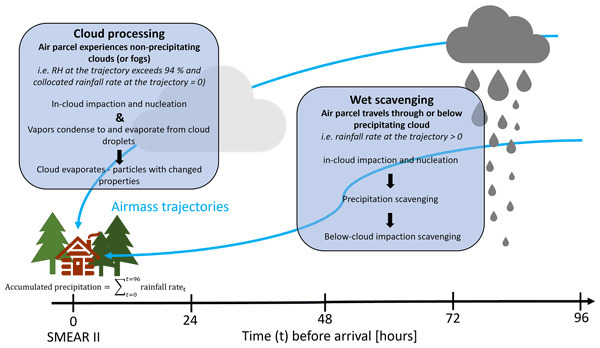
Published in Atmospheric Chemistry and Physics, a new study by an international team of researchers explores the effect of precipitation and clouds on particle concentrations during their transport to a measurement location. acp 22 11823 2022 avatar web b2cf7

Wet processes in the atmosphere, such as clouds and precipitation, have a strong impact on the concentrations and chemical composition of atmospheric aerosols. New findings from the study show that when air masses travel to the SMEAR II research station located in a rural boreal forest site in Finland in northern Europe, the concentrations of chemical species contained in the particles (such as sulfate, black carbon, and organics) significantly decrease upon a precipitation event, i.e., rain. The derived removal rate of sulfate from the atmosphere was dependent on the season, whereas organics and black carbon were reduced more evenly, regardless of the season. The researchers also observed that a significant amount of sulfate mass is formed in non-precipitating clouds, and they could determine the particle size to which the sulfate formed is distributed.

The researchers utilized long time series of aerosol concentrations measured in the SMEAR II research station, and air mass trajectories arriving at the measurement station, calculated from the HYSPLIT trajectory model.

The results can, among other things, improve the ability of climate models to estimate the transport of aerosols to different areas, and thus better estimate the number of aerosols on the planet. Current climate models have major inaccuracies, especially in the transport of aerosols to the Arctic region. This is reflected as uncertainty in climate models when assessing the impact of aerosols on the Arctic climate, which is particularly susceptible to the effects of climate change.

China shows how updated climate models clouded by scientific biases

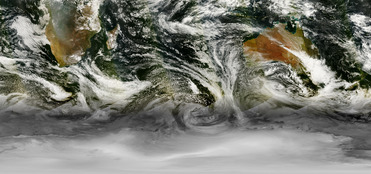
Clouds can cool or warm the planet’s surface, a radiative effect that contributes significantly to the global energy budget and can be altered by human-caused pollution. The world’s southernmost ocean aptly named the Southern Ocean and far from human pollution but subject to abundant marine gases and aerosols, is about 80% covered by clouds. How do this body of water and its relationship with clouds contribute to the world’s changing climate? The cloudy Southern Ocean shows an improved radiation budget in the latest IPCC climate models, but there are still significant biases in the simulated cloud physical properties over the SO. Those biases are largely cancelled out when they jointly influence the cloud radiative effect. The cloud image is captured by FY-3D satellite.

Researchers are still working to figure it out, and they’re now one step closer, thanks to an international collaboration identifying compensation errors in widely used climate model protocols known as CMIP6. They published their findings on September 20 in Advances in Atmospheric Sciences.

“Cloud and radiation biases over the Southern Ocean have been a long-lasting problem in the past generations of global climate models,” said corresponding author Yuan Wang, now an associate professor in the Department of Earth, Atmospheric, and Planetary Sciences at Purdue University. “After the latest CMIP6 models were released, we were anxious to see how they performed and whether the old problems were still there.”

CMIP6, a project of the World Climate Research Programme, allows for the systematic assessment of climate models to illuminate how they compare to each other and real-world data. In this study, Wang and the researchers analyzed five of the CMIP6 models that aim to serve as standard references.

Wang said the researchers were also motivated by other studies in the field that point to the Southern Ocean's cloud coverage as a contributing factor to some CMIP6 models’ high sensitivity when the simulations predict a surface temperature that rises too quickly for the rate of increased radiation. In other words, if improperly simulated, the Southern Ocean clouds may cast a shadow of doubt on the projection of future climate change.

“This paper emphasizes compensating errors in the cloud physical properties in spite of the overall improvement of radiation simulation over the Southern Ocean,” Wang said. “With space satellite observations, we are able to quantify those errors in the simulated cloud microphysical properties, including cloud fraction, cloud water content, cloud droplet size, and more, and further reveal how each contributes to the total bias in the cloud radiative effect.”

The cloud radiative effect — how clouds interfere with radiation to warm or cool the surface — is largely determined by the physical properties of the cloud. “Cloud radiative effects in CMIP6 are comparable with satellite observations, but we found there are large compensating biases in cloud fraction liquid water path and droplet effective radius,” Wang said. “The major implication is that, even though the latest CMIP models improve the simulation of their mean states, such as radiation fluxes at the top of the atmosphere, the detailed cloud processes are still of large uncertainty.”

According to Wang, this discrepancy also partially explains why the model climate sensitivity assessments do not perform as well, since those assessments rely on model detailed physics — rather than the mean state performance — to evaluate the overall effect on the climate.

“Our future work will aim to pin down individual parameterizations that are responsible for these biases,” Wang said. “Hopefully, we can work closely with model developers to get them solved. After all, the ultimate goal of any model evaluation study is to help improve those models.”

Other contributors include Lijun Zhao and Yuk L. Yung, Division of Geology and Planetary Science, California Institute of Technology; Chuanfeng Zhao, Department of Atmospheric and Oceanic Sciences, School of Physics, Peking University; and Xiquan Dong, Department of Hydrology and Atmospheric Sciences, University of Arizona.