

German researchers study cosmic expansion using methods from many-body physics

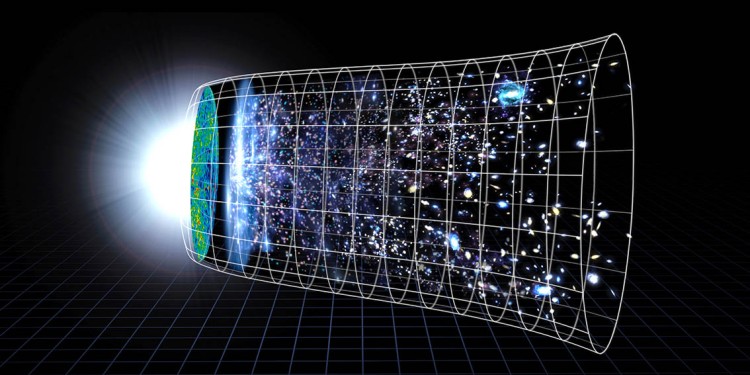
It is almost always assumed in cosmological calculations that there is an even distribution of matter in the universe. This is because the calculations would be much too complicated if the position of every single star were to be included. In reality, the universe is not uniform: in some places, there are stars and planets, in others, there is just a void. Physicists Michael te Vrugt and Prof. Raphael Wittkowski from the Institute of Theoretical Physics and the Center for Soft Nanoscience (SoN) at the University of Münster in Germany have, together with physicist Dr. Sabine Hossenfelder from the Frankfurt Institute for Advanced Studies (FIAS), developed a new model for this problem. Their starting point was the Mori-Zwanzig formalism, a method for describing systems consisting of a large number of particles with a small number of measurands. A representation of the evolution of the universe over 13.77 billion years. The far left depicts the earliest moment we can now probe, when a period of "inflation" produced a burst of exponential growth in the universe. (Size is depicted by the vertical extent of the grid in this graphic.) For the next several billion years, the expansion of the universe gradually slowed down. More recently, the expansion has begun to speed up again. © NASA's Goddard Space Flight Center
The theory of general relativity developed by Albert Einstein is one of the most successful theories in modern physics. Two of the last five Nobel Prizes for Physics had associations with it: in 2017 for the measurement of gravitational waves, and in 2020 for the discovery of a black hole at the center of the Milky Way. One of the most important applications of the theory is in describing the cosmic expansion of the universe since the Big Bang. The speed of this expansion is determined by the amount of energy in the universe. In addition to the visible matter, it is above all the dark matter and dark energy which play a role here – at least, according to the Lambda-CDM model currently used in cosmology.

“Strictly speaking, it is mathematically wrong to include the mean value of the universe’s energy density in the equations of general relativity”, says Sabine Hossenfelder. The question is now how “bad” this mistake is. Some experts consider it to be irrelevant, others see in it the solution to the enigma of dark energy, whose physical nature is still unknown. Uneven distribution of the mass in the universe may affect the speed of cosmic expansion.

“The Mori-Zwanzig formalism is already being successfully used in many fields of research, from biophysics to particle physics,” says Raphael Wittkowski, “so it also offered a promising approach to this astrophysical problem.” The team generalized this formalism so that it could be applied to general relativity and, in doing so, derived a model for cosmic expansion while taking into consideration the uneven distribution of matter in the universe.

The model makes a concrete prediction for the effect of these so-called inhomogeneities on the speed of the expansion of the universe. This prediction deviates slightly from that given by the Lambda-CDM model and thus provides an opportunity to test the new model experimentally. “At present, the astronomical data are not precise enough to measure this deviation,” says Michael te Vrugt, “but the great progress made – for example, in the measurement of gravitational waves – gives us reason to hope that this will change. Also, the new variant of the Mori-Zwanzig formalism can be applied to other astrophysical problems – so the work is relevant not only to cosmology.”
Japanese built quantum search algorithm offers hope for radically enhancing wireless networks

A proposed method of profoundly enhancing the energy efficiency of wireless networks unfortunately also suffers from being amongst computationally complex problems to solve. But a computer scientist has for the first time demonstrated that the quantum search algorithm can solve this problem faster than a classical supercomputer.

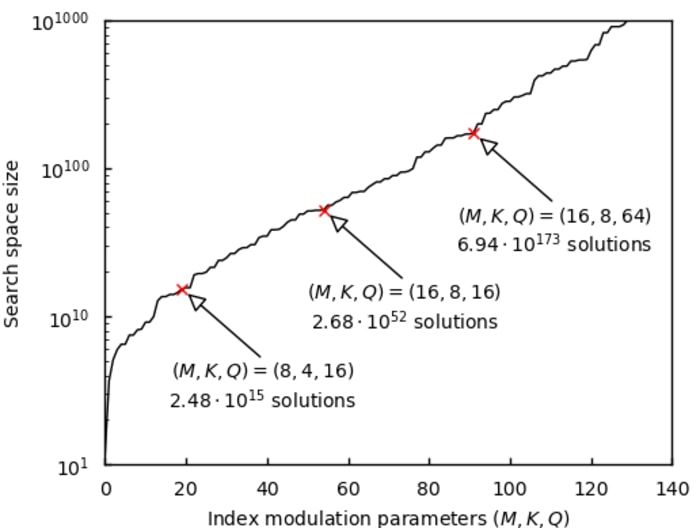
A novel wireless communications technique that turns the on-off status of parts of the telecommunications medium itself—such as antennas and subcarriers—could deliver super-charged energy efficiency gains, but its optimization suffers from being a problem that counts among the computationally hard class of problems to solve. However, a Yokohama National University located in Yokohama, Japan computer scientist has for the first time demonstrated that the quantum search algorithm can solve this problem faster than a classical supercomputer in terms of query complexity. This figure shows that the search space size of the index selection problem causes a combinatorial explosion, where any K elements are selected from M elements and assigned log2(Q) bits of information. Even for a simple case like (M, K, Q) = (16, 8, 64), there are about 6.94 * 10^{173} candidates, which is very hard to solve.

The arrival of 5G wireless networks offers a great boost to bandwidth and higher data rates, and potentially enables a wide range of new mobile data applications such as self-driving cars and the internet of things (IoT). At the same time, this explosion in traffic necessitates an enhancement of techniques for improving the efficiency of use of the radio spectrum carrier of all this information and the energy required to power the system.

One innovative method for improving energy efficiency and that has been attracting a great deal of attention in wireless communications circles in recent years is what is known as index modulation.

The technique’s name echoes the terms frequency modulation (FM) or amplitude modulation (AM) used to describe how information such as voices or music was transmitted through space via radio waves for much of the 20th Century. At the sending end, either the frequency or the amplitude of the ‘carrier’ radio wave was instantaneously modified (‘modulated’) by the transmitter to impress information on that wave, similar to how telegraph operators in the 19th Century impressed information in the form of Morse code upon an electric current running through telegraph wires. At the receiving end, the decoding, or ‘demodulation’ of that carrier wave extracted the information embedded in its form, producing sounds that could then be heard by human ears. A third way to modulate a carrier wave beyond altering a radio wave’s frequency or amplitude is by altering its phase.

Index modulation (IM) offers a fourth way, or one could say the fourth dimension, of impressing information, but this time via exploitation of the on or off status of its indices. The word index in this case is simply a catch-all term for the infrastructural and operational building blocks of the communications system, such as the transmission antennas, subcarriers, time slots, radiofrequency mirrors, LEDs, and even relays and spreading codes. By switching these various elements on or off, potentially adds another layer of information to transmission, this time in the form of binary digits or bits.

And by turning parts of the system off even as they are conveying information, the sparseness of the transmitted sequence of symbols simplifies the calculation complexity.      This also substantially reduces the energy required for a given amount of data that is transferred.

“It’s a very elegant concept, using the activation pattern of the building blocks of the communications system itself to impart information, and leading to a reduction in the complexity of the hardware,” said Associate Professor Naoki Ishikawa, the author of the paper.

But this radical improvement comes with an additional—and substantial—challenge.

IM requires optimization to determine which indices should be used and when to convey this binary information, and this particular type of optimization happens to be computationally very difficult.

“This optimization problem is what computational complexity theorists term ‘NP-hard’, one of the very hard classes of a problem there is. It leads to what we call a combinatorial explosion,” he added. “So I’ve named this monster of a mathematical challenge the ‘index selection problem’.”

To address the index selection problem, Ishikawa used an algorithm for quantum computing called Grover Adaptive Search (GAS), also known as the quantum search algorithm. Quantum computing may one day offer the ability to perform many types of computations much faster than classical computers.

In the paper, Ishikawa demonstrated for the first time that in principle GAS can solve the index selection problem faster than a classical computer in terms of query complexity.

“This shows that index modulation is compatible with quantum computers because it represents information on and off, resulting in binary variables typically used in quantum computation,” he said.

The use of GAS to solve the index modulation problem remains something of a proof of concept, as fault-tolerant, large-scale quantum supercomputers are years away from being realized. There remain many challenges for industrial applications of existing quantum computers due to their non-negligible noise drowning out many signals. In addition, GAS can provide a quadratic speedup, but the problem of exponential complexity is still unresolved and requires long-term study.

Quadratic speedup occurs when a quantum computer solves a problem through N queries where a classical computer would need to take, for example, N * N = N^2 queries. Exponential speedup occurs where a quantum computer solves a problem through N queries where a classical computer would take 2^ N queries. So if N is a large value, then the difference in terms of query complexity would become larger too.

Nevertheless, the demonstration of quantum speedup achieved by GAS has the potential to solve many other problems in society, not just the index selection problem.

South African researchers find giving a big penalty to an algorithm for false negatives results in higher precision

Anyone waiting for the results of a medical test knows the anxious question:’Will my life change completely when I know?’ And the relief if you test negative.

Nowadays, Artificial Intelligence (AI) is deployed more and more to predict life-threatening diseases. But there remains a big challenge in getting the Machine Learning (ML) algorithms precise enough. Specifically, getting the algorithms to correctly diagnose if someone is sick.

Machine Learning (ML) is the branch of AI where algorithms learn from datasets and get smarter in the process.

“Let’s say there is a dataset about a serious disease. The dataset has 90 people who do not have the disease. But 10 of the people do have the disease,” says Dr Ibomoiye Domor Mienye. Mienye is a post-doctoral AI researcher at the University of Johannesburg (UJ), South Africa.

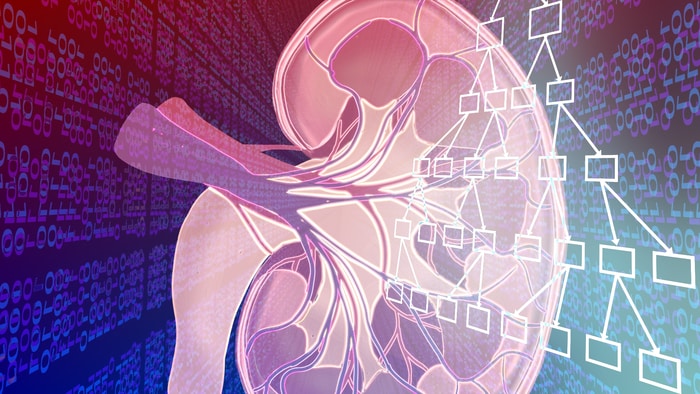
“As an example, an ML algorithm says that the 90 do not have the disease. That is correct so far. But it fails to diagnose the 10 that do have the disease. The algorithm is still regarded as 90% accurate”, he says. Telling sick people that they’re healthy, can happen when a human doctor sees a patient. It also happens when Artificial Intelligence (AI) learns to diagnose disease. But giving a big penalty to an algorithm for false negatives results in much better precision, UJ researchers find. The research appears in Informatics in Medicine Unlocked, at https://doi.org/10.1016/j.imu.2021.100690  CREDIT Graphic design by Therese van Wyk, University of Johannesburg. Based on Pixabay images.

This is because accuracy has been defined in this way. But for health outcomes, it may be urgent to diagnose the 10 people with the disease and get them into treatment. That may be more important than complete accuracy about the 90 who do not have the condition, he adds.

Penalties against AI

In a research study published in Informatics in Medicine Unlocked, Mienye and Prof Yanxia Sun show how ML algorithms can be improved significantly for medical purposes. They used logistic regression, decision tree, XGBoost, and random forest algorithms.

These are supervised binary classification algorithms. That means they only learn from the ‘yes/no’ datasets provided to them.

Dr Mienye and Prof Sun are both from the Department of Electrical and Engineering Science at UJ.

The researchers built cost sensitivity into each of the algorithms.

This means the algorithm gets a much bigger penalty for telling a sick person in the dataset that they are healthy, than the other way round. In medical terms, the algorithms get bigger penalties for false negatives than for false positives.

Disease datasets AI learns from

Dr Mienye and Prof Sun used public learning datasets for diabetes, breast cancer, cervical cancer (858 records) and chronic kidney disease (400 records).

The datasets come from large hospitals or healthcare programs. In these binary datasets, people are classified as either having a disease, or not having it at all.

The algorithms they used are binary also. These can say “yes the person has the disease” or “no they don’t have it.” They tested all the algorithms on each dataset, both without and with the cost-sensitivity.

Significantly improved precision and recall

The results make it clear that the penalties work as intended in these datasets.

For chronic kidney disease for example, the Random Forest algorithm had precision at 0.972 and recall at 0.946, out of a perfect 1.000.

After the cost-sensitivity was added, the algorithm improved significantly to precision at 0.990 and recall at a perfect 1.000.

For CKD, the three other algorithms’ recall improved from high scores to a perfect 1.000.

Precision at 1.000 means the algorithm did not predict one or more false positives across the entire dataset. Recall at 1.000 means the algorithm did not predict one or more false negatives across the entire dataset.

With the other datasets, the results were different for different algorithms.

For cervical cancer, the cost-sensitive Random Forest and XGBoost algorithms improved from high scores to perfect precision and recall. However, the Logistic Regression and Decision Tree algorithms improved to much higher scores but did not reach 1.000.

The precision problem

In general, algorithms have been more accurate at saying people do not have a disease, than identifying the ones who are sick, says Mienye. This is an ongoing challenge in healthcare AI.

The reason is the way the algorithms learn. The algorithms learn from datasets that come from large hospitals or state healthcare programs.

But most of the people in those datasets do not have the conditions they are being tested for, says Mienye.

“At a large hospital, a person comes in to get tested for chronic kidney disease  (CKD). Their doctor sent them there because some of their symptoms are CKD symptoms. The doctor would like to rule out CKD. Turns out, the person does not have CKD.

“This happens with lots of people. The dataset ends up with more people who do not have CKD, than people who do. We call this an imbalanced dataset.”

When an algorithm starts learning from the dataset, it learns far less about CKD than it should, and isn’t accurate enough in diagnosing ill patients – unless the algorithm is adjusted for the imbalance.

AI on the other side of a boat ride

Mienye grew up in a village near the Atlantic Ocean, that is not accessible by road.

“You have to use a speedboat from the nearest town to get there. The boat ride takes two to three hours,” he says.

The nearest clinic is in the bigger town, on the other side of the boat ride.

The deep rural setting of his home village inspired him to see how AI can help people with little or no access to healthcare.

An old lady from his village is a good example of how more advanced AI algorithms may assist in future, he says. A cost-sensitive multiclass ML algorithm could assess the measured data for her blood pressure, sodium levels, blood sugar and more.

If her data is recorded correctly on a computer, and the algorithm learns from a multiclass dataset, that future AI could tell clinic staff which stage of chronic kidney disease she is at.

This village scenario is in the future, however.

Meanwhile the study’s four algorithms with cost sensitivity, are far more precise at diagnosing disease in their numerical datasets.

And they learn quickly, using the ordinary computer that one could expect to find in a remote town.